Profile · Founders · Health Technology
David Stein
The co-founder building Ash into the quiet infrastructure behind at-home testing - the kits, the labs, and the software that healthcare runs on top of.
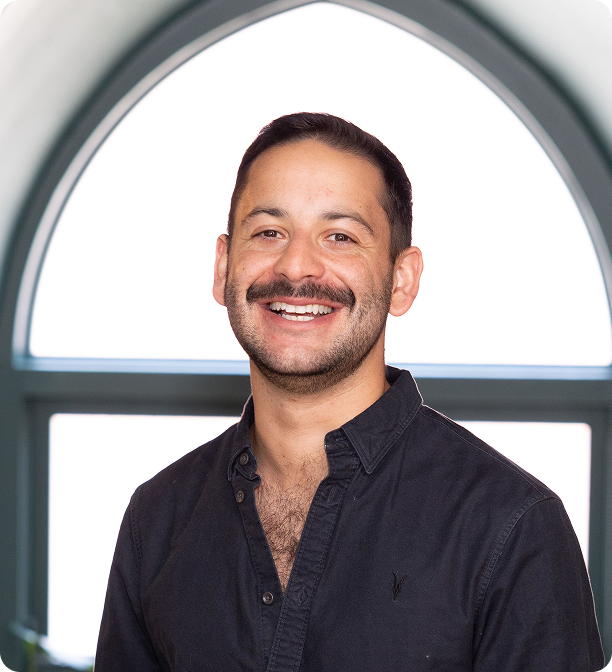
Photo: Ash / poweredbyash.com
The co-founder building Ash into the quiet infrastructure behind at-home testing - the kits, the labs, and the software that healthcare runs on top of.
David Stein runs Ash, a New York company most patients will never hear of - which is exactly the point. When a hospital, insurer, or wellness brand mails you a test kit and walks you through collecting a sample at home, there is a good chance Ash is the machinery underneath.
Ash sells infrastructure, not a brand. Stein and his co-founders built a white-label platform that lets any healthcare organization stand up its own at-home testing program without assembling the pieces themselves. Ash designs the kits, connects to a network of certified labs, handles the shipping and returns, and builds the patient-facing software that turns a box in the mail into a usable result. The organization keeps its own name on the box. Ash stays behind the curtain.
That model is deliberate. Rather than fight for consumer attention in a crowded market, Stein positioned Ash as the layer other companies plug into. "Ash goes far beyond simple kit distribution and health testing," he said when the company announced its Series A. "Our platform provides an end-to-end experience that includes everything from customized kit designs, to a vetted lab network, to real-time reporting, to a UX that's designed to improve patient engagement at every level."
The pitch has found buyers. In October 2024, Ash closed a $10 million Series A led by the Merck Global Health Innovation Fund, with participation from a national health insurance plan and other strategic investors. It pushed the company's total funding past $13 million and put a large pharmaceutical name behind a company that started as a scrappy direct-to-consumer experiment.
Stein did not come from healthcare. Before Ash, he worked across education technology, early-stage startups, and public-sector management consulting. When he arrived at Cornell Tech's one-year MBA program in 2019, he had no clinical background and no industry playbook. He has come to see that as a feature.
The founding team - drawn from retail, biotech research, and fintech rather than hospitals - kept approaching problems the way outsiders do. Instead of accepting how things were done, they asked a simpler question. "Why can't we do it this way?" Naivete, in Stein's telling, let them redesign processes that insiders had stopped questioning.
Ash grew out of Cornell Tech's startup studio, where Stein met three of his co-founders and built the company as a capstone project. It worked. The team won the school's startup award and landed a spot in the 500 Global accelerator, giving Ash its first real runway before it had a real product line.
Ash launched as a direct-to-consumer brand aimed at making testing more inclusive and accessible for the LGBTQ+ community. "As a queer founding team, we set out to make sexual health more inclusive and accessible for the queer community," Stein has said. Then the timing turned brutal. The company was shipping at-home kits just as the country went into lockdown.
"We were selling at-home STI testing kits to a nation that was being told to stay home," Stein recalled. The consumer model stalled almost overnight. But the same lockdown created a different, larger need: providers who suddenly could not bring patients into clinics and had no way to run tests remotely. Ash already had the pieces to solve that.
The team tested a business-to-business version of the product. Within a month, they sold four pilots. That validation reset the company's entire direction. What began as a consumer brand became the white-label engine it is today, serving providers, payers, and companies that want to offer testing without building a lab network from scratch.
Stein is unusually blunt for a founder in a market that loves the word "disruption." He is not trying to blow up how American healthcare is organized. His argument is practical: the overwhelming majority of people already receive care inside the existing system, so the fastest way to reach them is to plug into it rather than route around it. Ash's business is built on that bet - become the tool that hospitals, insurers, and providers reach for, and let them keep their patients and their brands.
He is also skeptical of easy talk about equity. Companies, he has noted, often "check the box" on inclusion without putting real resources behind it. It is a pointed stance from a founder whose company started with a mission around access, and it colors how Ash measures itself - by test return rates and closed care gaps rather than press releases.
The ambition is large. Stein wants Ash to become "the powerhouse behind all things at-home healthcare," expanding from its roots into chronic-condition and preventive testing and, eventually, integrating connected devices so more care can happen in the home. The company now spans more than 100 biomarkers and works with over ten lab partners across all 50 states, and it has shipped more than a million kits to get there.
For a company designed to stay invisible, that is a lot of reach. Which is the quiet joke at the center of Stein's strategy: the more places Ash shows up, the less anyone notices it is there.
Works across education technology, early-stage startups, and public-sector management consulting - no healthcare experience.
Enters Cornell Tech's one-year MBA program and co-founds Ash as a startup-studio capstone with three teammates.
Wins Cornell Tech's startup award and joins the 500 Global accelerator. COVID forces a pivot from D2C to B2B - four pilots sold in a month.
Ash reports having raised roughly $6.6M to date as the white-label model scales across providers and payers.
Closes a $10M Series A led by Merck Global Health Innovation Fund; total funding surpasses $13M.
Expands beyond sexual health into chronic and preventive testing; surpasses one million kits shipped nationwide.
Why can't we do it this way?
We were selling at-home testing kits to a nation that was being told to stay home.
Find people that are smarter than you.