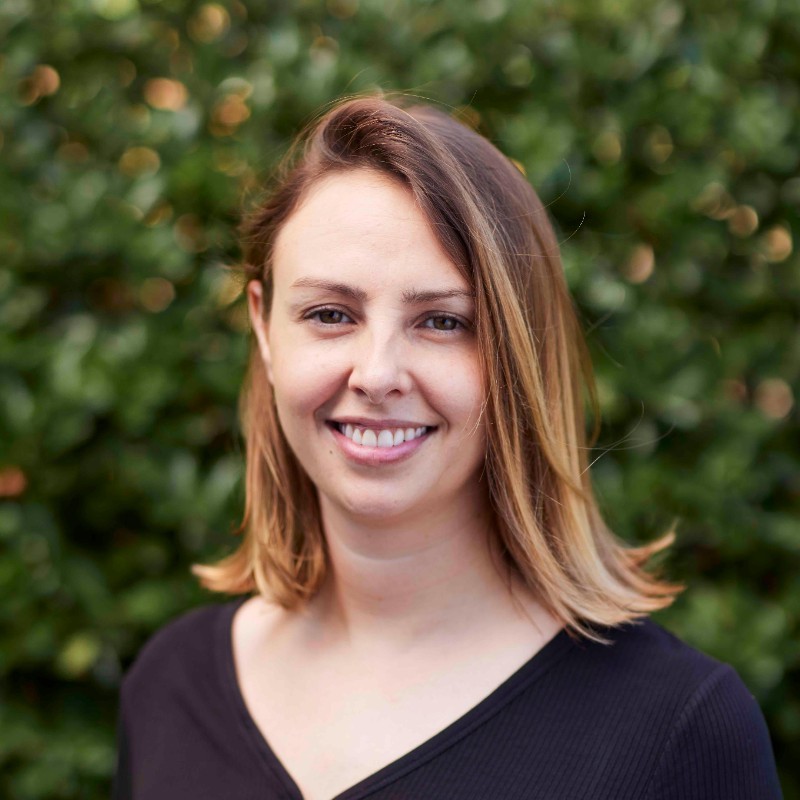
She decided she could do more for patients by not becoming a doctor. So she built the clinic doctors and midwives work inside.
When Adrianne Nickerson opened Oula's first clinic, three of its executives were pregnant at once. The CEO. The COO. The chief experience officer. They raised the capital, hired the team and unlocked the front door in roughly the time it takes to grow a human - and then went to deliver, inside the model they had just invented.
It reads like a stunt. It was a thesis. If you are going to redesign how a person gives birth, it helps to be a customer of your own product while you build it. Oula is Nickerson's answer to a question she kept running into: why does maternity care so often feel like something done to a patient instead of with her?
Her job title is CEO. Her self-ranking is more telling: entrepreneur first, patient advocate second, public-health worker third, health-tech expert fourth.
Being a revolutionary in healthcare is having a vision for improvement married with the ability to execute within today's constraints.Adrianne Nickerson
Oula is a hybrid maternity company in New York that puts midwives and OB-GYNs on the same team, in the same building, reading the same chart. Technology runs underneath it - scheduling, education, the twice-weekly check-ins that catch the small worries before they become big ones. The point is not novelty. The point is that a pregnant patient gets her questions answered and her preferences taken seriously.
The hybrid model has a measurable target: fewer unnecessary C-sections, calmer deliveries, better outcomes for patients who have historically been talked past. Nickerson has been blunt that the industry's defaults were not built around the person actually giving birth.
She came to this from an unusual angle. As an undergrad she worked a paid internship for a plastic surgeon. She studied biology at Columbia, then global health at Harvard, where her research dug into the barriers that keep people from reproductive care. Consulting at Deloitte and a corporate-venture stint at Northwell Health taught her how the money and the systems actually move.
Then she co-founded Robin Care, a virtual cancer-care company, before deciding the next thing she was meant to build lived in the delivery room.
The pattern is consistent across every stop: she keeps choosing the place where the system is failing the patient, and then tries to re-engineer it from the inside rather than complain about it from the outside.
Nickerson's Harvard research was about access - the practical barriers that stand between a person and the reproductive care they are supposedly entitled to. That question never really left her. Oula is, in a sense, the operational version of that academic work: take the gap between what care should feel like and what it usually feels like, and close it with a model you can actually run.
She is careful about the word revolutionary. To her it does not mean burning the system down. It means holding a clear picture of something better while staying disciplined enough to deliver it inside the rules, the reimbursement and the constraints that already exist. That is a harder, less romantic kind of ambition - and it is the one she keeps choosing.
It is also why the recognition tends to use words like "disruptor." Being named among the Top 50 in Digital Health as a System Disruptor is not a prize for a clever app. It is a nod to someone trying to move the defaults of an entire category - how prenatal visits are structured, who is in the room at a birth, whose preferences get written into the plan.
Her co-founding of Oula in 2019, the Brooklyn clinic in 2021, and a Series B by early 2024 trace a steady arc: prove the model works for patients, then earn the capital to do it for more of them. The funding is a means. The outcome is the product.
Asked to rank the identities that matter most to how she works, Nickerson is consistent. The technologist label comes last - the patient comes first. It is the through-line from cancer care to maternity care: build the system, not the credential.
I could actually do more for patients not being a doctor.Adrianne Nickerson
This is the company that I was meant to build.
Women deserve higher quality maternity care that centers their voices.
Vision for improvement married with the ability to execute within today's constraints.
Nickerson talks about Oula as a starting point, not an endpoint - a proof that women's and family health can be rebuilt around the patient and still work as a business. The plan is to widen the aperture: more clinics, more of the journey covered, the same insistence that care should center the person receiving it. For someone who calls herself risk-averse, she keeps betting on the harder version of the problem.
Profile compiled from public sources including LinkedIn, The Washington Post, 4sight Health, Crain's New York Business, the Wharton Health Care Business Conference and Top 50 in Digital Health. Facts only; where the record is silent, this page stays silent.