He turned a workplace tragedy into an insurance company that only wins when your people go home safe.
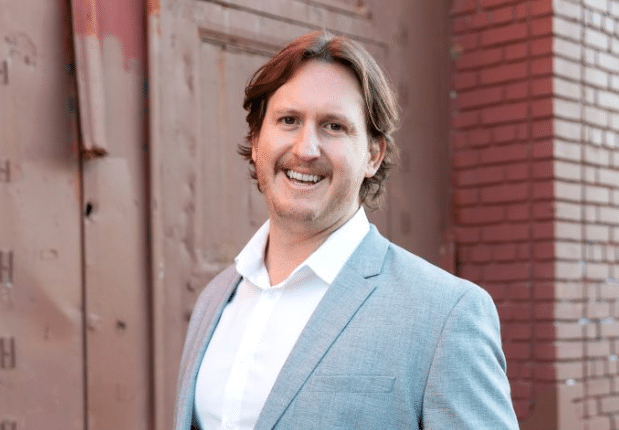
David Fontain, co-founder and CEO of Foresight.
David Fontain runs Foresight, a San Francisco insurtech that does something most carriers do not: it hands every policyholder the tools to make sure the next accident does not happen.
Foresight writes workers' compensation coverage for the middle market - the construction crews, manufacturers, landscapers and distributors that larger insurers often find hard to place. What sets it apart sits inside every policy: Safesite, the company's own risk-management platform, bundled at no extra cost. The app logs hazards, tracks inspections and generates a live safety score, and Foresight has said that use of it lowers workplace incident frequency by double-digit percentages.
The pitch to a business owner is direct. Run a safer operation, prove it with data, and your insurance should reflect that quickly. Fontain calls the model "engage and save," and it is the same idea he has been chasing for more than a decade - long before the first Foresight policy was ever written.
Under his watch the company has raised tens of millions of dollars, secured a paper partnership with QBE North America, and been named a 2025 Celent Model Insurer for digital and emerging technologies. But the reason he built it has nothing to do with any of that.
It's using the power of insurance to achieve a greater purpose. And for us, that means keeping workers safe and helping them get home to their families.- DAVID FONTAIN, ON WHY FORESIGHT EXISTS
Fontain grew up on Australia's Gold Coast, one of the great surfing coastlines in the world. He studied finance and, straight out of college, took a job at a Dutch investment bank, where he watched how public companies raised money and went public. It gave him, in his words, an early understanding of "how the economy works, how money works."
He did not stay in banking. He started an online custom business-shirt company manufactured in Beijing, using contacts from time spent studying in China, and later sold it. He built enterprise software. He was, by his own description, a serial entrepreneur before he found the problem that would define him.
That problem arrived in the worst way. In his late twenties, a childhood friend from the Gold Coast was killed in a workplace accident - one Fontain came to believe was entirely preventable. "It was completely preventable," he has said, "had the right guidelines and measures been put into place at this workplace."
He and co-founder Peter Grant, a civil engineer who specialized in construction safety, set out to build technology that would catch hazards before they turned into headlines. The result was Safesite, launched in Sydney around 2014. American companies started downloading it on their own, and that pull helped convince the pair to move to the United States.
“That was really the inspirational motivator behind us, creating our risk management technology.”
“No-one should suffer a life-changing, permanent injury at work.”
“We just hustled our butts off.”
In traditional workers' comp, a claim can send premiums up 200 to 300 percent, and it can take up to three years for a business to earn that back through experience-modifier adjustments. Fontain finds that backwards. A company that changes its habits today should not wait years for the price of its insurance to catch up.
Foresight's answer is to read live safety data - the inspections, the hazard reports, the safety score - and let good operators demonstrate they are lower-risk on a daily level. In his ideal version of the industry, premiums move "in a cycle of weeks, not years."
Getting there took patience. From first sketching the engage-and-save concept to writing Foresight's first policy in October 2020 was roughly an eleven-year journey through a technology company, an accelerator, and a brokerage before the carrier finally took shape.
Graduates in finance and joins a Dutch investment bank straight out of college.
Runs early ventures, including an online custom business-shirt company made in Beijing, and an enterprise software business.
Co-founds Safesite with Peter Grant; launches the mobile safety platform in Sydney.
Moves to the U.S. and joins the Plug and Play insurance accelerator in Sunnyvale, California.
Launches a commercial brokerage combining insurance with Safesite as a value-add.
Launches Foresight and underwrites its first workers' comp policy.
Closes a $39M Series B led by OMERS Ventures.
Announces a paper partnership with QBE North America.
Foresight named a Celent Model Insurer for Digital and Emerging Technologies.
"Quite often there's a 10-year story behind a business," he says. Foresight's own timeline proves the point.
His advice to a younger self: the smarter the people around you, the faster you iterate. Relationships over shortcuts.
He did not set out to run a carrier. He set out to stop preventable accidents - and insurance was the strongest lever he could find.
Foresight leans into the industries other insurers avoid: construction, manufacturing, landscaping, distribution.
Live safety data, not just past claims, should shape what a business pays. That is the engine behind engage-and-save.
An Australian ex-pat who grew up around surf, he moved his safety app - and himself - to Silicon Valley to build the carrier.
The insurance industry Fontain is trying to move is enormous and slow. Workers' compensation alone is a market measured in the tens of billions of dollars, and it has long run on a simple logic: collect premiums, pay claims, adjust prices after the fact. Foresight's argument is that the "after the fact" part is where the human cost lives. By the time a premium reflects a dangerous worksite, someone has usually already been hurt.
So the company keeps pushing its data further into the underwriting itself. Foresight leans on proprietary AI models and integrated safety tools to spot hazards early, and it has expanded through partnerships - most notably the arrangement with QBE North America that lets it write on established insurer paper. The recognition from Celent as a 2025 Model Insurer is the kind of industry nod that helps a young carrier win the trust of brokers who have seen plenty of insurtech promises come and go.
Fontain is candid that none of this happened fast. Foresight raised money by hustling, wrote its first policy more than a decade after the idea first formed, and went through the ordinary hard seasons of a startup, including having to resize the team. His framing has stayed consistent through all of it: build the relationships, stay patient, and keep the mission in front of the metrics.
That mission still traces back to a single preventable death and a belief that insurance, used well, can be a force that keeps people alive rather than a bill that arrives after the worst has happened. For Fontain, the measure of success is not only the loss ratio or the funding total. It is whether more workers finish their shift and get home - a standard he set for himself years ago and has built an entire company to try to meet.
“Who you surround yourself with is everything. The smarter the people, the faster you iterate.”
“It's a marathon, not a sprint. Quite often there's a 10-year story behind a business.”
He is the Australian-born co-founder and CEO of Foresight, a San Francisco insurtech that combines workers' compensation insurance with its own safety technology, Safesite.
The company grew out of the death of a childhood friend in a preventable workplace accident, which motivated Fontain and co-founder Peter Grant to build technology that makes safety proactive rather than reactive.
Safesite is Foresight's award-winning risk-management platform, bundled free with every policy and credited with reducing workplace incident frequency by double-digit percentages.
Foresight closed a $39M Series B led by OMERS Ventures in 2022, bringing total funding into the tens of millions from investors including Digital Garage Ventures, the George Kaiser Family Foundation, Brick & Mortar Ventures and Builders VC.
It uses an "engage and save" model that rewards safer businesses with faster premium relief, aiming to reflect good safety behavior in insurance costs within weeks rather than years.