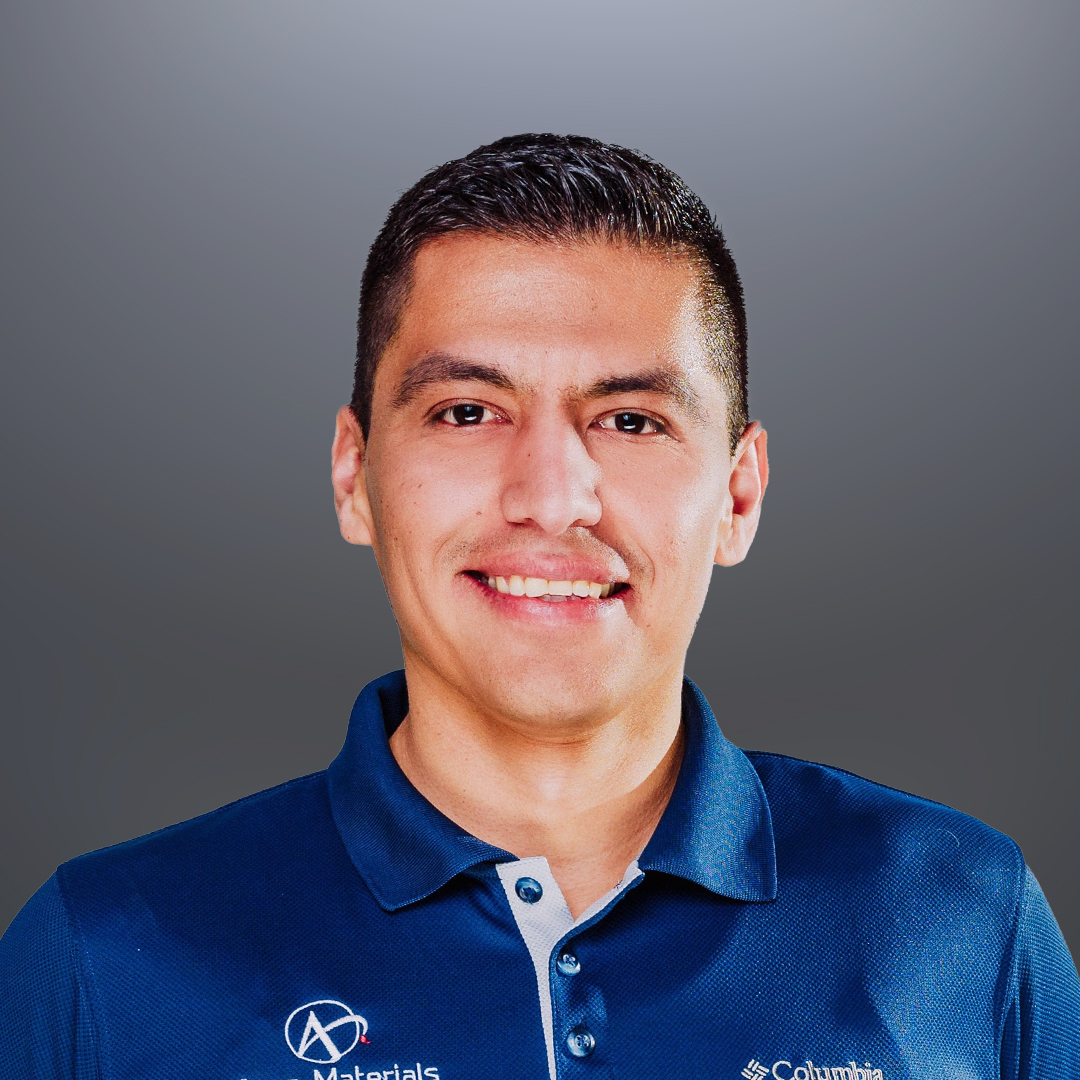
The scientist teaching machines to invent materials
Walk into the problem David Arreaga has spent a decade on and it sounds deceptively small: the sheet of plastic underneath a screen. Not the pixels, not the chips - the substrate holding everything together. Get it wrong and a display cracks, warps, or never makes it out of the factory. Get it right and electronics can finally do the thing everyone keeps promising: bend.
Arreaga is the co-founder and CEO of Ares Materials, a deep-tech company in Plano, Texas that designs optical polymers, cover windows, adhesives, and films for the display and consumer-electronics industry. The work is unglamorous by design. While much of the tech world chases software, his team is down in the chemistry - the layer most people never think about, and the one that quietly decides whether a foldable phone survives a year in your pocket.
What sets the company apart is not just what it makes but how it decides what to make. Ares pairs high-throughput experimentation with machine learning, running large batches of experiments and feeding the results into models that suggest which molecule to try next. The goal is blunt: take a process that historically ran on decades of trial and error and compress it into years.
"Instead of adapting the process to the polymer substrates, we designed a new class of substrate technology that adapts the polymer to the process."
— David Arreaga, on the core idea behind Ares MaterialsThat single inversion is the whole thesis. For years the flexible-electronics industry tried to force plastic substrates through manufacturing tools built for rigid glass and silicon. The plastics buckled under heat, drifted out of alignment, and reacted badly to factory chemicals. Arreaga and his co-founder Adrian Avendano took the opposite approach - engineer the polymer so that standard, high-volume microfabrication tools could work with it at high yield.
From a mechatronics degree to a materials lab
Arreaga did not start out as a chemist. He earned a bachelor's degree in mechatronics engineering - a discipline that blends robotics, electronics, and mechanical systems - before a scholarship from Mexico's national science council, CONACYT, brought him to the United States for graduate school. At the University of Texas at Dallas he completed a master's and then a Ph.D. in materials science and engineering.
His doctoral research ranged across thin-film lithium-ion batteries and flexible neural interfaces before it narrowed onto the polymer-substrate problem that would become the company. The engineering background shows in how he frames the business - less as a chemistry curiosity, more as a systems problem where the material, the process, and the machine all have to agree.
"Curved televisions, although a good start, is not even close to really unleashing the potential of flexible electronics."
— David ArreagaAn idea that started at Qualcomm
The seed of Ares Materials traces back to Avendano's work on Qualcomm's Mirasol display project. The two developed the concept through their PhD years and, in 2014, spun it out of UT Dallas's Advanced Polymer Research Lab. By 2016 the company had secured venture capital and was operating in earnest. In 2020 it folded machine learning into its development process, betting early that data science would become as important to materials discovery as the lab bench itself.
The chemistry underneath is thiol-click chemistry, a reaction family prized for being fast, clean, and highly tunable - qualities that matter when you are trying to dial in both mechanical flexibility and optical clarity at the same time. As Avendano has framed the industry's central tension, the problem has long been "the lack of tunability in mechanical properties, often at the expense of optical performance." Ares was built to break that trade-off.
The money and the momentum
The bet has attracted capital. In October 2024, Japan-based Denka invested to combine technologies for flexible OLED displays. Then in 2025 the company closed the first trench of a Series B - $12 million in equity and convertible notes, led by Black Diamond Ventures, with Moneta Ventures, L'Attitude Ventures, 1200VC, and Hunt Holdings joining. The funds are earmarked to scale Pylux, the company's Monolithic Cover Window for foldable displays, to commercialize solvent-free and PFAS-free adhesives and films, and to expand its AI and experimental infrastructure.
The sustainability angle is not incidental. Solvent-free and PFAS-free formulations sidestep some of the most scrutinized chemistries in electronics manufacturing, positioning Ares for a market where cleaner processes are becoming table stakes rather than a bonus.
What he's building toward
Ask Arreaga where this goes and the answer widens out well past phones. His vision is of a world where "the electronics, sensors, displays, are embedded in your ecosystem and available at all times" - ambient, flexible, woven into the objects around you rather than trapped behind a rigid rectangle of glass.
It is a long game, and Arreaga plays it like a scientist: patiently, from first principles, with the conviction that the boring layer everyone overlooks is exactly where the future gets decided. For now, the company he started in a university lab spans four countries and sits in the middle of one of consumer electronics' hardest races. The polymer underneath, it turns out, matters more than anyone thought.
In His Words"We designed a new class of substrate technology that adapts the polymer to the process."
"Curved televisions are not even close to unleashing the potential of flexible electronics."
"A world where electronics, sensors, displays are embedded in your ecosystem and available at all times."