On an 8,200-foot mountain in the Swiss Alps, Michael Markesbery discovered that the future looked suspiciously like a tire mascot. He had dressed for the cold in so many layers that his arms barely cooperated. He later compared the effect to the Michelin Man and to Randy, the immobilized younger brother in A Christmas Story. The scenery was grand. The silhouette was not.
This was during college, while Markesbery was backpacking across Europe. He had run with the bulls in Spain and collected the sort of stories that improve with distance. Yet the useful souvenir was a question: after centuries of invention, why did staying warm still require dressing like upholstered furniture?
The question followed him home to Miami University in Ohio. Markesbery was studying zoology, not textiles, and he was conducting undergraduate research. His friend Rithvik Venna was on a similar pre-med track. They began looking at insulation together. Many origin stories are polished until the founder appears destined for the work. This one is better because it took a zoologist, an irritated hiker and a material famous for being almost impossible to handle.
The useful embarrassment
In 2014, Markesbery received a $10,000 Astronaut Scholarship for his scientific work. The award brought more than money. It connected him with a community shaped by space research and pointed his attention toward aerogel, the ghostly solid often nicknamed frozen smoke. Silica aerogel can be more than 95 percent air. Its nanoporous structure makes it extremely light and very good at slowing heat transfer.
Aerogel also had a comic flaw for anyone hoping to put it in a jacket: traditional forms were brittle. Early flexible blankets could shed particles with movement and needed careful containment. A material may perform nobly in a laboratory and still behave like a difficult guest at a factory. Markesbery and Venna’s opportunity lived in that gap.
The translation problem
The team eventually infused aerogel into a flexible polymer composite. Solarcore Foam could be cut, compressed and incorporated into other products. In its current standard form, the insulation can be fabricated as thin as two millimeters. Thinness was not a decorative feature. In footwear, a bulky insulator steals space from the foot. In a battery pack, an extra millimeter may be a luxury. In an aircraft or vehicle, weight politely sends an invoice every mile.
“If it’s good enough for space, shouldn’t it be good enough for Earth?”Michael Markesbery
An awful jacket with excellent manners
The first commercial vehicle for the idea was OROS, an outerwear brand launched by Markesbery and Venna while they were still close to college. The name suggested mountains. The product made the science touchable. A customer did not have to understand nanopores; the customer only had to stand outside and notice the absence of shivering.
Markesbery has been wonderfully unromantic about the prototype. “The first jacket we made was awful, terrible, but it worked,” he said in a 2020 interview. That is a useful hierarchy. A handsome coat that fails in the cold is merely tailoring with confidence. Their ungainly version established the difficult part first.
The Kickstarter campaign moved quickly past its $100,000 goal, ultimately raising more than $300,000 and selling over 1,100 jackets. Later demonstrations made the invisible advantage theatrical: one memorable test involved liquid nitrogen and a jacket, the kind of spectacle that saves a materials startup several paragraphs of explanation. By 2018, Markesbery and Venna were on the Forbes 30 Under 30 list for Retail & Ecommerce. OROS would sell more than $10 million of outerwear to customers in more than 100 countries.
But the garment was also conducting market research. Brands including L.L.Bean, Cabela’s and Merrell began using the insulation in footwear and gloves. The warm jacket had become a persuasive sample book.
The company hiding inside the coat
OROS could have remained a consumer label with an unusual ingredient. Instead, the ingredient kept acquiring a life of its own. The company won work connected to U.S. Army cold-weather shelters. Solarcore insulation supported science hardware on a Blue Origin mission. Product teams saw uses in buildings, packaging, vehicles and energy systems. The same question appeared in different uniforms: how do you manage temperature when thickness and weight are expensive?
One material proposition, many rooms
The bars above show the widening sequence, not revenue or market share. The strategic movement matters more than a spurious precision. OROS began with a narrow, vivid product and discovered a broad industrial problem.
In 2023, Solarcore launched as a standalone materials brand. The following year, the original apparel operation moved into a separately backed licensed company. Markesbery explained the logic plainly: government, commercial and consumer work had gained their own momentum, and the apparel label no longer needed to carry all the burden of awareness. Solarcore could focus on selling materials; the clothing business could keep buying the insulation and pay royalties.
It resembled the ingredient-brand model used by Gore-Tex, but with aerogel-infused foam at the center. A $22 million Series B led by Airbus Ventures helped fund the expansion, followed by another $30 million financing in December 2024, also led by Airbus Ventures. Money is not proof of destiny. It is permission to attempt harder manufacturing and longer sales cycles with a larger calendar.
Solarcore can fabricate its aerogel-infused insulation at a thickness suited to spaces where conventional loft becomes a design penalty.
Portland, where the jackets already know everyone
The company moved from Cincinnati to Portland in 2019. Markesbery has said the move was about access to technical and outdoor-industry talent, along with a culture that fit the team. Portland put Solarcore near people who understood shoes, apparel, laminates, testing and the fussy choreography required to move a material through another company’s supply chain.
That choreography rarely makes the founder montage. A foam must survive compression. A roll must meet a factory’s dimensions. A formula intended for a battery needs different fire behavior from one placed in a boot. In 2024, Solarcore introduced Sc_Foam_FR, a fire-retardant version designed for narrow, safety-sensitive spaces. By 2026, applications included electric-vehicle batteries, compact HVAC units, aircraft interiors, recreational vans and cold-chain packaging.
The physics travels well. Better insulation can reduce heating and cooling demands in a shelter. In a camper van, it can preserve battery power for longer off-grid trips. In an aircraft, the same thin material can provide thermal and acoustic benefits without much weight. In footwear, it leaves room for toes, an innovation category with a demanding constituency.
“Being an entrepreneur is learning how to become comfortable being uncomfortable.”Michael Markesbery
Markesbery’s public personality is consistent with that sentence. He talks about grit, skeptics and napkin ideas. He also talks easily about the embarrassments, including the first bad jacket. The useful confidence here is not the belief that every idea is brilliant. It is the willingness to let reality improve the idea without surrendering the original question.
Belief comes back wearing a school lanyard
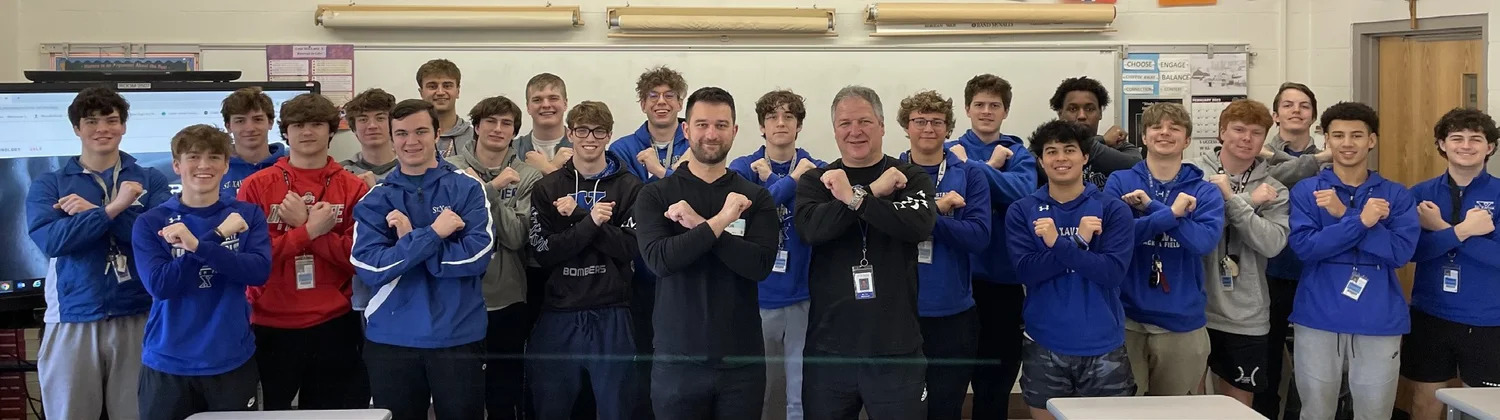
There is another loop in the story, quieter than the funding rounds. Markesbery graduated from St. Xavier High School in Cincinnati in 2011. He has since returned to its entrepreneurship classrooms as a guest. In 2024, he joined three other St. Xavier and Miami University alumni to create a six-figure scholarship endowment for St. Xavier graduates studying entrepreneurship at Miami.
He also stayed close to the Astronaut Scholarship Foundation. He served as a mentor and an adviser for aspiring technical founders. By 2026, the Foundation listed him on its board of trustees. The institution that once sent an astronaut to affirm a college student’s promise now has that former student helping choose how promise is supported. It is difficult to design a neater orbit.
Solarcore’s ambition remains materially large and verbally simple: more warmth, less bulk. Markesbery wants the company’s foam to move deeper into HVAC, batteries, automotive systems, aviation, construction and other settings where thermal efficiency is constrained by space. The slogan survives each market because it describes a tradeoff an engineer can recognize and a cold hiker can feel.
The mountain did not hand Markesbery a company. It handed him an irritation. The scholarship did not hand him a product. It handed him a strange material and a community willing to take science seriously. The jackets did not hand him the final business. They gave him evidence.
A decade later, the evidence arrives by the roll. It sits between battery cells, under boots and inside walls. The founder’s trick was to notice that a personal problem was shared by industries that had never bought a parka in their lives.