The Texas Startup That Coats Roofs So They Sweat Heat Back at the Sky
NanoTech Materials built a ceramic particle that radiates heat away instead of trapping it. Now it is selling that trick to roofers, oil refineries and towns bracing for the next wildfire.
The origin story that NanoTech Materials keeps telling on itself is almost too good: early batches of its now-patented coating were hand-crushed in a driveway, blended in kitchen blenders, and cured on a backyard BBQ. That was 2019, in a two-car garage outside Houston. In April 2026 the same company closed a $29.4 million Series A. The distance between those two facts is the story.
NanoTech Materials is an advanced materials company, which is a polite way of saying it sells paint that does something unusual. The product is a family of spray-on coatings built around one patented ingredient: the Insulative Ceramic Particle, or ICP. The particle does not try to block heat the way fiberglass batting does. It does something closer to what a lizard does in the desert - it radiates heat back out. Coat a roof with it and the surface sheds absorbed solar energy to the sky as long-wave infrared, while the film itself resists letting heat pass through. Cooler roof, cooler building, smaller air-conditioning bill.
That is the entire pitch, and it is deliberately unglamorous. NanoTech is not asking a building owner to choose between the planet and the balance sheet. It is arguing that the two point the same way.
It's crucial to recalibrate the sustainability narrative - environmental responsibility and financial return can go hand in hand.Mike Francis, CEO & Co-Founder
One particle, three problems
Most deep-tech companies hide behind a single hard word. NanoTech hides behind three: coatings, additive, thermal management. Underneath all of them is ICP, and the reason the company matters is that it built one additive versatile enough to attack three separate markets instead of three different chemistries.
How the Insulative Ceramic Particle works
High emissivity. The coated surface radiates absorbed heat back out as long-wave infrared, dumping energy to the sky instead of holding it.
Low thermal conductivity. Less heat passes through the coating film itself, so what does get absorbed moves slowly into the structure below.
Water-based and sprayable. The particle rides in ordinary acrylic coatings, so contractors apply it with familiar equipment - no exotic install.
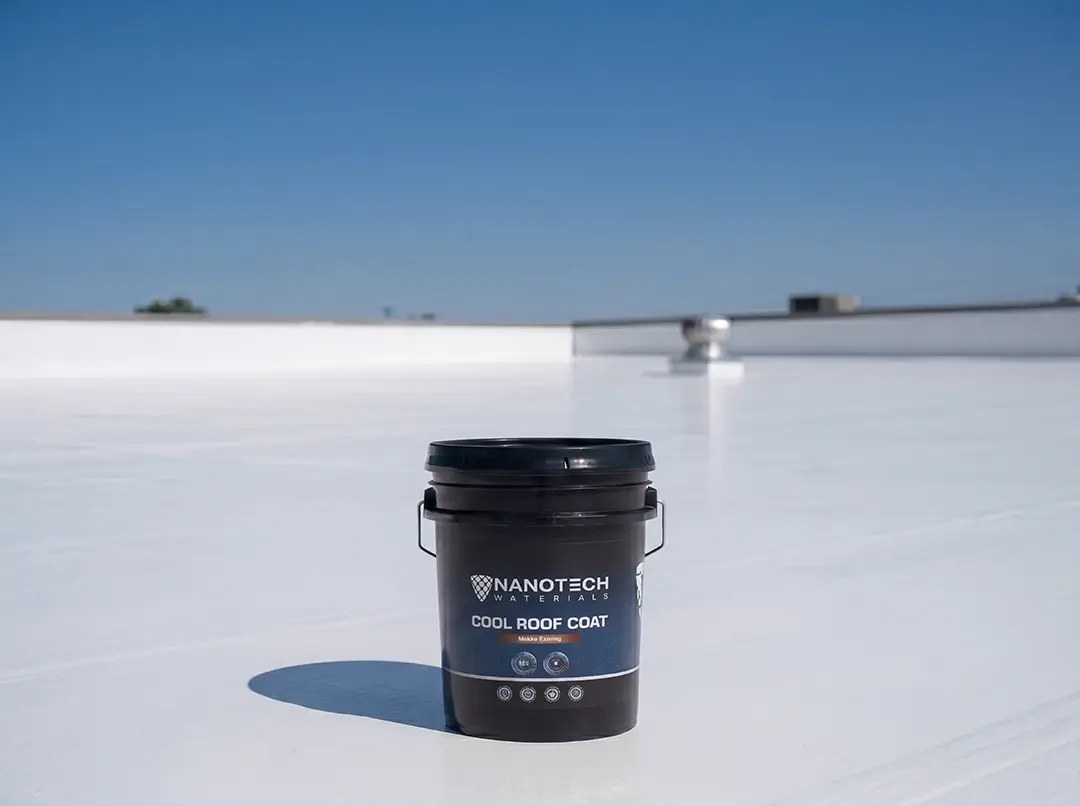
Cool Roof Coat is the flagship and the first product to market. NanoTech reports it can lower HVAC cooling loads by up to 49% and trim a building's Scope 2 carbon emissions in the same stroke. Chief Commercial Officer Carrie Horazeck has pointed to field data going back to 2022 showing HVAC consumption drops of roughly 30 to 40 percent. It is the kind of number that gets a CFO and a sustainability officer to sign the same purchase order.
Wildfire Shield, launched in early 2025, points the same particle at fire. It is a water-based acrylic coating for wooden and structural infrastructure - utility poles, bridges, the timber that keeps catching and carrying wildfire - engineered to resist temperatures up to 3,272F without producing toxins. In a fire season that keeps rewriting what "fire-resistant" means, a non-toxic coating that buys a wooden asset time is a straightforward sell to utilities and public works departments.

Insulative Coat: Cool Touch is the industrial play. Spray it on hot equipment and the surface temperature drops enough to keep it OSHA-compliant for workers who might brush against it, while the same film helps fight corrosion under insulation - the quiet, expensive problem that eats pipes and assets at refineries and chemical plants. It is the least photogenic product and possibly the stickiest business.
We have a pretty good amount of data from 2022 showcasing that we can reduce HVAC consumption within the building by about 30 to 40 percent.Carrie Horazeck, Chief Commercial Officer
The customers are boring, which is good
NanoTech's buyers are not early-adopter consumers. They are commercial building owners, roofing contractors working through a nationwide partner program, oil and gas operators, state departments of transportation, and utilities protecting timber and steel they cannot easily replace. The coatings have gone onto Caltrans highway shoring in California - the largest DOT in the country - and even into SpaceX launch areas, where heat exposure is extreme. This is a B2B materials company, and its addressable pain is heat and fire on infrastructure that already exists.
It helps that the founders are not first-timers guessing at an industrial market. Mike Francis is on his fourth company, with earlier exits behind him, and spent years inside Halliburton and National Oilwell Varco before starting NanoTech - he knows how an industrial buyer thinks and how long a procurement cycle runs. Hani Taan, the technical co-founder and CTO, came out of field engineering at Schlumberger. That pedigree is part of why an oil-services incubator handed them a desk, and why refinery operators will take a meeting about corrosion under insulation.
The investor list tells the same story. The $29.4 million Series A was led by HPI Real Estate & Investments, with participation from Goose Capital and manufacturing giant Milliken & Company. A real estate firm led a climate-materials round - not a coastal green fund - because property owners feel the cooling savings on their own operating statements. When the people who pay the AC bill write the check, the product tends to work.
The edgeWhy not just buy a white roof?
Reflective and elastomeric roof coatings already exist, and they are not nothing - a white roof reflects sunlight. NanoTech's argument is that reflection alone leaves heat sitting on the surface, while ICP adds the emissivity to actively radiate it away, plus the insulative resistance to slow whatever remains. And crucially, the same particle stretches into fire protection and industrial insulation, which a plain reflective coating cannot do. The competition is fragmented across three categories - cool-roof brands like GAF, Sherwin-Williams and Henry, intumescent fire coatings, and traditional industrial insulation - and NanoTech shows up in all three with one platform. Its Cool Roof Coat carries a Solar Reflectance Index of 104, and the factory is ISO 9001-certified, the sort of unglamorous credentials that matter when a facilities manager is comparing spec sheets rather than press releases.
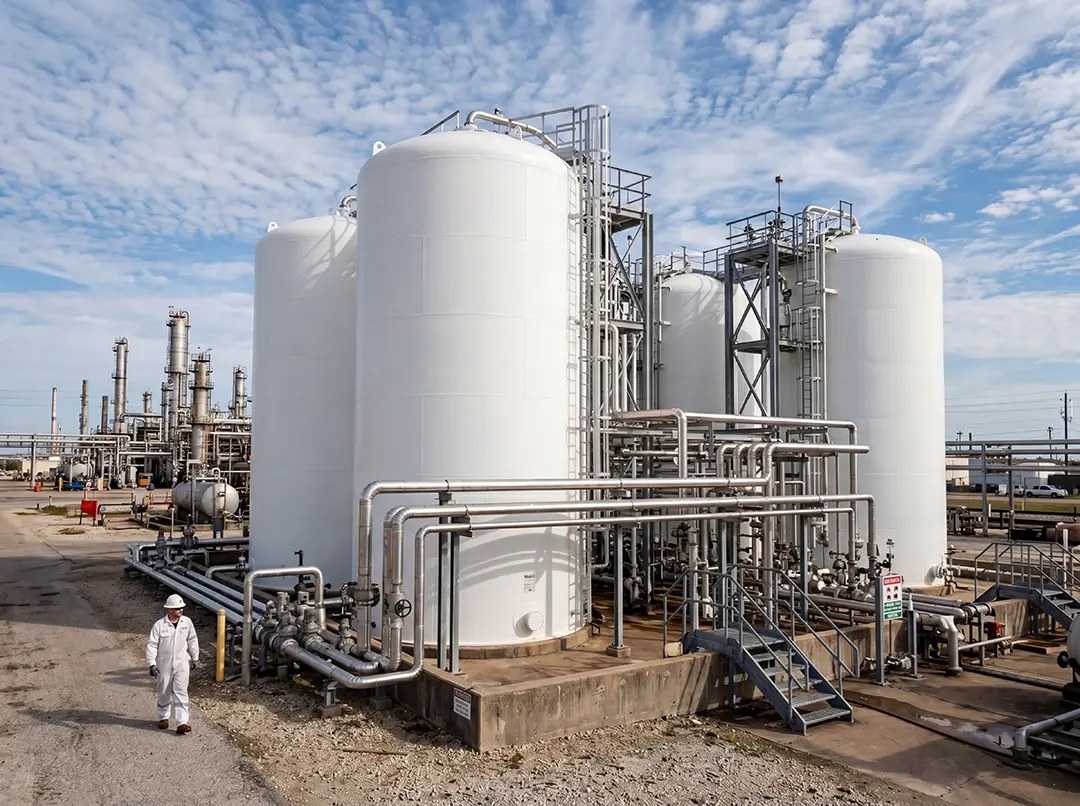
The credibility that lets a young company sell into refineries and DOTs did not appear overnight. NanoTech was the very first startup admitted to Halliburton Labs when the oil-services giant launched its incubator in 2020 - years of facilities, technical expertise and a Rolodex that matters when your customer is an industrial buyer. In November 2024, TIME named the Insulative Ceramic Particle to its Best Inventions of the year, the kind of stamp that shortens a procurement conversation.
The build-outTurning a chemistry into a factory
The unglamorous middle of every materials company is manufacturing, and that is where the Series A money goes. NanoTech runs a 43,000-square-foot production facility in Katy, Texas, and in 2024 expanded into greater Houston with a second building that lifted ICP manufacturing capacity by about 340%. The garage is long gone; the challenge now is scaling output without giving away margin, and pushing into markets as far as the Middle East and Singapore.
Founded in a garage
Mike Francis and Hani Taan start NanoTech, hand-mixing early ceramic batches.
Halliburton Labs' first startup
NanoTech becomes the inaugural company in Halliburton's clean-energy incubator.
$5M seed round
Ecliptic Capital leads a seed round to commercialize the ICP coating.
Cool Roof Coat goes nationwide
The flagship roof coating launches through a nationwide partner program.
Katy factory and TIME honor
Moves into a 43,000 sq ft facility, expands Houston, lands on TIME's Best Inventions.
Wildfire Shield launches
A fire-protective coating for wooden and structural infrastructure debuts.
$29.4M Series A
HPI Real Estate & Investments leads, bringing total funding to about $34.4M.
There are honest limits to the pitch. A coating is not a cure - Wildfire Shield buys time and resistance, not immunity, and the cooling numbers depend on climate, building type and how the roof was performing before. NanoTech's own framing is careful about that: the value is measured against the AC bill and the replacement cost, not against a miracle. In a market where heat is starting to feel like the new flood, "cheaper than rebuilding" is a strong enough position.
The substantial decline in CO2 emissions and energy costs forms the cornerstone of our long-term strategy.Mike Francis, CEO & Co-Founder
For a company that started with a kitchen blender and a BBQ, the ambition is modest and specific: make one ceramic particle boring enough, and cheap enough, that coating your roof against heat becomes as ordinary as coating it against water. If NanoTech pulls that off, the most interesting thing about it will be that nobody notices.