Founder / Executive / Author
David Jones
He walked away from running one of the world's biggest ad networks to bet that generative AI would rewrite how brands market. That bet became The Brandtech Group.
Founder & CEO, The Brandtech Group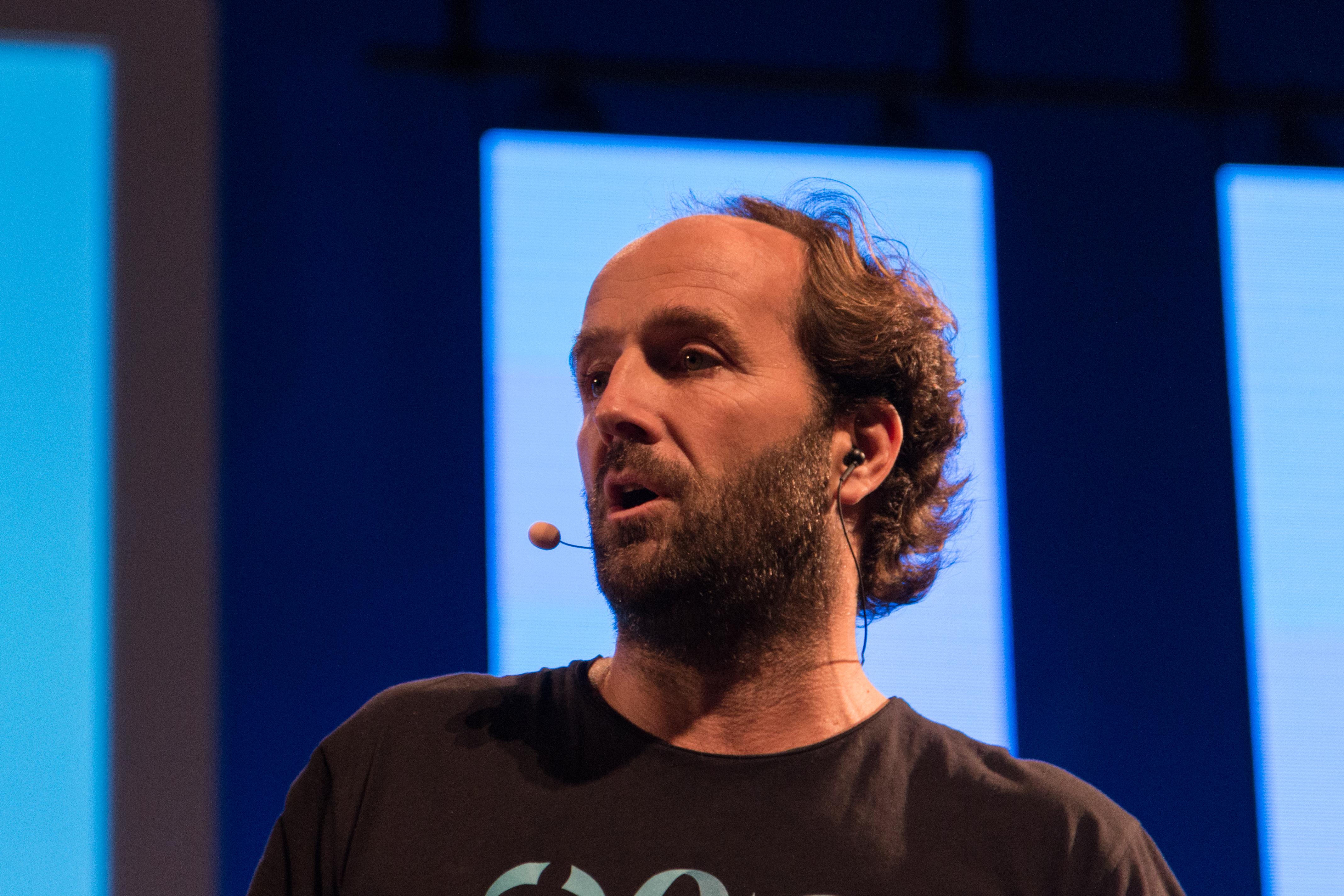
He walked away from running one of the world's biggest ad networks to bet that generative AI would rewrite how brands market. That bet became The Brandtech Group.
Founder & CEO, The Brandtech Group
David Jones spends most of his time now arguing with the advertising business he helped run. His claim is blunt: the biggest brands in the world are already using generative AI to make their marketing, and the agencies meant to serve them are, in his words, "missing in action."
That is the stance of a man who has staked a company on it. Jones is the founder and CEO of The Brandtech Group, the digital-only marketing company he describes as the world's leading generative-AI marketing business. It exists to help global brands do their marketing "better, faster and cheaper," and it is built around software and AI production rather than the traditional agency model of large creative teams and long timelines.
The through-line of his current work is a number he repeats often: he expects roughly 70% of marketing to be produced with AI, with human creativity accounting for the remaining 30%. He does not present this as a threat to be managed so much as a shift to be embraced early. When OpenAI's Sam Altman suggested generative AI would replace 95% of what agencies do, Jones's response was not defensive. "We agreed with it," he said. "It's why we created the company."
Jones did not arrive at this position as an outsider throwing rocks. He arrived as someone who had already climbed to the summit of the old system. Born in Altrincham, near Manchester, in 1966, he started as an account executive at BDH Manchester before moving through JWT in Paris and Lowe Europe, then becoming the youngest board member at London's AMV BBDO. Fluent in English, French and German, he built a career that crossed borders early.
In 1998 he joined the Havas-owned Euro RSCG network as CEO of its Australian operation at age 32. He rose quickly: CEO of Euro RSCG New York in 2004, CEO of Euro RSCG Worldwide in 2005, and by 2011 CEO of the entire Havas network, media included. Along the way his agency was named global agency of the year and he advised political campaigns and global institutions. In 2012 his earnings were reported in the millions of euros. It was, by any measure, one of the biggest jobs in the industry.
Then in 2014 he left. A year later he raised around $350 million and launched You & Mr Jones, pitching investors on the idea that technology, not more people, would be the engine of modern marketing. He coined a word for the category: brandtech. In 2022 the company took that word as its name.
The clearest expression of the thesis is Pencil, the group's AI content platform, and its Pencil Pro tool. Jones points to figures from a single recent quarter in which three of the world's ten largest advertisers used the platform to generate 235,000 pieces of in-market content. He cites results of 62% faster production, 55% lower cost, and 40% better return on investment. Whether or not those numbers hold across the industry, they are the argument he is making in public, repeatedly, to anyone who will listen.
Figures Jones cites for Pencil Pro output across major advertisers in a single quarter.
He is also making predictions about what comes next. Jones has said 2026 will be "the year of AI agents," describing systems that can be daisychained together to analyze trends, generate campaign ideas, produce key visuals and even build entire videos at what he calls infinite scale. A year and a half ago, he notes, it was not possible to create 100% of a TV commercial with generative AI. Now, he argues, it is.
There is an older strand to Jones that predates the AI conversation. In 2009 he co-founded One Young World with Kate Robertson, a global forum that gathers young leaders from around the world. The same year, at the request of former UN Secretary-General Kofi Annan, he built the open-source TckTckTck climate campaign ahead of the Copenhagen conference, which recruited more than 17 million supporters it called "climate allies."
In 2011 he published Who Cares Wins: Why Good Business Is Better Business, arguing that responsible business practices were becoming a competitive advantage rather than a cost. He built a framework he called the "Social Business Idea," the point where a company's commercial strengths meet the values of its customers. It was a purpose-driven argument made well before ESG became a boardroom staple.
Jones has lived and worked in the UK, Germany, France, Australia and the United States, and today keeps homes in New York and on the French island of Ile de Re. That mobility shows up in how he talks about markets and technology - as things that don't respect borders. He was an early investor in Niantic, the company behind Pokemon Go, and for a period built much of his founder's letter around the promise of the metaverse and Web3 before pivoting his public focus squarely onto generative AI.
The recognition has followed. He has been named to Ad Age's and Crain's "40 Under 40," inducted into the American Advertising Federation Hall of Achievement, named a World Economic Forum Young Global Leader, and listed among Britain's 500 most influential people by The Sunday Times. In 2025 Goldman Sachs named him one of its Most Exceptional Entrepreneurs and he was recognized as Entrepreneur of the Year for his generative-AI leadership.
What ties the strands together is a consistent instinct: move before the rest of the room is ready. He did it leaving Havas, he did it with purpose-driven business, and he is doing it now with AI. The provocations he throws at his old industry are, in a sense, a description of his own method. Watch where the biggest clients are already going, and get there first.
Rises through BDH Manchester, JWT Paris and Lowe Europe; becomes the youngest board member at AMV BBDO in London.
Appointed CEO of Euro RSCG Australia at age 32, beginning a fast climb through the Havas network.
Named CEO of Euro RSCG Worldwide and Directeur General of Havas.
Co-founds One Young World with Kate Robertson and builds the TckTckTck climate campaign at Kofi Annan's request.
Becomes CEO of the entire Havas network and publishes Who Cares Wins.
Leaves Havas to start something new.
Raises roughly $350 million and launches You & Mr Jones, coining the term "brandtech."
Rebrands the company as The Brandtech Group.
Named a Goldman Sachs Most Exceptional Entrepreneur and Entrepreneur of the Year for generative-AI leadership.
Fluent in three languages - English, French and German.
Has lived and worked across the UK, Germany, France, Australia and the US.
Was an early investor in Niantic, the studio behind Pokemon Go.
Keeps a home on the French island of Ile de Re.
Advised David Cameron and the UK Conservative Party during his Havas years.
Raised around $350 million for his company on the strength of a single PowerPoint.