The Car That Rewrote Its Own Story
The Prius used to be the car people bought when they stopped caring about cars. That era is over.
For two decades, the Toyota Prius sat at the intersection of environmental virtue and aesthetic punishment. You got the moral high ground, but you also got the looks of a hospital shuttle. People who bought Priuses told themselves it was about the planet. Partly true. Mostly, it was about the math - 50 miles per gallon is a compelling argument when gas hits four dollars.
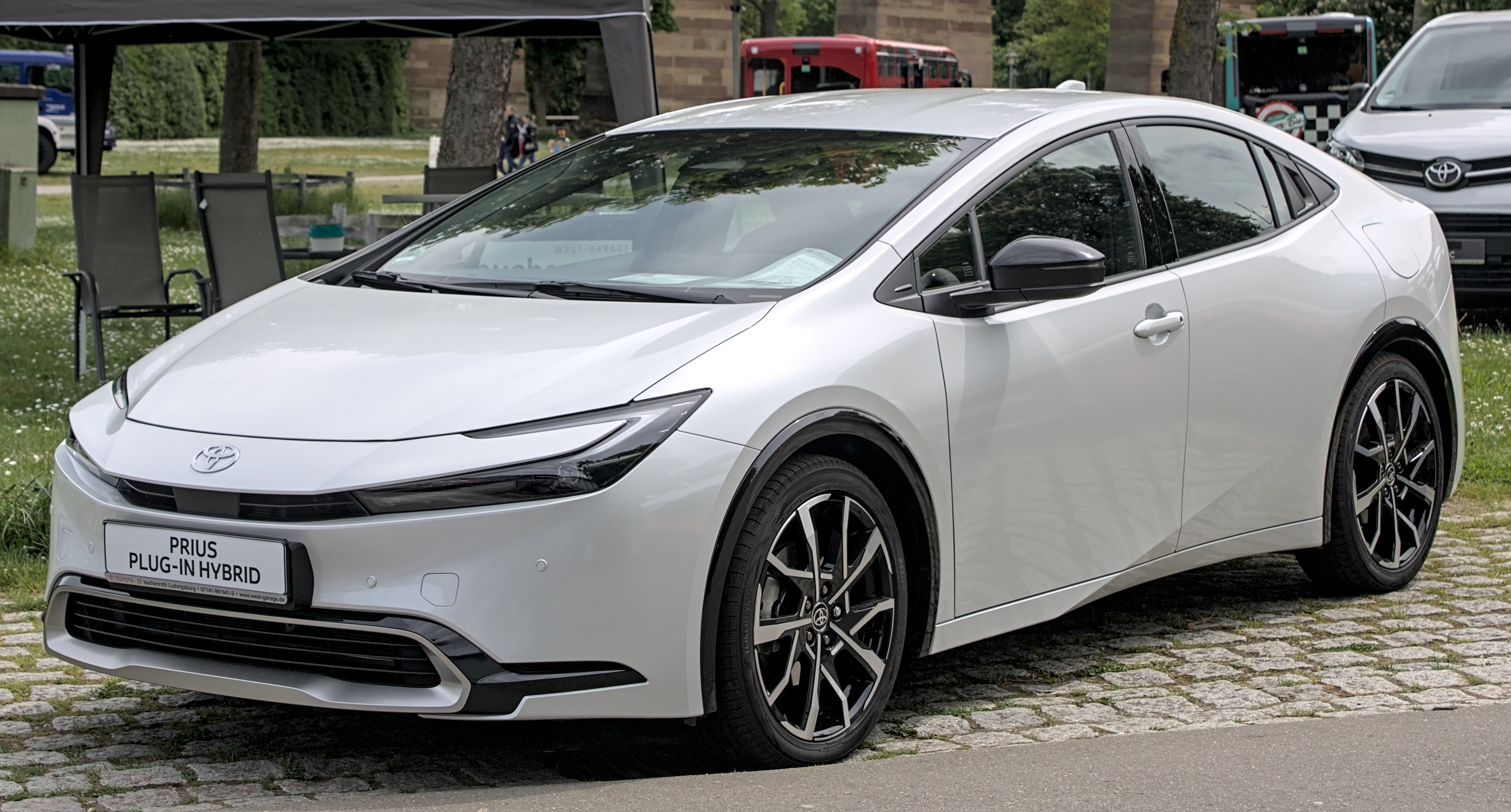
Then Toyota did something unexpected. They started over. Not quietly. Not with a mild facelift and a new color option. They rebuilt the Prius Prime from the ground up in 2023 with a body so dramatically styled that reviewers ran out of compliments before they ran out of column inches. One called it "one of America's best-looking hatchbacks." Another noted the coupe-like hidden rear door handles - a design trick that had journalists triple-checking if it was actually a two-door. It isn't. It has four. Toyota just didn't want you to know that at first glance.
This is the story of how a car famously associated with compromise became the 2024 North American Car of the Year, won 17 industry awards within months of launch, and set a Guinness World Record for coast-to-coast fuel efficiency - all while remaining a sensible, family-practical, sub-forty-thousand-dollar hatchback.
Not just handsomely styled hatchbacks - they represent automotive innovation, with the plug-in version delivering more than 40 miles of pure electric range.
- Matt DeLorenzo, NACTOY JurorWho This Car Is Actually For
Let's be specific, because the Prius Prime deserves specificity. This is a car for people who commute 30 to 50 miles a day and are quietly furious about how much of their paycheck goes to a gas station. If your daily round trip is under 44 miles, you can drive the Prius Prime on pure electricity - all week, every week - and never visit a pump. You plug it in at night like your phone. You arrive at work having burned zero gasoline. The math is violent in your favor.
This is also a car for the person who wanted an EV but didn't want the anxiety. Range anxiety - the cold sweat that accompanies a road trip in a battery-only car - is simply not a factor here. The 13.6 kWh battery runs out, the 2.0-liter engine quietly takes over, and you get 52 miles per gallon on the rest of the tank. You can drive from Los Angeles to New York on one charge and whatever the gas stations along I-40 decide to charge you that week.
The redesigned 2023+ generation also picked up a new demographic: younger buyers who had written off the Prius as their parents' environmental statement. The car they're encountering now is 220 horsepower, does 0-60 in 6.6 seconds (35% quicker than the model it replaced), and has a drag coefficient of 0.27 Cd that makes it more aerodynamic than most sports cars. It doesn't look apologetic. It looks like it wants to go somewhere.
Real owners are reporting 90-120 MPG in blended daily driving. Yes, you read that right. Gas becomes optional, not mandatory.
What Twenty-Seven Years of Hybrid History Looks Like
Context matters. The Toyota Prius launched in Japan in October 1997 as the world's first mass-produced hybrid passenger car. Not a concept. Not a limited edition. A production car, available at Toyota dealerships, that combined a gasoline engine with an electric motor. The automotive industry watched skeptically. Then it watched the cars sell.
The first plug-in variant arrived in 2012 - a Prius with a 4.4 kWh battery that could do about 11 miles on electricity before switching to hybrid mode. It was modest. It was enough: that first-generation plug-in Prius became the second-most-sold plug-in electric car globally in 2012. The world had a taste of something.
The "Prime" name arrived in 2016, with a larger 8.8 kWh battery, 25 miles of electric range, and the first meaningful step toward being a real plug-in vehicle. But the design remained conservative. The performance remained polite. The audience remained unchanged.
The third generation - the car you can buy today - arrived at the 2023 New York International Auto Show and landed like a pronouncement. The 13.6 kWh battery (54% larger than its predecessor). The 44-mile electric range that covers 95% of American daily commutes without a drop of gasoline. The 127 MPGe that makes every competing PHEV look at its shoes. And that body - angular, dramatic, borderline aggressive - that announced Toyota was no longer satisfied with the hybrid lane it had created.
The Spec Sheet That Stops Arguments
Numbers, because some arguments need numbers. The Prius Prime SE - the base trim at $32,675 before incentives - delivers 44 miles of EPA-estimated electric range and 127 MPGe when running on electricity. Switch to hybrid mode when the battery depletes, and you get 52 combined miles per gallon. The XSE trim, with slightly larger wheels, gets 39-40 miles of EV range and 114 MPGe.
The powertrain is a 2.0-liter inline four-cylinder paired with an electric motor system, producing 220 net combined horsepower. The 0-60 time of 6.6 seconds puts it in the range of cars that cost considerably more and care considerably less about fuel economy. The drag coefficient of 0.27 Cd is engineering done quietly - you don't see aerodynamics, you feel them at highway speeds in a car that seems to want to keep going.
Charging the 13.6 kWh battery takes about 4 hours on a Level 2 (240V) home charger, or roughly 11 hours on a standard 120V outlet. The XSE Premium adds an optional 185-watt solar roof that can add range while the car sits in a parking lot under the California or Florida sun - a feature that sounds gimmicky until you realize it's essentially free electricity delivered by the sky.
Toyota's battery warranty is 10 years or 150,000 miles - transferable to a second owner. That is the longest PHEV battery warranty available from any manufacturer. It signals confidence. It should signal confidence to buyers too.
Things That Are True And Worth Knowing
- The Prius Prime qualifies for up to $3,750 in US federal EV tax credits, making the effective SE price under $30,000.
- Toyota Safety Sense 3.0 is standard on every trim - adaptive cruise, lane departure, pre-collision with pedestrian detection, road sign recognition.
- Six USB-C ports are distributed throughout the cabin. Six. The family in the back row has no charging complaints.
- The 2026 model adds a Nightshade Edition with blacked-out trim. Toyota knows its new audience.
- As of 2025, Toyota renamed it "Prius Plug-in Hybrid" for clarity. The driving experience is unchanged.
The Technology Stack in Plain English
The Prius Prime runs on what engineers call a series-parallel plug-in hybrid system. In EV mode, the electric motor drives the wheels using stored battery power. When the battery drops to a threshold or when you demand more power than the battery alone can deliver, the gasoline engine engages - either to drive the wheels directly through the planetary-type CVT, or to generate electricity that feeds the motor. The result is a system that optimizes for efficiency in nearly every scenario without requiring any driver input.
Toyota Safety Sense 3.0, standard across all trims, uses a combination of radar and cameras to provide pre-collision warning (with recognition of pedestrians, cyclists, and other vehicles), adaptive cruise control that maintains following distance in traffic, lane departure alert with steering assist, and road sign recognition that can update your cruise control speed automatically. The XSE Premium adds Traffic Jam Assist - hands-free operation at speeds under 25 mph in stop-and-go conditions.
The infotainment runs Toyota's Audio Multimedia system on an 8-inch or 12.3-inch touchscreen, with Drive Connect cloud-based navigation that updates in real time and an intelligent voice assistant. The system supports wireless Apple CarPlay and Android Auto. Digital Key technology - available on higher trims - means your phone is your car key.
The Honest Competition Report
The PHEV segment is smaller than it should be, mostly because carmakers have struggled to make plug-in hybrids that people actually want. The Chevrolet Volt (53 miles EV range, discontinued 2019) and Honda Clarity PHEV (48 miles, discontinued 2021) had longer electric ranges than the previous Prius Prime but are no longer available. That tells a story about how hard this market is to sustain.
Active competitors include the Ford Escape PHEV (37 miles EV range), the Hyundai Tucson PHEV (33 miles), and the Kia Niro PHEV (33 miles). All are capable vehicles with their own advantages - the Tucson offers standard AWD, the Escape is available in an SUV body style - but none match the Prius Prime's 127 MPGe efficiency or Toyota's 10-year battery warranty.
Within Toyota's own lineup, the RAV4 Prime is the logical comparison: an SUV sibling with 42 miles of EV range and standard AWD, but it costs more and delivers lower efficiency. If you need the cargo space and ground clearance, the RAV4 Prime is Toyota's answer. If you primarily care about efficiency and daily commute economics, the Prius Prime is the better argument.
What the Awards Are Actually Saying
Seventeen industry awards in the months following the 2023 launch is not a coincidence and not a campaign. The 2024 North American Car of the Year jury - automotive journalists who vote individually - picked the Prius and Prius Prime. MotorTrend gave it Car of the Year. The World Car Awards gave it Car Design of the Year. The IIHS gave it a Top Safety Pick+ in 2025. Car and Driver put it on its 10Best list.
What's being rewarded is not novelty for its own sake. It's the convergence of things that are genuinely difficult to achieve simultaneously: excellent efficiency, meaningful electric range, competitive performance, sharp design, and a price that doesn't require a second mortgage. The Prius Prime is not the cheapest car in its segment. It is the one that does the most things well at once.
The Guinness World Record for highest MPG coast-to-coast drive is a theatrical flourish, but it points at something real: the platform is so efficient that, in controlled conditions, it achieved numbers that automotive journalists still argue about at conferences.
The Verdict: Is It Worth It?
For the right buyer, the Prius Prime is not just worth it. It's the obvious choice.
If you commute under 44 miles daily, you will spend almost nothing on gasoline. If you have a 240V outlet at home (or can install one), charging costs are minimal - typically $1 to $2 for a full charge at average US electricity rates. The federal tax credit of up to $3,750 brings the effective SE price to approximately $29,000, which puts it in direct competition with non-hybrid compact cars that will cost you significantly more to fuel over five years.
The 10-year battery warranty removes the primary anxiety about hybrid ownership: what happens when the expensive part wears out? Toyota's answer is: not your problem for a decade. The resale value on recent Prius models has remained strong, partly because the brand has rebuilt its reputation and partly because fuel-efficient cars look better every time a gas price spike makes the news.
The honest counterargument: if you regularly drive over 100 miles on highway trips, need AWD for winter driving, or require significant cargo space, other vehicles serve you better. The Prius Prime is front-wheel drive only in PHEV configuration, and the lower roofline of the 2023+ design costs some cargo room compared to older models.
But if your life is a daily commute, school runs, weekend errands, and occasional longer trips - which describes most American drivers - the Prius Prime is a machine built precisely for you. It is efficient without being tedious, stylish without being impractical, and technological without being complicated. Toyota took the car that people tolerated and turned it into one that people want.
That's not a small thing. That's the whole thing.