The Story
The Car That Was Never Supposed to Exist
There is a car company in China building electric vehicles that scare Porsche. It was not supposed to happen this way. But here we are.
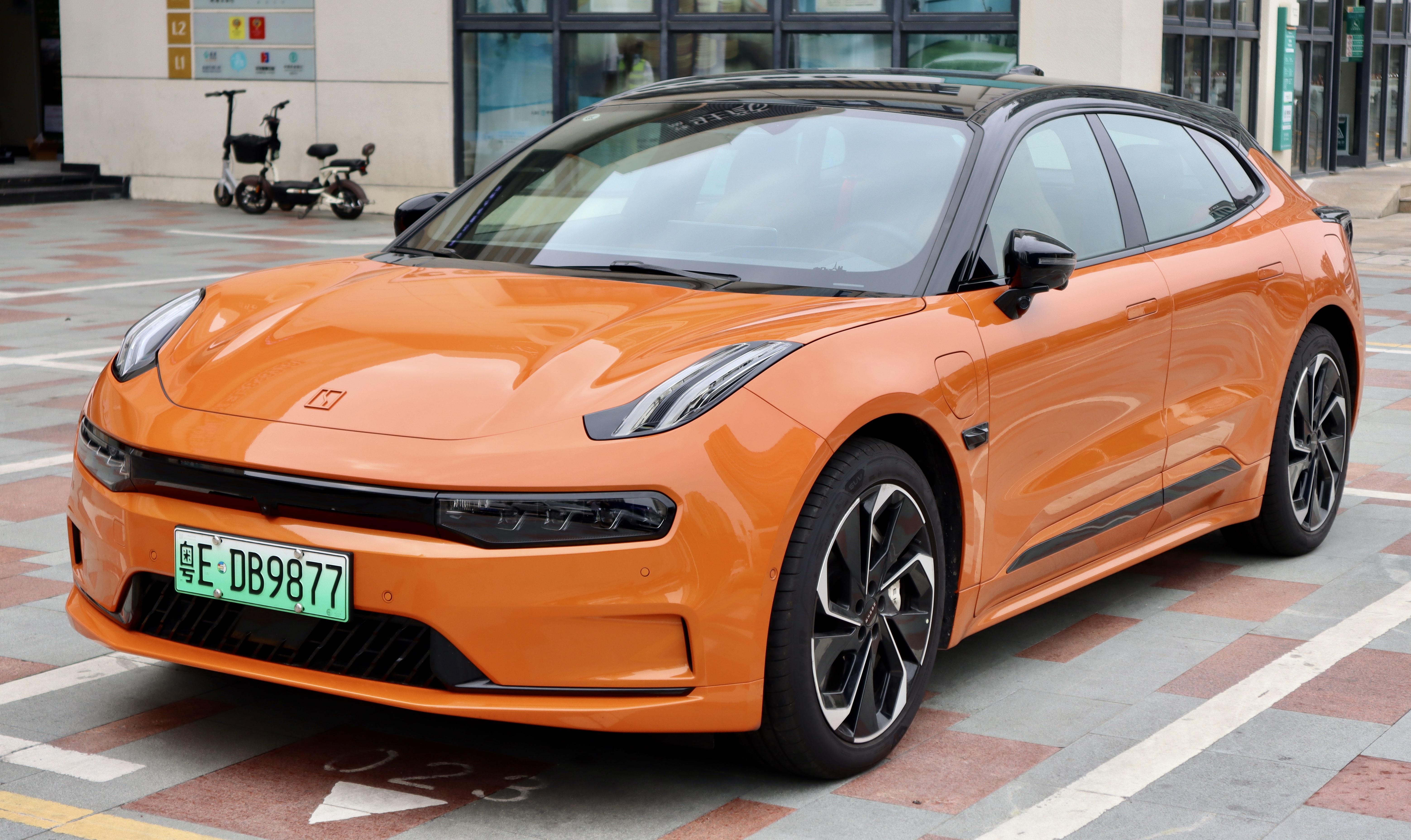
The Zeekr 001 began life as someone else's idea. It was originally designed for Lynk & Co - another Geely brand - before being quietly reassigned at the last minute to a new sub-brand that had not yet been named. That sub-brand became Zeekr. The car became the 001. The name is literal: it is Zeekr's very first vehicle, and someone had the nerve to put that fact on the bodywork in bold.
When Zeekr unveiled it at Auto Shanghai on April 16, 2021, the automotive press did what automotive press always does with Chinese cars: it was cautiously polite. But the car had different plans. It went into production in October 2021, started arriving in European driveways by 2023, and by early 2026 had notched up more than 301,720 deliveries. That is not a curiosity. That is a movement.
"This thing isn't 'good for a Chinese car.' It's just good - and better than a lot of more expensive EVs. It should worry legacy luxury brands."
- Andrei Nedelea, InsideEVs
Who It's For
The Buyer Zeekr Is Hunting
The Zeekr 001 is not for everyone. It is for a specific person who has done the math and found the answer unsatisfying.
That person wants the shape of a Porsche Taycan Sport Turismo - the swooping 5-door fastback that looks like the future is catching up to a Formula 1 car in the outside lane. They also want the performance to back up those looks: triple-digit horsepower figures, sub-four-second 0-100 km/h times, a range that does not require careful rationing. And they want it without the six-figure price tag that has historically been the toll road to those ambitions.
That buyer exists in enormous numbers. In China, they are urban professionals in their mid-30s to late 50s, already comfortable with Chinese tech brands in every room of their house, ready to extend that comfort to their driveway. In Europe, they are EV-curious performance buyers who test-drove a Polestar 2, liked it, and want more car for less money. They are the people who read spec sheets the way others read novels - and then they see the Zeekr 001's spec sheet and they have questions.
Good questions.
The Platform
Built on Borrowed Genius
The Zeekr 001 sits on Geely's SEA1 platform - the Sustainable Experience Architecture, a modular EV underpinning shared with Polestar and Volvo vehicles. That is not a marketing claim. The SEA1 was designed from scratch as an EV platform, not adapted from a combustion-engine architecture, and it shows in the way the 001 is packaged: flat floor, long wheelbase, low centre of gravity.
The body is arresting. Five doors, fastback roofline, a drag coefficient of 0.23 Cd - that is lower than most sports cars. Designer Chris Chen gave it the proportions of a grand tourer that happens to have practical rear access. The comparison to the Taycan Sport Turismo is unavoidable and entirely intentional. Zeekr was not trying to hide the inspiration. The asking price, however, is a very different conversation.
The 2024 refresh standardized 800V architecture across the lineup - a significant engineering step that most European competitors were still treating as a premium add-on. The 2026 model pushed that to 900V with 12C charging capability, delivering a peak recorded rate of 546 kW at a Zeekr V3 Supercharger. The practical implication: 10-80% battery state in 7 minutes. That is no longer a spec-sheet curiosity. That is changing the calculus on road trips.
Inside, the 2024 refresh brought a 15.05-inch 2.5K OLED center screen and a 35.5-inch augmented reality head-up display projecting navigation, speed, and safety data across the width of the windshield. The infotainment runs Zeekr OS 6.0 - a software stack built on the recognition that the car is now a compute platform that happens to have wheels.
The Tech Inside
Silicon in the Seats
The 2025 model introduced Haohan Smart Driving 2.0, powered by dual NVIDIA Orin chips delivering 508 TOPS of compute. One LiDAR unit, twelve high-definition cameras, five millimeter-wave radars, and twelve ultrasonic sensors form the perceptual apparatus. The system offers full-scenario autonomous driving assistance - Zeekr's answer to Tesla's Autopilot, developed on a timeline that surprised people who were not paying attention.
The battery supply chain runs through CATL, China's dominant battery manufacturer. Depending on trim and model year, the 001 is available with NMC chemistry, LFP (Shenxing cell), or the flagship Qilin battery technology - a structural cell pack that improves both energy density and thermal performance. The special 2023 Ultra Long Range Edition used a 140 kWh Qilin pack to achieve 1,000 km of CLTC range - enough to drive from London to Edinburgh and back without touching a charger. Zeekr limited production to 1,000 units, which immediately made it an object of desire.
The third-generation permanent magnet synchronous motors achieve 97.86% efficiency - among the highest in any production vehicle. Efficiency at that level is not an engineering footnote. It means less heat, less energy waste, and more range for the same battery capacity.
The FR Variant
More Power Than an F1 Car
And then there is the 001 FR.
Four independent motors. 1,265 horsepower. 931 kW. A 0-100 km/h time of 2.02 seconds. A modern Formula 1 car - a machine that exists at the intersection of engineering and regulatory compliance - produces approximately 1,000 hp from its combined power unit. The Zeekr 001 FR exceeds that figure. It is also, as of early 2026, a car you can buy.
The FR's four independent motors enable torque vectoring so precise that the car can perform a "tank turn" - rotating on its own axis, like a military vehicle, with the front and rear wheels spinning in opposite directions. This is not a practical feature. It is a proof of concept that Zeekr's engineers have a sense of humor about physics.
Monthly production is capped at approximately 99 units. The 001 FR is not a car for everyone. It is a car for people who want the most extreme expression of what this platform can do, and who are comfortable with the knowledge that almost no one else will be driving one.
"The 001 FR is the most powerful car I've ever driven. It could be the most powerful car many F1 drivers have driven, too."
- EV Central, December 2024
Safety and Controversy
The Upgrade That Enraged Its Own Owners
The Zeekr 001 holds 5-star ratings from Euro NCAP, Green NCAP, and China's C-NCAP - all three major consumer safety assessment programs. That is not common. That is the automotive equivalent of a clean sweep, and it required genuine engineering intent rather than a lucky outcome on any single test protocol.
The safety technology extends to what Zeekr calls G-AES: an emergency active safety system capable of automatic obstacle avoidance at speeds up to 130 km/h, and all-scenario tire blowout protection to 120 km/h. These are not typical features in a car at this price point.
The controversy came with the upgrades. In early 2024, Zeekr launched a major refresh with 800V architecture, new interior, and reduced prices. Thirty thousand firm orders followed in the first month. But then, just six months later in August 2024, they launched another significant update with dual NVIDIA Orin chips. And in October 2025, the 2026 model arrived with the 900V architecture and the Starry Sky Concert Hall roof - an animated panoramic display with star and constellation patterns.
Owners of earlier models protested in China. The depreciation implications were real. Zeekr had moved fast in a way that made its own customer base feel like beta testers. That tension - between a company iterating at software speed and a customer who bought what they thought was hardware - is one of the defining conflicts of the modern EV era, and Zeekr is running directly into it.
The European Ambition
Stuttgart Is Watching
The 001 arrived in European markets in 2023 at approximately £51,400 / €68,000 - well below the entry price for a Porsche Taycan Sport Turismo, which begins at around £87,900 before options. For a car with comparable visual impact, triple five-star safety ratings, and superior charging speed, the value equation is difficult to dismiss.
Auto Express called it a brand that UK manufacturers "need to be taking seriously." Top Gear described it as a "swoopy all-electric estate in the same vein as the Porsche Taycan Sport/Cross Turismo, but with a price tag that's actually closer to the bargain MG5 EV." That observation - that the 001 occupies a premium design and performance position while pricing closer to a budget alternative - captures the specific market disruption Zeekr is executing.
This is not a fluke. Geely's ownership of Volvo gave Zeekr access to European engineering standards, safety testing protocols, and supply chain relationships. The SEA1 platform was designed with European certification in mind. The brand has moved methodically, not hastily, toward European market credibility - and it is earning it.
When Zeekr listed on the New York Stock Exchange in May 2024 under the ticker ZK, raising approximately $441 million, it was signaling that the ambition extends beyond China. The 001 is the opening statement. There will be more.
What The Press Says
Critics Weigh In
"Despite its age, the Zeekr still left me pretty impressed... It should worry legacy luxury brands."
InsideEVs - Andrei Nedelea, 2024
"If you take one thing away from a drive in the Zeekr 001, it's that this is a brand that the UK's established premium car manufacturers need to be taking seriously."
Auto Express, 2023
"Essentially, it's a swoopy all-electric estate in the same vein as the Porsche Taycan Sport/Cross Turismo, but with a price tag that's actually closer to the bargain MG5 EV."
Top Gear, 2023
"The 001 FR is the most powerful car I've ever driven. It could be the most powerful car many F1 drivers have driven, too, because that 930kW comfortably outdoes a modern Formula One car."
EV Central, December 2024
The Bottom Line
The Zeekr 001 is the most credible challenge to premium European EVs that has arrived from China. It combines genuine performance, genuine safety credentials, and genuine technology ambition at a price that forces real comparison. Its rapid iteration cycle is both its greatest competitive advantage and its most significant friction point with existing owners. For buyers entering the market now, it is among the best-value propositions in premium electric motoring. The establishment is right to be concerned.