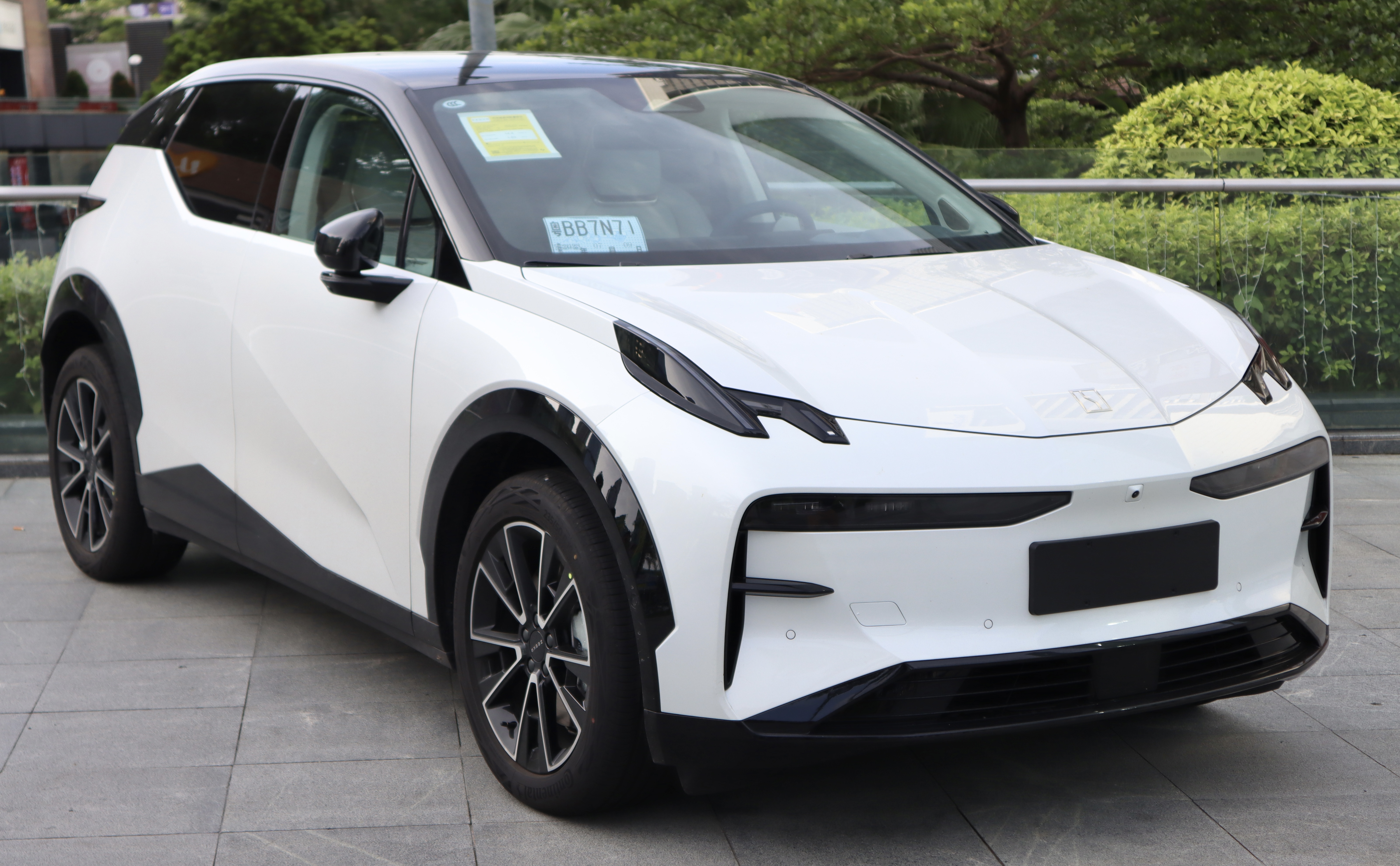
There is a particular kind of discomfort that settles over automotive journalists when a car is both very good and from a brand they haven't decided how to feel about yet. The Zeekr X induces precisely this discomfort. It is compact where other cars are timid, powerful where they are practical, and designed with a conviction that makes its European competitors look like they've been consulting focus groups since 1987.
The Zeekr X is made in Chengdu, China. Its exterior was designed by Stefan Sielaff - previously Volkswagen Group's head of design, the man behind the interiors of vehicles that Germans pay extra to sit inside. The two lead exterior designers, Jon Radbrink and Robert Knutsson, are Swedish. The car was tested on European roads. It shares a platform with the Smart #1 - a vehicle backed by Mercedes-Benz. None of this prevents car reviewers from describing it as a "Chinese EV," which is accurate, and also the most reductive possible way to describe something this internationally mongrel.
The car was designed by a German, engineered in Sweden, and developed on European roads. The question of whether manufacturer nationality matters is, increasingly, a question for philosophers - not car buyers.
So let's talk about who should buy this car. And more importantly: why you might be underselling yourself by not considering it.
Who Is the Zeekr X Actually For?
The Zeekr X is for the city dweller who is tired of apologizing for having taste. It is for the person who looked at the Mini Electric and thought "I want something that doesn't need its brand history to justify the price." It is for the young professional in Amsterdam or Stockholm or Sydney who wants genuine cargo space (362 litres, or 1,182 with the seats folded), genuine performance, and something the neighbours haven't seen before.
It is, specifically, not for the buyer who needs a dealer on every corner, a badge that communicates status at a glance, or a software experience indistinguishable from an iOS update. Zeekr is still building its service network. The brand recognition outside China is, charitably, a work in progress. If you need your car to explain itself to people who ask, keep looking.
But if you're the kind of buyer who does their own research - which, given that you're reading this, seems likely - then the Zeekr X makes a compelling case for itself on almost every metric that actually matters.
The Sliding Screen Is Not a Gimmick
Every car gets a touchscreen now. Most of them are mounted in the same place they've been since 2012, pointing vaguely at the center console, equally accessible to driver and passenger and optimally placed for neither. The Zeekr X does something different: its 14.6-inch display sits on a 353-millimeter motorized rail and physically moves. Toward the driver when you're driving. Toward the passenger for entertainment mode. It sounds gimmicky. It isn't. It's one of those features that, once you've used it, makes every static screen feel like a compromise.
Pair this with an augmented reality head-up display that overlays navigation data onto the windscreen, a letterbox-style instrument panel (narrow horizontal strip, nothing in your sightline), and a two-spoke steering wheel with integrated paddle shifters, and the Zeekr X's interior feels thought-through in a way that many cars at twice the price do not. The optional Yamaha audio system, the optional B-pillar screen (visible from outside the car, mounted on the door frame), the optional automatic powered doors - these are not the features of a car trying to compete on price. They're the features of a car trying to win on ideas.
A built-in refrigerator that both cools and heats, in a sub-$25,000 compact crossover. This is either the future or an extremely well-executed joke. Either way, the drinks are cold.
And then there's the refrigerator. The 2026 model includes a 5.7-liter center console unit that cools to -6 degrees Celsius or heats to 50 degrees Celsius. This is not a cup holder that gets warm. This is a functioning mini-fridge in a car that competes with the Mini Electric on dimensions. The fact that it exists is either a sign of category-defining ambition or the result of a product meeting where nobody wanted to say no. The result is the same either way: it works, and nothing else in the segment has it.
The Performance Number That Needs Explaining
489 horsepower. In a compact crossover. In a car 4,450 millimeters long. The 2026 AWD model covers 0-100 km/h in 3.69 seconds, which means it is faster than a Porsche 911 Carrera S from 2018 and faster than a BMW M3 from 2015. This is not a comparison Zeekr makes in its marketing materials, but it is a true one. The figure applies from the moment you press the accelerator - no waiting for revs, no clutch slip, no gearbox hesitation. Electric torque delivery is instantaneous, which makes 489 horsepower in an urban crossover a more interesting proposition than it sounds on paper.
The base RWD single-motor variant is no slouch either: 272 horsepower, 5.6 to 5.8 seconds to 100 km/h, up to 560 km of CLTC-rated range. The battery is a 66 kWh NCM pack - the same chemistry that powers the premium end of the EV market. DC fast charging peaks at 150 kW, meaning a meaningful charge stop is measured in minutes rather than meals.
The 2025 model year added a 49 kWh LFP battery option for entry-level buyers. Lithium iron phosphate chemistry doesn't deliver the same energy density but it is more stable across temperatures and cycles better over years of use. For city driving, where 300+ km of real-world range is rarely exhausted, the LFP option is the sensible one.
The Platform Nobody Talks About
The Zeekr X is built on Geely's SEA2 - Sustainable Experience Architecture - platform. This matters for two reasons. The first is that it's a genuinely good platform, purpose-built for electric vehicles rather than adapted from something designed to accommodate an internal combustion engine. The second is that this exact platform also underpins the Smart #1. If you have paid any attention to the Smart #1's critical reception in Europe, you know that it is generally well-regarded. You are, in the Zeekr X, getting a longer, wider vehicle on identical underlying architecture, for a comparable or lower price, with a more innovative interior.
The trade-off is brand recognition. Smart, backed by Mercedes-Benz, comes with a century of European motoring history and a service network built before most current EV owners were born. Zeekr has been selling cars since 2021. The gap is real. Whether it matters to you is a question only you can answer.
What the Press Said - and What They Missed
Autocar's Illya Verpraet gave it three out of five stars. His criticisms were specific and fair: wind noise at motorway speeds, body roll in corners, some pitch under hard acceleration. These are real weaknesses. The car is tuned for comfort and city use; at 110 km/h on the motorway, the NVH (noise, vibration, harshness) falls short of where BMW or Volvo would have it.
CarExpert in Australia rated it 7.5 out of 10, called the interior "plush," appreciated the "massive performance," and flagged "frustrating tech quirks" - a charge leveled at nearly every new Chinese EV brand as software localisation catches up with hardware ambition. The broader Australian press noted that servicing costs can be higher than established competitors, a consequence of a smaller dealer network requiring more specialized labor.
What the press reviews tend to underweight: the safety scores. A 91% adult occupant protection score at Euro NCAP, in 2024, is exceptional. This is not a car that got five stars by meeting the minimum. It got five stars the way a valedictorian gets five stars - with scores that leave room above the passing line. The same result was replicated in Australia (ANCAP) and across Southeast Asia (ASEAN NCAP). Three separate testing bodies, three separate results, all arriving at the same conclusion.
The Colour Names Are Not an Accident
Every colour in the Zeekr X palette is named after a world city. Sydney Harbour Blue. Berlin Metallic Gray. California Sunglow Pink. Hangzhou Green. Oslo Black. Paris Brown Rice. Athens Cloud White. This is deliberate brand positioning, not interior decoration. A car made in Chengdu whose colours are named after Stockholm, Sydney, and Los Angeles is a car that wants to be understood as international. The city names are the marketing strategy, compressed into the paint choice.
It is, in the context of a Chinese EV brand building recognition in markets where it has no legacy, quite clever. The colors are also genuinely good. The California Pink, in particular, is the kind of choice that requires institutional confidence - paint a car pink and everyone who sees it has an opinion about the kind of person who drives it. Zeekr is betting that the kind of person who drives a Zeekr X is comfortable with opinions.
The Price Trajectory Is the Story
Here is the number that deserves more attention than it gets: the Zeekr X launched in China in April 2023 at 189,800 RMB. By the 2025 model year, that starting price had dropped approximately 25 percent. By the 2026 model year, the car had gained more horsepower, better brakes (Akebono four-piston calipers), and a more advanced driver assistance system - and started at 155,800 RMB, roughly $21,800 USD.
For context: in Europe, the car launched at €44,990. The price gap between the Chinese domestic market and international markets is substantial, and it reflects both import tariffs and Zeekr's market positioning decisions in different geographies. In Australia, the 2026 model is priced from $48,900 AUD driveaway - still a reduction from the previous generation's $54,513 AUD starting point.
The price of the Zeekr X is falling while its specification is rising. This is the trajectory of every Chinese EV that has successfully penetrated an export market. Whether the export markets allow it to continue - given the EU tariffs on Chinese EVs that have been under discussion since 2024 - remains an open question. Buy now, or pay more later. That is, historically, how these stories tend to go.
The 2026 Update Is Material, Not Cosmetic
The "New Zeekr X," revealed in September 2025 and launched in China on November 5, 2025, is not a facelift in any traditional sense. The peak power increased from 315 kW (428 hp) to 365 kW (489 hp). The 0-100 time dropped from 3.7 seconds to 3.69 - a difference of 0.01 seconds, which matters only to people who care about such things, and they know who they are. The Akebono four-piston brake calipers - components typically reserved for sports cars - arrived standard on the top trim. The XTCS intelligent anti-skid system was added. A new 61 kWh "Energee" battery option appeared alongside the existing 66 kWh CATL pack. The 50W wireless charging nearly doubled from the previous generation. The refrigerator grew to 5.7 liters and gained dual-temperature functionality.
New for 2026: intelligent matrix LED headlights integrated into the front grille, Thor-U chip integration (Geely's H2 OTA refresh), and an electronic password-protected glove box. These are not the updates of a car resting on its sales numbers. China's EV market is fierce enough that resting means losing, and Zeekr knows this better than anyone watching from the outside.
The Verdict: Buy It If You're Ready
The Zeekr X is a genuinely excellent compact EV from a brand that is still building the scaffolding that established manufacturers take for granted. The hardware is ahead of the experience. The interior is more innovative than the software is reliable. The performance is exceptional; the refinement at speed is not quite there yet.
What the Zeekr X offers is something harder to quantify: the feeling of being early. Not recklessly early, in the way of first adopters who regret their decision by year two - but early in the way that pays off. Early enough that the price trajectory is working in your favour. Early enough that the badge still generates genuine curiosity rather than indifference. Early enough that when the brand becomes what it appears to be aiming toward, you'll have been driving one since before the queue formed.
The Zeekr X is a city car with supercar acceleration, a refrigerator, a sliding touchscreen, and the highest safety scores in its class. Whether it's the right car for you depends less on the car and more on what you're willing to be the first person on your street to drive.
Zeekr X photographed at Euro NCAP testing, 2024. The 91% adult occupant score was among the highest recorded for a compact SUV that year. - Zeekr / Wikimedia Commons
