What Lies Beneath
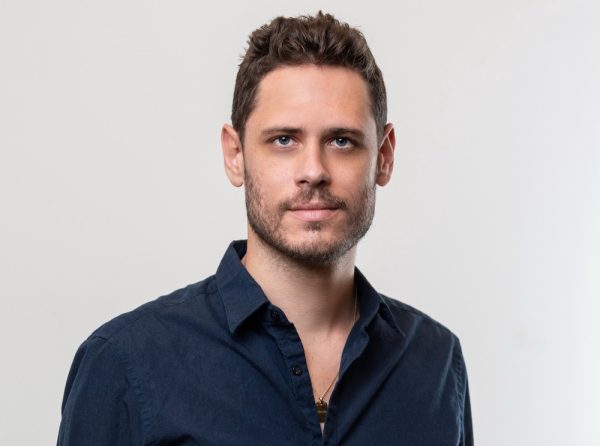
Every year, construction crews worldwide punch through buried gas lines, telecommunications cables, and water mains they had no idea were there. The result is $100 billion in unnecessary excavation, delayed projects, and - when the hit is bad enough - people who don't go home. Jeremy Suard has decided this is an information problem, and he intends to solve it.
Suard is the co-founder and CEO of Exodigo, a company that has built a non-intrusive underground mapping platform unlike anything in the market. Exodigo's field systems deploy an array of sensors simultaneously - ground-penetrating radar, magnetic gradiometers, electromagnetic instruments, electrical simulations - and scan the ground in a proprietary overlapping snake pattern while a proprietary AI engine fuses the incoming signals in real time. The output is a 3D subsurface map that reveals utility lines, pipes, and buried assets with a precision the industry had never seen before. Where traditional methods miss, Exodigo finds 20 to 30 percent more utility lines than premium competitors.
The numbers around the company have been moving fast. Founded in January 2021, Exodigo has raised $271 million in total across seed rounds, a $105 million Series A in February 2024, and a $96 million Series B in July 2025. The investor roster includes Greenfield Partners, Zeev Ventures, SquarePeg, 10D VC, and National Grid Partners - the strategic arm of one of the world's largest energy utilities. The valuation sits at an estimated $700 million. The team has grown to 400 people, with offices in Palo Alto and Tel Aviv.
At 31 or 32, Suard is running a company that TIME named a Best Invention in 2022 and one of the 10 Most Influential Design & Build Companies in early 2026. He has also been on the speaker stage at CERAWeek, the energy industry's annual gathering, and at ENR's Future Tech summit. None of this happened by accident.
France to Tel Aviv to Unit 81
Suard was born in France and relocated to Israel at age 15. The move was formative: he arrived in a new country, learned a new language under pressure, and enrolled in the Israeli school system at exactly the moment it starts tracking young people with math and science aptitude toward elite military science programs.
He earned a Bachelor's and Master's degree in Physics from The Hebrew University of Jerusalem, graduating cum laude, through the IDF's Atueda program - a track that recruits exceptional students to complete degrees before beginning military service. The deal is straightforward: the military funds your education, and then you serve in positions aligned with your expertise. For Suard, that meant heading directly into Unit 81, one of Israeli Military Intelligence's most secretive and technically sophisticated units.
Unit 81 does not advertise. What is publicly known is that it develops the technology Israel's intelligence services use to collect and process signals - acoustic, electromagnetic, optical. Suard spent nearly eight years there, rising to lead R&D section teams focused on algorithm development for acoustic and electromagnetic signal processing, AI systems, and special operations technology. By the time he was discharged in January 2021, he had been awarded the three highest IDF honors for technology and leadership - a distinction that made him the most decorated technology major in the Israeli Army.
The skills developed inside a classified intelligence unit translate less obviously than you might think. Signal processing, sensor fusion, turning noisy multi-sensor inputs into coherent situational awareness under real-world field conditions - this is deeply specialized work, and almost none of it has a commercial equivalent. When Suard and his two co-founders decided to leave the military and start a company, they did not pivot away from these skills. They asked instead: where in the civilian world does the same problem exist?
The answer was underground.
"The potential impact we could have in mitigating the enormous risks stemming from inaccurate underground data motivated the company's founding."
- Jeremy Suard, Co-Founder & CEO, ExodigoExodigo: The Subsurface Intelligence Layer
Three people founded Exodigo in January 2021: Jeremy Suard (CEO), Ido Gonen (CTO), and Yogev Shifman (Chief Product Officer). All three are alumni of elite Israeli intelligence units - Gonen from Unit 8200, the signals intelligence arm that has launched more technology startups than perhaps any other military unit in the world. This was not a coincidence of networking. It was an intentional team construction: sensors + algorithms + field operations.
The product they built combines hardware and software in a way that is genuinely difficult to replicate. Exodigo's scanning systems deploy simultaneously across multiple sensor types. Each sensor type captures different physical phenomena from the subsurface: radar waves, magnetic gradients, electrical conductivity, ground-wave propagation. The snake-pattern scan protocol ensures full coverage of a target area. And the AI model - trained on more subsurface scans than any competitor could plausibly accumulate in the same timeframe - processes the fused sensor data into a 3D model of what lies below.
What does that mean in practice? Construction crews and utility operators know, before the first shovel breaks ground, exactly where every buried asset sits. They can plan excavation routes around known hazards. They can avoid the gas mains. They can call the dig safe. Exodigo has documented a reduction in unnecessary excavation of up to 90 percent on projects where its platform is deployed. That is not a marginal improvement in a legacy workflow. It is a different category of operating knowledge.
The market Exodigo addresses spans energy and utilities, transportation and infrastructure, telecommunications, and construction broadly. Clients include major utilities, infrastructure developers, and government agencies in the United States, Europe, and Israel. The company's technology is relevant wherever pipe, cable, or any other asset has been buried and the records of that burial are incomplete - which, across most of the world's aging infrastructure stock, is nearly everywhere.
Multi-Sensor Fusion, Applied Underground
The core of Exodigo's platform is a sensor fusion architecture that would be familiar to anyone who has worked on autonomous vehicles, satellite surveillance, or - in Suard's case - military intelligence systems. Individual sensors are incomplete. Radar sees certain materials. Magnetics reveals ferrous objects. Electromagnetics maps conductors. Stacked together, cross-correlated, and processed by an AI that has seen thousands of subsurface environments, the picture becomes substantially more complete than any single method can achieve.
The proprietary snake-pattern scan protocol matters as much as the sensors themselves. By overlapping passes across a target area, Exodigo's field teams capture redundant data that the AI model uses to improve confidence in each detected object. It is the same logic that makes military surveillance more reliable than a single aerial pass - more angles, more returns, more certainty. Suard has described it directly: "We use several sensors, all with different strengths, and scan the ground in a unique overlapping snake pattern to cover the entire area."
This is not a plug-in to existing survey software. It is a ground-up platform built to process raw, noisy geophysical signal data and output a deliverable that a construction engineer can act on. The civil engineering workflow - where projects like AutoCAD, Civil 3D, Autodesk InfraWorks 360, and GIS tools live - is precisely where Exodigo's outputs land. The company has invested in integrations with the software stacks that project teams already use, which reduces adoption friction in an industry that is notoriously skeptical of new tools.
"Combining AI with multi-sensing technology is our breakthrough; no one else is doing this."
- Jeremy SuardFrom Zero to $271 Million in Four Years
Exodigo's fundraising arc is steep by any measure. The company launched in early 2021 from the shared background of three IDF alumni with no prior startup track record - just classified signal processing expertise and a clear thesis about the construction industry's data deficit.
The seed rounds in 2022, totaling approximately $41 million, established the product and secured early marquee clients. The TIME Best Invention recognition in 2022 gave the company a cultural validation signal that translated directly into enterprise sales conversations. By early 2024, the Series A came in at $105 million, co-led by Greenfield Partners and Zeev Ventures, with National Grid Partners as a strategic participant. The message from the capital markets was clear: this is not a point solution, it is a platform.
The Series B in July 2025 - $96 million, again co-led by Zeev Ventures and Greenfield - brought total disclosed funding to $271 million. Vintage Investment Partners and Leblon Capital joined the existing investors in that round, broadening the international capital base. The estimated valuation of approximately $700 million puts Exodigo solidly in deep tech territory for a five-year-old company in a field - geophysical instrumentation and infrastructure software - that most venture investors would struggle to pitch to their LPs.
Hiring for Hunger, Not Track Record
Suard does not talk about leadership in the vocabulary of management consulting. His background is military: specific objectives, resource constraints, high-stakes consequences. The approach he brings to Exodigo's hiring reflects that. He prioritizes people "willing to learn completely new things, ask questions, and be humble." Three filters. No mention of pedigree or prior startup exits.
The implication is important for understanding how Exodigo has scaled. The company operates across multiple technical domains simultaneously: geophysics, AI and machine learning, field operations, civil engineering integration, enterprise software. No single person masters all of it. The organizational culture, by design, requires continuous learning and intellectual honesty about what you do not yet know. This is a military intelligence team operating norm that Suard has transplanted into a commercial setting.
He has also been deliberate about how Exodigo positions itself with clients in the construction sector. The industry is historically risk-averse and slow to adopt new technology - for good reason, since infrastructure projects carry real human and financial consequences when they fail. Suard's take on this: "The construction sector, while traditionally conservative, has the right clients thrilled about embracing innovation." He reads the conservatism not as obstruction but as an invitation to demonstrate proof with rigor. Show the data. Run the pilot. Let the comparison speak.
This posture has served the company well in its client relationships. Utility companies and major construction firms do not adopt novel geophysical survey tools based on pitch decks. They adopt them because the field data is better than anything else they have tried.
Construction does not have a digging problem. It has a data problem. Cities have been laying pipe and cable for over a century, with paper records, transferred ownership, and no common standard for documenting what went where. Exodigo's mission is to close that gap, scan by scan.
Career Arc
What Gets Noticed
The Bigger Picture
The problem Exodigo is solving has a surprising scale. The global construction industry spends an estimated $100 billion annually on excavation that turns out to be unnecessary - either because it was exploratory (no one knew what was there), or because it hit something unexpected and had to stop. Utility strikes - when a drill or excavator contacts a buried live asset - cause project delays, cost overruns, environmental damage, and, not infrequently, deaths. In the United States alone, a utility line is damaged every six minutes.
Suard's bet is that this is a tractable problem, not a structural feature of the construction industry. The records are incomplete because the recording tools were poor and the incentives to maintain them were diffuse. The detection methods that existed before Exodigo - paint markings on pavement, single-sensor locating tools, utility atlas maps of uncertain accuracy - were not good enough, and the industry had largely made peace with that. Exodigo's pitch is that making peace with it is no longer necessary.
There is also an environmental dimension that Suard has addressed publicly. Every unnecessary excavation requires heavy machinery. Heavy machinery burns fuel, compresses soil, disturbs ecosystems, and generates carbon emissions. A 90 percent reduction in unnecessary excavation is not merely an efficiency improvement for construction companies. It is a meaningful reduction in the carbon footprint of the infrastructure build-out that cities around the world are racing to complete.
Whether Exodigo reaches the scale of a foundational infrastructure data company - the kind that becomes embedded in how every major construction project in the world is planned - depends on execution, market expansion, and the company's ability to build the data advantage that Suard has been accumulating since the first field scans. The physics haven't changed. The signals underground are the same signals Suard has spent his career learning to read. The question now is how fast the rest of the world learns to ask for them before it digs.