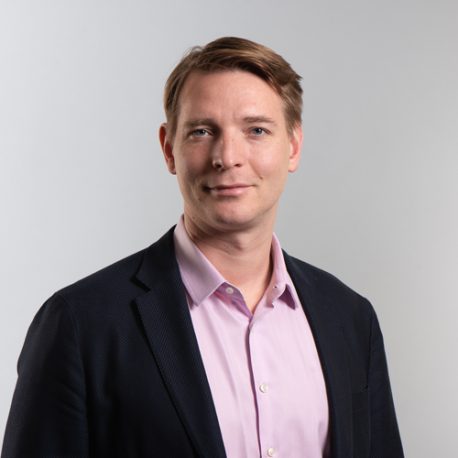
The Engineer Who Went From Killing the Fail Whale to Backing Europe's Future
In 2009, Twitter was breaking. Every few hours, the platform buckled under the weight of its own users - a cartoon sperm whale suspended by birds became so recognizable it had a nickname: the Fail Whale. Engineers scrambled. One of them was Florian Leibert, a young German software developer who had just joined the company, and who would help architect the distributed systems that finally tamed the problem. That whale never fully went away. But Leibert moved on - to Airbnb, to his own company, and eventually to one of the more unusual second acts in tech: running a billion-dollar venture fund from Berlin.
Leibert grew up in Germany, studied computer science at International University Bruchsal, and won the ACM programming competition during his studies - advancing to the European finals. He arrived in Silicon Valley via the standard pipeline of early-stage tech companies: software engineer roles at Ning and Adknowledge before Twitter came calling around 2009. The handle he secured then - @flo - is three characters, the kind of prime real estate you can only get by being early.
Building the Plumbing
What Leibert was working on at Twitter - before "container orchestration" was a phrase in widespread use - was essentially a new way to manage computing resources across a datacenter. Apache Mesos, the technology he helped deploy there, let clusters of machines pool their resources and schedule workloads dynamically. It was foundational work. He then brought the same approach to Airbnb, managing the data infrastructure team and building Mesos-based analytics systems at a company that was itself trying to figure out how to scale rapidly.
In 2013, Leibert co-founded Mesosphere with Tobias Knaup and Benjamin Hindman. The pitch was essentially: here is the distributed operating system your datacenter actually needs. The company raised over $252 million from Andreessen Horowitz, Microsoft, T. Rowe Price, and Khosla Ventures. Customers eventually included Apple, Netflix, SAP, Audi, Deutsche Telekom, NBC Universal, and Royal Caribbean - the kind of list that makes a company's slide deck look implausible until you realize the product was solving a genuine infrastructure headache at scale.
The company's average enterprise customer was paying $200,000 in annual subscriptions and generating over $3 million per month in revenue when Mesosphere rebranded to D2iQ in 2019 - the name a reference to "Day Two," the stage after launch when the real complexity of running software in production sets in. D2iQ was later acquired by Nutanix. Leibert had already started thinking about the next chapter.
"You should not always listen to your investors."- Florian Leibert, 20 Minutes VC with Harry Stebbings
From Code to Capital
In 2020, Leibert co-founded 468 Capital alongside Alexander Kudlich and Ludwig Ensthaler. The firm's first fund - $200 million - was the largest first-time VC fund in European history. The second fund, raised in 2022, came in at $400 million and was the largest European seed-stage fund at the time. The total capital under management sits at $1.3 billion across more than 100 companies.
The thesis at 468 is that the people best positioned to back early-stage founders are the ones who have actually built and operated companies themselves. Leibert is the embodiment of that bet: he has shipped infrastructure that ran at Twitter scale, raised nine-figure rounds, navigated enterprise sales cycles with Fortune 500 companies, and watched a company he built get acquired. When he sits across the table from a founder, there are not many scenarios he has not seen.
The portfolio reflects a broad but focused range: Iterative (MLOps), Linearity (formerly Vectornator, design tools), Bardeen (AI automation), QuestDB (time-series database), Garden.io (developer tooling), Rapid Robotics, and Tonies - the Berlin-based audio player for kids that went public in the US. The firm invests from Day 0 through Series B, with a sweet spot around $1.5 million and a ceiling of $15 million per deal.
Operator Instincts, Investor Patience
On the 20 Minutes VC podcast with Harry Stebbings, Leibert was candid in a way that most VCs avoid: he told founders that they should not always follow their investors' advice. Coming from someone who has raised $252 million from institutional investors, that is not contrarianism for its own sake - it is pattern recognition from someone who has watched that dynamic play out badly in both directions.
The other phrase that keeps appearing in his public commentary is "don't fight the universe" - a kind of philosophical pragmatism about the difference between the things you can change and the things you cannot. For someone who spent years in the infrastructure layer of the internet, where the physics of distributed systems are genuinely non-negotiable, that framing makes a certain amount of sense.
Leibert splits time between San Francisco and Berlin, which reflects the actual shape of 468 Capital's operations: a firm with offices in Berlin, San Francisco, and Madrid, investing in European founders who often need help navigating the Atlantic. His background gives him genuine credibility in both directions. He is not a Bay Area investor who occasionally visits Europe. He is someone who built infrastructure at Twitter and Airbnb, then moved capital back toward the ecosystem that produced him.
What He Bets On
468 Capital's current investment focus clusters around four areas: AI and automation, infrastructure and enterprise software, energy transition and climate, and what the firm calls "prosumer" products that bridge professional and consumer use cases. The emergence of MLOps as a distinct category - companies like Iterative in the portfolio - reflects Leibert's technical background directly. He was building production machine-learning infrastructure before most companies had a dedicated team for it.
He also contributes to the World Economic Forum's Agenda platform and has been a speaker at the GABA (German American Business Association) Gala - another reflection of the trans-Atlantic positioning that defines both his career arc and his firm's identity.
On GitHub, his username is still florianleibert, and one of his repositories is called mesos-getting-started. The fact that it is still public says something about how he thinks about the work: the infrastructure he helped build, and the frameworks he helped popularize, remain worth pointing people toward even after the company that commercialized them has changed hands twice. The code is there if you want it.