computational-design
(7)
Deepak Aatresh Is Teaching Buildings to Think Like Chips
A magazine article pulled him toward microprocessors. A construction time-lapse sent him in a new direction. Deepak Aatresh has spent the years since translating the logic of silicon into a language for buildings.

Clifton Harness
Clifton Harness is the co-founder and CEO of TestFit, a Dallas-based real estate feasibility platform that lets developers, architects and contractors solve site plans in seconds instead of weeks. A University of Texas at Austin architecture graduate who grew up around his father's development business, Harness spent two years doing site plan test fits at StreetLights Residential before teaming up with his college roommate, software developer Ryan Griege, to automate the repetitive work. TestFit has raised roughly $22 million, led by a $20 million Series A from Parkway Venture Capital, and Harness has become a leading and often provocative voice on generative design in the AEC industry.

TestFit
TestFit is a Dallas-based real estate feasibility platform that uses configurator and generative-design algorithms to turn a raw parcel into a buildable site plan, unit mix, parking layout, cost estimate and pro forma in minutes instead of weeks. Founded in 2016 by Clifton Harness and Ryan Griege, it serves developers, architects, contractors, civil engineers and municipalities evaluating multifamily, industrial, retail and mixed-use projects, and has raised $22M including a $20M Series A in 2022.

Aditazz, Inc.
Aditazz is a Silicon Valley technology company that borrows the automated, rule-based workflows of semiconductor chip design and applies them to the design and construction of complex buildings. Its SaaS platform captures human engineering and architectural expertise as design rules, then uses algorithms and digital twins to generate, simulate and optimize building layouts before a single wall is built. Founded in 2010 by chip designer Deepak Aatresh and architect Zigmund Rubel, the company first targeted healthcare facilities - winning Kaiser Permanente's 'Small Hospital, Big Idea' competition - and has since applied its methods to hospitals, labs, and other infrastructure across the U.S., China and India.

Jifei Ou
Jifei Ou is the founder and CEO of OPT Industries, a Medford, Massachusetts company that turned a decade of MIT Media Lab research into a new kind of factory. After nearly seven years spent learning to 3D-print fur, hair, and micro-textures no mold could produce, Ou built RAMP, described as the world's first roll-to-roll 3D printing system, which prints intricate microstructures by the mile. Rather than sell machines, OPT sells the products it makes on them - false eyelashes, beauty applicators, and diagnostic swabs that outperformed the gold standard during COVID. Ou raised $15M in Series A funding and is betting that reconnecting design and production can bring precision manufacturing back onshore.
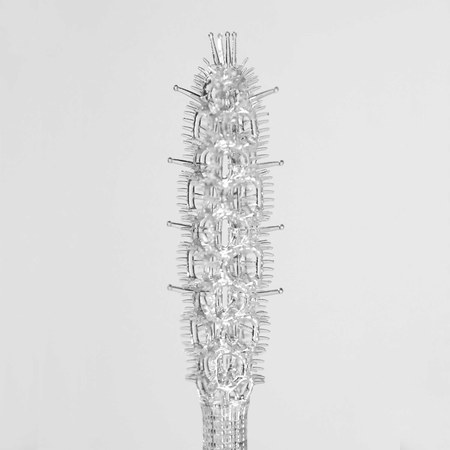
OPT Industries
OPT Industries is an MIT-spun materials foundry in Medford, Massachusetts that built the world's first roll-to-roll 3D printing platform, RAMP. By pairing computational design software with continuous additive manufacturing, OPT prints micron-precise materials at unlimited length and high volume - producing everything from the InstaSwab COVID-19 nasal swab to flockless cosmetic applicators and false eyelashes. The pitch is simple: one process, endless possibilities.

Forest Flager
Forest Flager is the CEO and co-founder of Parspec, an AI-native software platform modernizing the construction supply chain. A Stanford PhD in computational design optimization, Flager spent years in academia and at SoftBank-backed Katerra before launching Parspec in 2021 with co-founder Pratyush Havelia. The company has raised $31.5M (including a $20M Series A in July 2025 led by Threshold Ventures), grown revenue 4x in 12 months, and counts four of the five largest U.S. electrical distributors - representing $70 billion in global annual sales - among its customers. Parspec automates product selection, quoting, and submittal generation, cutting submittal creation time by 55-80%.