mentoring
(33)
Alastair Turner and the Icarus Problem
A school project about flying too close to the sun gave Aspectus’s Group CEO a useful business lesson. His career reveals the work of building confidence while keeping pride in check.

Vetri Vellore and the trouble with Monday morning
He built software for mentors, then for goals. After selling Ally.io to Microsoft, Vetri Vellore is pursuing the part of company life that a clear objective still cannot fix: getting through the week together.

Michael Bender and the art of getting back to the customer
Before he became Kohl’s CEO, Michael Bender had run stores, helped build an online business and advised the people in charge. Now he has to make all that experience count for the shopper walking through the door.

Lori Koch and the careers hiding in plain sight
She built a finance career inside DuPont, then became its CEO. Now Lori Koch is helping students see the possibilities beyond Wall Street while reshaping the company she joined in 2003.

Peter Cowan’s thirty-year lesson in a split-second business
From cash-machine connections to PayPal’s Australian business, Peter Cowan has spent three decades working on what happens when money moves. His story turns on trust, a brief spell doing every job himself, and the people behind the payment.
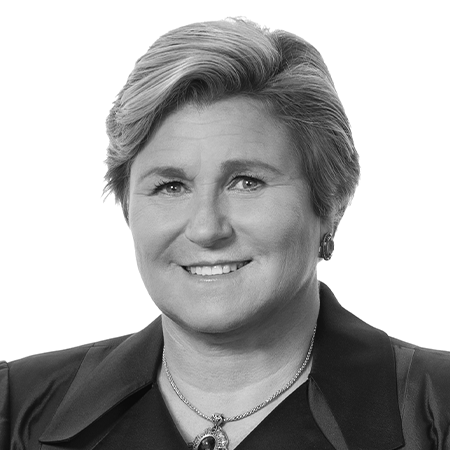
Gail Boudreaux and the art of the second possession
Before she ran Elevance Health, Gail Boudreaux collected 1,635 rebounds at Dartmouth. Her story turns on what happens after the first shot - and who gets the next chance.

Gregory Kallinikos and the value of being nearby
From a Singapore clearing business to an expanding Asian network, Gregory Kallinikos has built a career around getting closer to the people who use financial markets. The next connection is often a local one.

Dan Wall and the interview that almost ended his career before it began
He joined Expeditors to earn a paycheck until he could drive a truck. Thirty-eight years later, Dan Wall became CEO - and the second chance that started his career had become a program for hundreds of young people.

Kathy Mazzarella took a wrong turn. It led to the president’s office.
She walked into Graybar looking for directions to another job interview. Four decades later, Kathy Mazzarella is still showing what can happen when ambition meets a company willing to let people grow.

Pythian Leaders Land Three CRN Finalist Spots
Vanessa Simmons and Solange Jacob account for Pythian’s three September 2026 finalist honors. Behind the shortlist are years of partnership work, mentoring and a push to help enterprise employees use AI.

WERK1: A startup needs more than a desk
Munich’s WERK1 puts offices, coaching and temporary homes within walking distance of one another. Its first useful discovery was simpler: founders would not come to the old address.

El Club del Emprendimiento and the business of not going it alone
A free front door, a six-month mentoring offer, and a room full of possible introductions. Spain’s El Club del Emprendimiento makes a business out of helping small businesses find their next useful connection.
Catalysr turns new arrivals into startup founders
A failed startup helped Usman Iftikhar find a better problem to solve: getting migrant talent into business. Catalysr now pairs entrepreneurship lessons with the local connections a passport cannot supply.
GameFounders bets on the studio - and the city around it
A game can be built anywhere. A games business needs people who know what happens next. GameFounders has spent its working life bringing those people to places still assembling an industry.

Imperial Enterprise Lab makes room for the unfinished idea
Before a startup can impress an investor, it has to survive a conversation with a customer. Imperial Enterprise Lab gives founders a place to have that conversation - and free help with what happens next.

ASPER-HUJI Innovate teaches ideas to survive the real world
At the Hebrew University of Jerusalem, entrepreneurship begins with a question before it becomes a pitch. Free venture programs, social projects and a campus hub give academic ideas somewhere to meet reality.

Cajigo knows a career can begin with a conversation
A Bristol social enterprise connects girls and women with the people already working in technology. Its wager: a clearer route and a useful mentor can make an unfamiliar career feel possible.

Neil Matheson Knows Who to Call Next
Twenty years after hiring a colleague, Neil Matheson brought her back onto his team. The New Zealand-born entrepreneur’s career offers a close look at what survives when companies change hands: the relationships.

Jane Barwis and the Business of Staying
She founded BRG Communications in 2001. Nearly a quarter-century later, Jane Barwis is still testing a deceptively simple proposition: an agency can keep growing while giving people reasons to stay.

Boost Turku gives first-time founders a summer to find out
Eight weeks. No fee. No equity taken. In Finland’s student-run startup community, the first business idea is only part of the education.

Lemon Ideas wants your startup pitch. English is optional.
From Nagpur, Lemon Ideas has built a startup contest, an entrepreneurship school and a mentoring network around a practical proposition: a promising founder can come from anywhere, and speak in their own language.
Accelpoint gets startups into the room where pilots happen
The Warsaw accelerator pairs public funding with corporate access. Its real test is whether a promising prototype can become something a bank, insurer or telecom will actually use.

AIC-RMP puts the business into grassroots ambition
At this Maharashtra incubator, social impact comes with homework: test the product, find the customer and make the numbers work. Its network has supported more than 100 startups, from agriculture to digital health.

The Dot puts Tunisia’s startup maze under one roof
In Tunis, The Dot brings founders, advisers and public institutions into the same building. Its next test is making that proximity useful to entrepreneurs far beyond the capital.
W Startup Community turns a warm introduction into a business tool
A Spanish nonprofit puts women founders in reach of investors, corporate leaders and one another. Its most useful offer may be the conversation that happens after the applause.

Sweden’s business network in Germany runs on introductions
A mystery lunch, a royal patron and a balance sheet tell the story of the Swedish Chamber of Commerce in Germany - and what it takes to turn a membership into a useful business relationship.
Venture Hive teaches startups to grow. Its own lesson was finding the right customer.
Susan Amat built an accelerator that let founders keep their equity. The bigger business lesson came when Venture Hive tried to sell accountability to other accelerators.
AwakenHub wants women on both sides of the cheque
The all-island founder community has built a route from first business questions to investor introductions. Its next challenge is turning those connections into customers, capital and companies that can travel.
A good résumé does not make a good mentor
Red de Mentoring de España has built a business around the gap between having experience and knowing how to share it. Its offer combines mentor training, managed programs and the machinery that keeps people talking.

The Navigators
For nine decades, a Colorado Springs ministry has run on one stubborn instruction its founder gave a sailor: don't just learn it - teach the next person, and make sure they teach someone too.