In June 2004, Neil Matheson hired Beth McMahon. In June 2024, he was welcoming her onto his team again. Twenty years is long enough for a company name to change, a business to be sold, and a familiar colleague to become a familiar colleague with considerably more experience. His greeting was short: “Welcome home Beth.”
There are more conventional ways to introduce the chief executive of Citrus Health Group. Begin with the titles. Add the companies founded, the international responsibilities, the board appointments. Arrange everything in descending order of importance and let the reader admire the staircase. The reunion is a better entrance. It puts another person in the picture.
McMahon joined Citrus as Chief Medical Officer. Matheson’s public welcome connected the appointment to their first professional chapter two decades earlier. The dates give the moment its interest. This was a new appointment with an old relationship behind it, a piece of business news that also had a memory.
For someone who has spent his career assembling companies and teams, it is a revealing place to begin. A résumé records where an executive worked. A returning colleague adds another dimension: who worked with him, and who might work with him again. The company names matter. So do the names that survive between them.
The names inside the deals
Citrus arrived with institutional backing and considerable history already attached. NaviMed Capital marked the group’s launch in March 2023. Its foundations included Prescott Medical Communications and the earlier Citrus business established by John “Zeke” Czekanski and Scott Roberts. Matheson was leading a new group made from businesses that had existed before the group did.
That distinction matters. Starting with established agencies means starting with other founders’ decisions, colleagues’ habits, and client relationships that have their own chronology. The executive has to understand what has been brought together. A new organizational chart can fit on one page. The experience represented by that chart takes rather longer to read.
In September 2023, Citrus and NaviMed acquired MedLogix Communications, founded in 2000 by Susan Sessa and Jeff Debs. Both founders had continuing jobs in the combined business. Sessa joined the executive board as Chief Operating Officer; Debs became Executive Vice President, Medical Consulting. They would continue supporting their established client relationships.
Matheson’s welcome focused on the team they had built and its reputation for delivering work. The personnel changes also reached elsewhere in Citrus: Czekanski moved to Chief Commercial Officer. An acquisition can sound abstract until the announcement begins assigning people their next responsibilities. Here, those responsibilities showed the work of joining organizations beginning in public.
The following month brought The Curry Rockefeller Group. Mike Curry and Chuck Rockefeller had founded it in 2001. Matheson said he had known them for years and had followed the business’s progress. This purchase had a professional acquaintance behind it, rather than beginning with a name encountered for the first time across a negotiating table.
Curry and Rockefeller became senior advisors. Jeff Keller took the role of President, Scientific Communications; Rhonda Croxton and Amy Koch took leadership responsibilities across the group. In his own welcome, Matheson also promised to retain the Curry Rockefeller name. The arrangement made room for the acquired business’s history inside the new organization.
Keeping a name is a modest gesture beside the legal machinery of a transaction. It is also a visible one. A founder has spent years persuading people to associate that name with dependable work. Preserving it acknowledges that the purchase includes a reputation, and that a reputation has authors.
The long route to another beginning
Matheson had been one of those authors himself. A New Zealander, he studied at the University of Otago and began his working life teaching physical education in Auckland. He moved to the United States with Adis International in 1989. By 1999 he was founding ApotheCom and building the agency group AXIS.
AXIS was sold to Huntsworth in 2007. Matheson became Global CEO of Huntsworth Health in 2009 and remained until 2017. The sequence took him from founder to leader within a larger organization. By the time Citrus was acquiring other founders’ businesses, he had experienced an acquisition from the side of the person selling.
His 2019 appointment as Non-Executive Chairman of Atlantis brought another setting for that experience. The company wanted help with international growth; its chief executive, Jonny Duder, emphasized Matheson’s record of founding, building, and managing businesses. The announcement presented accumulated experience as something useful to an existing executive team.
In such a role, the question changes. Instead of making every decision yourself, you have to make your experience available to someone who has the job of deciding. There is room for advice, challenge, and practical assistance. There is also a boundary: a chair and a chief executive have different responsibilities.
The board appointment came through Nurole. Its account describes a candidate with an entrepreneurial record and experience of scaling businesses. Matheson, despite having an established industry network, valued access to board opportunities he might otherwise never hear about. Even a well-connected executive needs a route to the next conversation.
“I’m very driven by teamwork and motivating teams”Neil Matheson, 2019
One can read the appointment as a continuation of company building through another role. A board position gives experience a destination beyond the business in which it was acquired. The lessons travel with the person. The practical test is whether they help the team now sitting around the table.
A New Zealand connection with an American address
The Pacific move did not close Matheson’s relationship with Otago. In 2008, he was a founding member of the board that established Alumni of the University of Otago in America. The university later recorded him as its president. His education had become a connection he helped make available to others.
The American alumni organization supported student exchanges and other university initiatives. In the university’s 2017 account, its work included more than NZ$90,000 of support for programmes at Otago. That was the organization’s contribution, a collective effort. It belongs in his story as evidence of the group he helped establish, rather than as a personal donation.
There is a different sort of continuity here from a repeated appointment. An alumni organization connects people whose careers may have very little in common apart from their university and the country in which they now live. The shared beginning becomes a reason to meet, exchange experience, and help the next arrival find their bearings.
In 2019, Matheson publicly welcomed an Otago alumni career event in Sydney. He wrote about older graduates’ willingness to mentor younger ones as their careers developed. The comment was specific to an event on the other side of the world, yet its subject was familiar: people with experience making themselves useful to people acquiring it.
Otago’s 2023 foundation report listed him on AUOA’s honorary advisory board. The form of involvement had changed over time. The connection remained. Alongside the succession of companies in his biography runs this quieter sequence of founding, serving, and advising within a university community abroad.
Experience gets another invitation
In September 2024, Citrus and NaviMed acquired Mirador Global, the consulting business Chuck Peipher founded in 2016. Peipher joined Citrus’s executive leadership as Chief Strategy Officer while continuing as Mirador’s CEO. Once again, the announcement joined the purchase of a business to a continuing role for its founder.
Matheson described teams chosen for the client’s particular need. That approach puts a practical burden on a leader: know enough about the people available to choose a useful combination. Buying a business expands the list of names. Working together determines how useful that expanded list becomes.
The Mirador appointment also adds a different rhythm to the twenty-year reunion. Some relationships return after a long interval. Others begin a new phase through a transaction. Both require the same ordinary follow-through: colleagues learning what each person can contribute and how their responsibilities fit together.
In October 2025, Citrus announced Lisa Druce as Chief Client Officer, reporting to Matheson. She brought more than twenty years of global and US communications experience. His welcome tied the appointment to expanding existing client relationships. The group was continuing to add experience through recruitment as well as acquisition.
It is easy to make a business biography sound as though companies grow themselves while executives stand nearby wearing the appropriate title. These appointments restore the activity to the story. Someone joins. Someone takes a different responsibility. Someone brings experience from elsewhere. Growth becomes a series of decisions involving actual colleagues.
The company a career keeps
For Medical Communications Day 2026, Matheson reflected on more than forty years in his profession. He credited the people he had worked with and the clients who had trusted his teams. After a long sequence of corporate names, his public reflection returned to colleagues and relationships.
His current company biography also puts people at the centre of the next challenge: adapting the communications business as artificial intelligence changes its work. It emphasizes leadership, new thinking, and empathy in managing change. That is an ambition for the work ahead, rather than an accomplishment to add prematurely to the list.
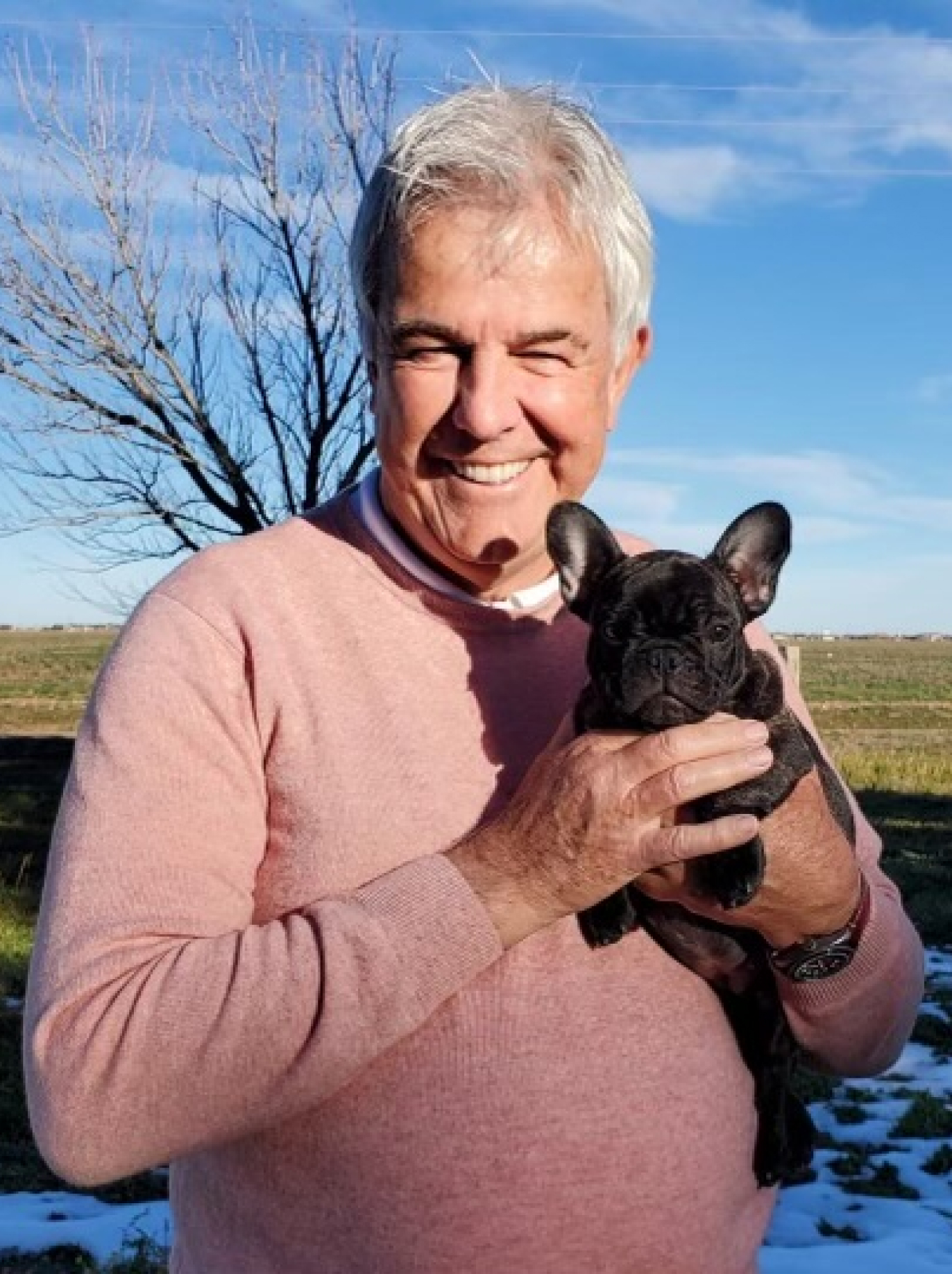
Outside work, the same biography lists cooking, wine, golf, music, travel, family, and dogs. The photograph gives the final item a face. There is no need to turn every pastime into a management lesson. Sometimes a dog is allowed to be a dog, without being appointed Director of Unconditional Engagement.
The career gives us enough to consider without such assistance. Companies founded and sold. A university connection kept alive abroad. Founders invited to continue as advisors. A colleague welcomed back after twenty years. Matheson’s story has plenty of changes in it. The people who remain in the picture give those changes their meaning.