Peter Cowan had a hundred-day plan. Then he had to set up the email. In July 2016, having left a corporate job to start a business, he described discovering how many departments one person could become. Information technology, legal, finance, sales, delivery, payroll: the organisational chart had acquired a distinctly familiar face. He was pleased with what he had built on a small budget. He was also learning that a prospective client’s internal timetable could be considerably more relaxed than his own.
For someone whose work concerns the movement of money, waiting for a deal to pay the bills was a useful education. His response was practical: manage the pipeline better, allow for delays, and stop expecting every organisation to share a founder’s urgency. He thanked the early clients who had taken a chance on him, friends who called, and people who offered a beer. Entrepreneurship, in this telling, came with both administrative chores and company.
Today Cowan is CEO of PayPal Australia and vice president of Global Entity Management. That earlier account helps bring the title down to human scale. He has experienced the distance between a corporate process and the person waiting at the other end of it.
Before the button, there was the wire
Cowan dates his entry into Australian payments to 13 February 1996. Thirty years later, he recalled an industry constrained by physical connections, limited transmission capacity and the need to conserve data. Cash machines communicated at 2400 baud. Saving a byte was a real consideration, rather than an affectation one might develop after buying a vintage computer.
His anniversary reflection follows that world into a market of digital services and specialist fintech businesses. The pleasure he takes in the change is revealing. He celebrates the proliferation of smaller, distinct solutions, and the opportunities to build experiences around payment infrastructure. He also gives considerable space to colleagues and competitors who have helped one another keep the system working.
Thirty years in Australian payments, marked by Cowan on 13 February 2026.
Thirty years is a useful span from which to judge a fashionable promise. A new interface may make commerce feel effortless, while the work required to sustain it remains extensive. Cowan’s career sits across that divide: the shopper sees a button; the executive must consider everything that makes clicking it a reasonable act.
The bargain hunter has somewhere else to be
By May 2019, Cowan was PayPal Australia’s director for mid-market, small business and partners. He was discussing a recognisable mismatch in online retail. Customers wanted discounts more regularly than many shops were offering them. PayPal’s research found that only 19% of online retailers said they always had a sale running.
The observation sounds modest beside the grander claims made for financial technology. It is also close to a merchant’s daily concerns. A business can have a beautifully functioning checkout and still struggle to give someone a reason to reach it. Cowan’s public work at PayPal has included this unglamorous territory of how people actually shop.
In November 2020, he returned to the subject of discoverability. An attractive offer had to be easy to find. Discount strategies needed to extend beyond the familiar sales calendar. The underlying concern was the same: how does a business connect what it offers with what a customer is looking for? Technology earns its place by helping with that encounter.
A new choice inside a familiar checkout
In March 2021, Cowan introduced PayPal’s planned Australian buy now, pay later offering in an article of his own. His description emphasised where customers would encounter it. Pay in 4 would sit among the choices behind the existing PayPal button, with a separate button also available for businesses that wanted one.
That detail matters because adopting a payment method involves two decisions. A shopper has to choose it. A merchant has to make it available. Cowan presented the service as part of the checkout relationship those businesses already had with PayPal. His July article marked its Australian introduction.
There is a particular kind of product work in making something new feel familiar. The visible addition can be small, even when the commercial effort behind it is substantial. For an executive responsible for local customers, the test arrives in ordinary use: whether people can understand the choices presented to them and whether merchants can offer those choices without an obstacle course.
Trust gets the first vote
Asked in November 2022 about trust, convenience and ease of use, Cowan put trust first. PayPal’s Australian consumer research, he said, found security or trust concerns at checkout were a barrier for 60% of respondents.
“Trust is the ticket to play.”
Peter Cowan · November 2022
His responsibilities then included customer-facing teams and merchant relationships across the PayPal wallet, Braintree and Hyperwallet. He also chaired the local credit business. It was a remit that connected the consumer’s decision with several different ways businesses accept or distribute money.
Security or trust concerns at checkout, in the Australian consumer research Cowan cited.
He described protection, privacy, identity and dispute handling as parts of maintaining confidence. The breadth of that answer is significant. A person’s experience of a payment includes what happens when a purchase goes wrong, as well as the moment the money moves. The reassuring button carries a promise about a later conversation, should one be necessary.
This is the less photogenic side of a payments brand. An advertisement can announce confidence in a few seconds. A customer service interaction has to make good on it, one case at a time.
The room includes the competition
At the 2023 Australian Financial Review Banking Summit, Cowan appeared on a panel about payment models, innovation and embedded finance. Alongside him were Mastercard’s Richard Wormald, Paypa Plane’s Simone Joyce and Stripe’s Paul Harapin, with James Eyers moderating. Different commercial interests shared the same discussion.
That is a useful picture of his professional world. Payments firms compete for business while inhabiting a system that needs participants to communicate. The neighbouring company may be a rival, a partner in an industry discussion, or both before lunch. A career in this market involves learning to recognise which conversation is taking place.
The same year, Cowan joined a NSW Government workshop’s closing discussion about the future of payments. The participants included representatives from Azupay, Westpac and the Australian Payments Network. The setting brought the discussion closer to public services and the practical decisions facing government teams.
These appearances place him in the working conversations around payments, where a new possibility must eventually become something an organisation can operate. The technology has to fit the people and institutions expected to use it.
A signature beneath the machinery
On 2 November 2023, Cowan signed PayPal Australia’s submission to Treasury on proposed changes to the Payment Systems (Regulation) Act. The company supported modernising the regulatory framework and argued for an approach that could accommodate a changing digital payments market.
The submission is a quieter career document than a product announcement. It places his name beneath the company’s position on how the system should be governed. For the local chief executive, explaining the business to policymakers is part of the work of running it.
FinTech Australia’s Intersekt 2025 biography made that responsibility explicit. It described Cowan as accountable for PayPal’s overall Australian business, serving consumer and business customers with risk management and regulatory engagement underpinning the role. The scope extends from the individual customer’s experience to the conditions in which the company operates.
A checkout takes little space on a screen. Its institutional footprint is rather larger. Cowan’s public record moves between those two scales, discussing a merchant’s offer in one setting and the framework for payment systems in another.
Some days, the work comes in boxes
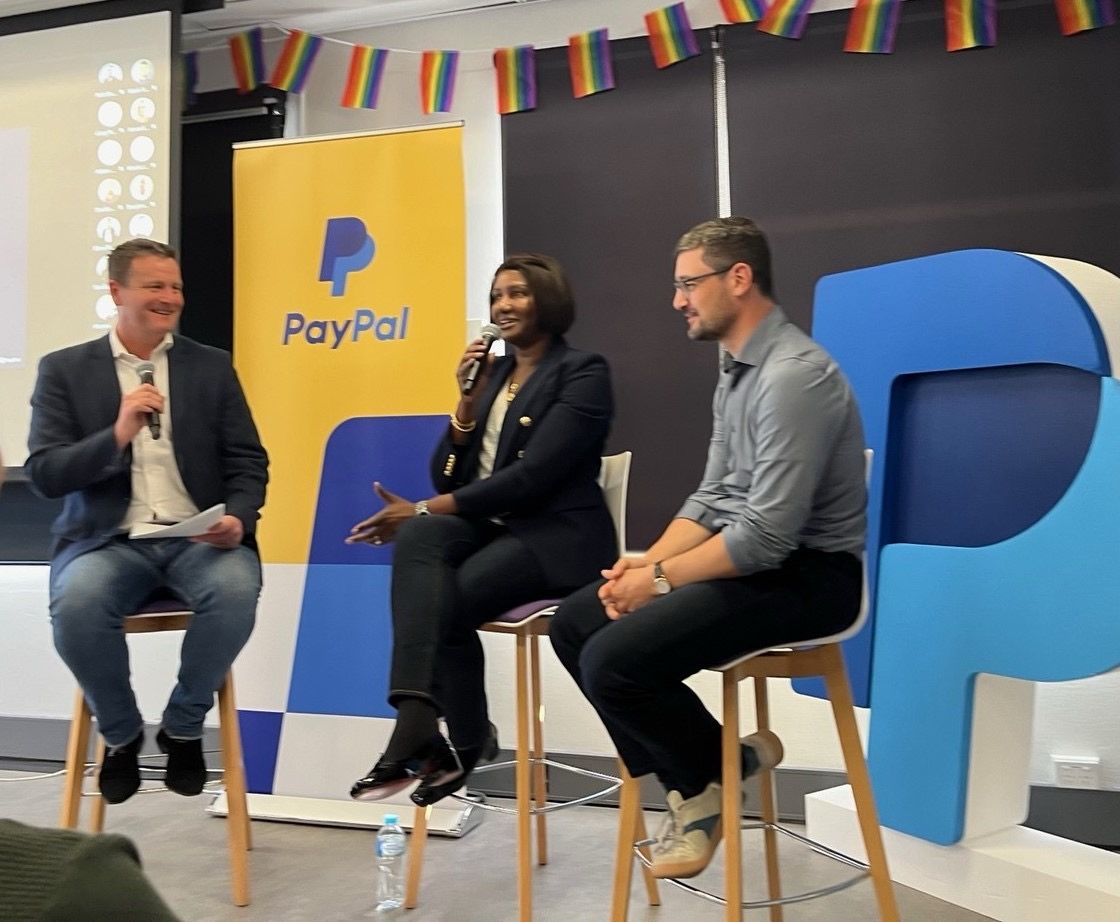
In July 2024, Cowan shared photographs from a period of activity in PayPal’s Sydney office. Global leaders had visited, including Suzan Kereere, Frank Keller and Nadia Syed. He valued the chance to exchange ideas face to face.
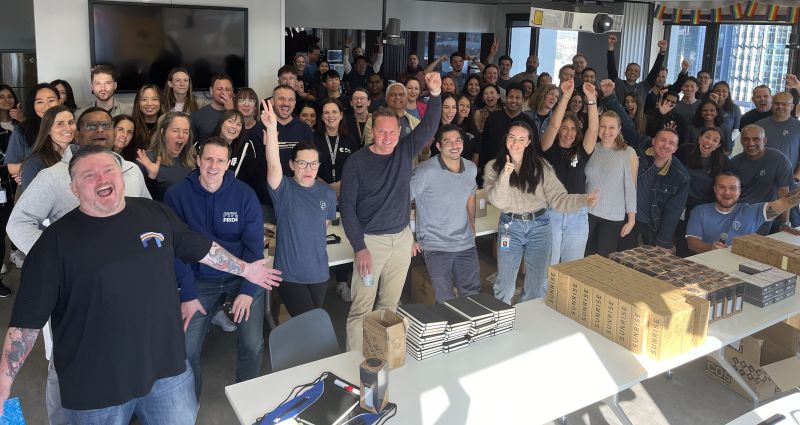
Then the work became more tangible. For PayPal Impact Day, employees packed hundreds of kits containing goods from small business partners, for distribution through nonprofit organisations. Partners included Santos Organics, Muru Office Supplies, The ‘I Am’ Experience, Plate it Forward, Young Change Agents and the Australian Literacy & Numeracy Foundation.
In the accompanying group photograph, the foreground is occupied by tables, boxes and supplies. It is a pleasingly literal version of delivery. Cowan also described hearing business owners talk about their plans and the role PayPal had played in their businesses. The relationships normally represented by transaction activity had people in the room.
A longer view of who comes next
Cowan has also supported colleagues through Women in Payments. In a November 2024 post, he said he had joined its Australian Advisory Board that January. Looking ahead to the Sydney symposium, he singled out award nominees Alison O’Brien and Emily Curlewis. Both responded by thanking him for his support.
The exchange supplies a small, specific example of a senior executive’s influence. A nomination can put someone’s work in front of a wider audience. Advice can help a colleague judge a decision. Neither requires a product launch, though both can shape a career.
His professional profile also lists an advisory board role at Upplft from May 2025, focused on strategy, routes to market and enterprise governance. The recurring interest is in helping other people and organisations develop their work.
When Cowan reached his thirtieth anniversary in payments, mentoring the next generation occupied a prominent place in his reflection. The executive who once had to arrange his own payroll now has experience to offer people facing their own unfamiliar tasks. His story gives that ambition some texture: the systems keep changing, clients still have their own timetables, and someone occasionally needs to pick up the phone.