Enrique Lores was puzzled by the enthusiasm. A group of HP engineers had come to his university in Valencia to explain how a printer worked. The machinery interested him. The devotion seemed harder to account for. Here were grown people speaking with considerable feeling about putting marks on paper. He would later recall wondering: “How can someone feel passion for something so strange?”
In 1989, he joined HP as an engineering intern. The opportunity took him to San Diego for the summer. When the internship ended, HP was opening a research and development center in Barcelona and offered the young Spaniard a reason to stay. He accepted, imagining a relatively brief detour. The detour became a career of more than 35 years.
That is a pleasingly untidy beginning for a chief executive. There was no childhood blueprint for running HP, he told David Rubenstein in February 2024. There was a technical education, an interesting summer and a job offer in another city. The grand narrative arrived considerably later than the employment paperwork.
On March 1, 2026, Lores became president and CEO of PayPal. The former intern had already spent more than six years running HP. His new assignment carries a particular irony: an executive whose career demonstrated the value of staying is now being asked to make a company move faster.
One internship. Several careers inside it.
- 1989HP engineering intern
- 2015HP separation leader
- 2019HP president & CEO
- 2026PayPal president & CEO
Learning the company from several sides
Born in Madrid, Lores studied engineering at the Polytechnic University of Valencia and earned an MBA at Esade in Barcelona. The combination would become visible in his work: technical products on one side of the desk, customers and commercial decisions on the other. He spent years moving between those concerns inside the same employer.
His early executive record resists the neatness of a single specialty. He led HP’s large-format printer business, worked on commercial products across Europe, the Middle East and Africa, and held worldwide sales and customer-service responsibilities. He later ran Business Personal Systems, overseeing product development alongside marketing, sales and execution.
Customer support, in particular, supplies a different education from product development. A design team can discuss what a machine should do. A support organization hears what happened after somebody bought it. Lores held senior roles in both settings. His 2016 biography describes a support operation serving more than 150 million HP customers.
This breadth helps explain the otherwise surprising move from printers and PCs to payments. The products differ, but his experience extends to how a large technology business sells, supports and organizes them. PayPal hired someone accustomed to moving across those boundaries. The job now requires him to learn another set of products without losing sight of the people using them.
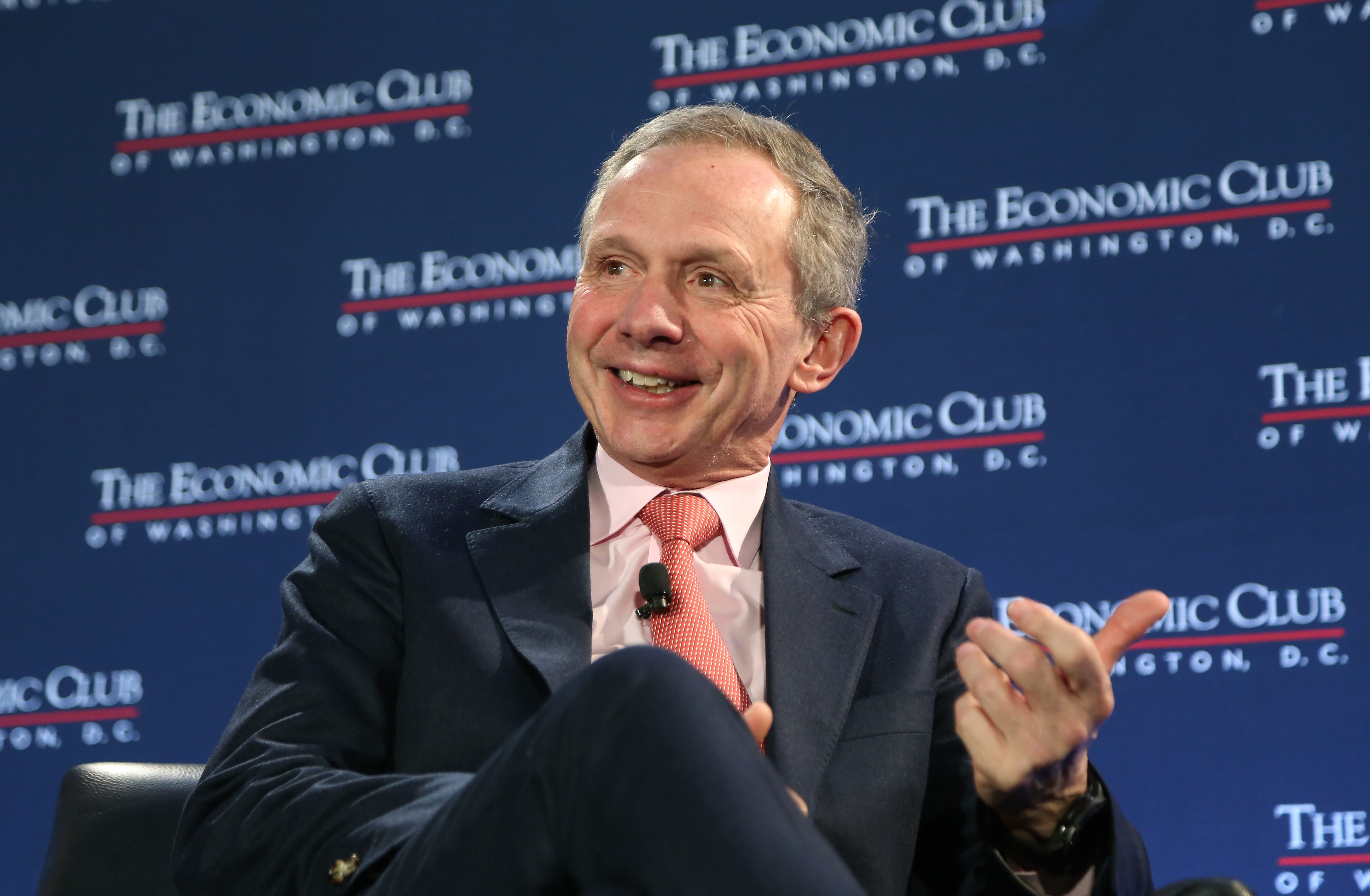
The year one employer became two
In 2015, Lores led HP’s Separation Management Office as Hewlett-Packard divided into HP Inc. and Hewlett Packard Enterprise. One company retained printing and personal systems. The other took the enterprise infrastructure, software, services and financing businesses. The separation was completed on November 1.
It sounds almost tidy when reduced to two names. The practical work involved maintaining relationships with customers, partners and suppliers while establishing separate corporate functions. Finance, legal affairs, technology systems, property and human resources all figured in the separation planning. The legal boundary had to become an operational reality.
This is the portion of his biography that keeps returning when boards explain why they want him. HP cited his role when naming him CEO in 2019. PayPal invoked it again when announcing his appointment in 2026. Corporate separations offer little of the glamour attached to a product launch. Their achievement is that ordinary business can continue while the organization underneath it changes.
After the split, Lores became president of HP’s Imaging, Printing and Solutions business. He had helped redraw the company and then took responsibility for a substantial piece of it. Four years later, HP’s board unanimously chose him to succeed Dion Weisler as chief executive, effective November 1, 2019.
From HP intern in 1989 to HP chief executive in 2019.
A printer was never just a printer
Before he became CEO, Lores was already describing a broader future for HP. In a 2018 interview, he discussed textile printing, digital art, additive manufacturing and services. The interesting question was how capabilities developed for an established product might find another use, or how a customer’s request could become a different business.
One example was particularly practical. Companies that asked HP to manage their printing equipment also wanted help managing their PC fleets. Lores described that demand as the origin of its Device as a Service proposition. The commercial opportunity began with a customer asking for another problem to be taken off the list.
As CEO, he also presided over HP’s acquisition of Poly, completed in August 2022 in a transaction valued at about $3.3 billion, including net debt. Poly brought cameras, headsets, video conferencing equipment, voice products and software. The purchase extended HP’s offering for people working across offices and remote locations.
The logic was easy to recognize in daily working life: a computer is only part of a usable meeting. Somebody still has to hear the person speaking. HP wanted to provide more of the surrounding equipment and services. That expansion also gives the PayPal move a little context. Lores had already spent years looking beyond the product category printed on the box.
A familiar boardroom, a different chair
Lores arrived at PayPal with an unusual advantage and a corresponding burden. He had joined its board in June 2021 and become independent chair in July 2024, succeeding John Donahoe. He knew the company from the boardroom before taking responsibility for its daily operations.
When PayPal announced the change on February 3, 2026, its explanation was unusually direct. The pace of change and execution over the preceding two years had fallen short of the board’s expectations. Alex Chriss would leave the CEO role. Jamie Miller would serve as interim CEO until Lores started, and David Dorman would become independent chair.
Lores therefore stepped into a problem he had already been helping oversee. Familiarity could shorten the introduction, but it also made it harder to present the assignment as a discovery. The board wanted improved execution, and its former chair would now be judged by the same standard.
His stated ambition joined long-term innovation to near-term delivery, with an emphasis on “executing with greater speed and precision”. The wording matters because it describes two different tests. A company can move quickly in the wrong direction, or make careful plans that take too long to reach customers. He was promising to address both.
“executing with greater speed and precision”
Enrique Lores · On his PayPal appointment, February 2026
Three businesses, fewer places to hide
On April 29, PayPal announced a new operating structure around three businesses. Checkout Solutions & PayPal would bring its consumer and merchant ecosystems together. Consumer Financial Services & Venmo would develop the consumer platform. Payment Services & Crypto would unite processing capabilities, including Braintree, with other merchant services and crypto.
The accompanying appointments made the structure concrete. Frank Keller was named president of Checkout Solutions & PayPal. Alexis Sowa and Jeff Pomeroy were appointed interim leads for the other two businesses. Antonio Lucio joined as chief marketing and corporate affairs officer; Anshu Bhardwaj was appointed chief AI transformation and simplification officer.
An organization chart is a modest object on which to hang a turnaround. Yet the reasoning was consistent with Lores’s operating history: define the businesses, put people in charge and make responsibility easier to locate. Whether those changes produce better products or stronger growth remains a matter for results. The announcement establishes what he changed, rather than proving what the change will earn.
By September, he was discussing a wider consumer financial-services offering and potential acquisitions tied to the growth strategy. He also described integrating technology assets accumulated through earlier purchases. For an executive associated with a major corporate split, the immediate challenge included making existing pieces work together.
The three-business model announced April 29, 2026
Back in Valencia, in unfamiliar clothes
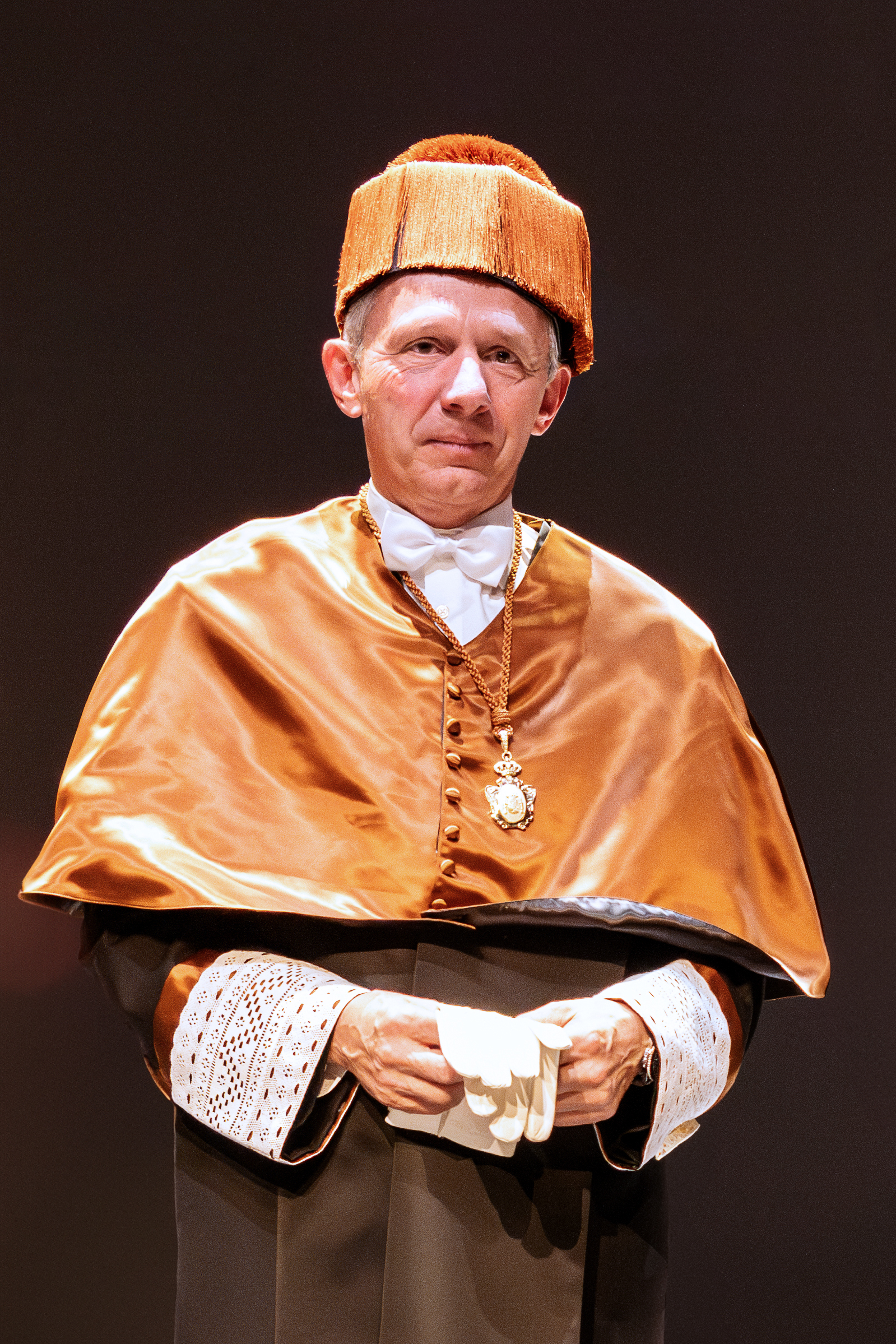
In June 2024, Lores returned to his university for an honorary doctorate. The ceremony took place at Valencia’s Palau de les Arts Reina Sofía. Academic dress gave the engineering graduate a rather different silhouette from the dark suit familiar at business events. Few career milestones come with such emphatic headwear.
The university recognized his professional career and commitment to education. He had also served on his engineering school’s strategic council since 2022. This was a continuing relationship with the institution where he had studied, rather than a name rediscovered for a ceremonial program.
Before receiving the honor, he described feeling moved and nervous to accept it at home among family, friends and the university community. His remarks returned to the importance of choosing an ambition and working toward it. The setting supplied a useful counterpoint to the corporate biography: the executive was also a former student returning to a place that had helped form him.
The clock is now part of the job
At Money20/20 in Las Vegas on October 19, 2026, Lores returned to decision-making and accountability in conversation with PYMNTS chief executive Karen Webster. He described a company slowed by management layers and said Venmo and Braintree had needed more attention and investment. Consumers, too, were to receive greater emphasis.
He also put a timetable around one fashionable idea. PayPal was preparing for commerce conducted through AI agents, but he said meaningful sales volumes were unlikely before 2028. Infrastructure and partnerships needed work in advance. That distinction between preparing for a market and collecting revenue from it is particularly relevant to his assignment.
For now, the story is unfinished. A long apprenticeship has brought Lores to a job with an impatient brief. The young engineer once found other people’s enthusiasm for printers faintly mysterious. He eventually made a career among them. At PayPal, his task is to make years of accumulated operating experience count in the much shorter interval between deciding to do something and actually doing it.