Breaking
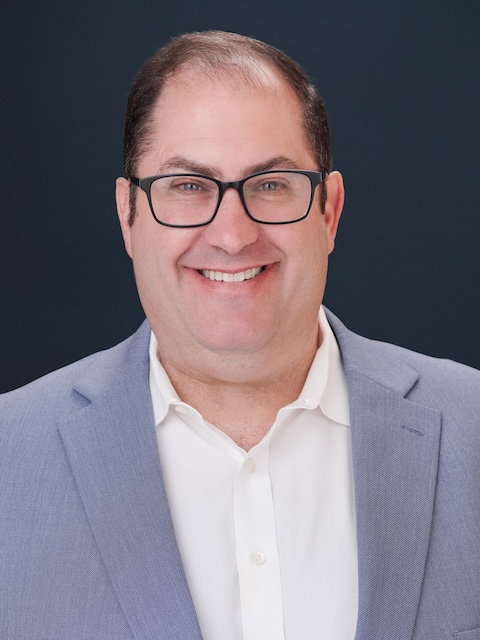
Eric Wiesen, General Partner at Bullpen Capital
Venture Capital // San Francisco, CA

EricWiesen

General Partner - Bullpen Capital

He backed Venmo when it was a $26M footnote. He funded Braintree before PayPal showed up with $800M. He left one of Silicon Valley's most prestigious law firms to build a startup - twice. Now he runs one of the most deliberate post-seed funds in the business, looking for what the herd can't see.

"Bias to Action"
$130M
Latest Fund
20+
Exits at RRE
15+
Years in VC
2x
Founder

The Investor Who Hunts Obscured Value

Eric Wiesen runs money at the moment most VCs look away. Not too early - seed funds own that territory. Not Series A - everyone with a term sheet wants that. Bullpen Capital lives in the uncomfortable middle: companies that have proven something, but don't yet fit the $10M-raise-in-18-months script that traditional venture requires.

That's where Wiesen spends his time. Hunting companies where the value is real but "obscured" - his word - from the consensus view. It's a philosophy that produced Venmo. It produced the Braintree investment that eventually caught PayPal's attention for $800 million. It produced exits at Makerbot, TapCommerce, Singleplatform, Sailthru, and Bitly.

Since joining Bullpen Capital in 2015, Wiesen has deployed across four funds, backing companies from digital mental health (Brightside) to energy sector operations software (CruxOCM) to family-focused commerce (CAMP). His instinct is for sectors where the conventional narrative has either missed something or written the story too soon.

"Venture firms must have a differentiated product to maintain competitive advantage."

- Eric Wiesen, on Bullpen's approach
Current Role
General Partner

Bullpen Capital
San Francisco, CA
2015 - present

Previous Role
General Partner

RRE Ventures
New York
2010 - 2015

Before VC
Attorney

Fenwick & West
Silicon Valley
VC, M&A, Securities

Founder
2x Entrepreneur

Xert Computing (age 20)
Higher Ground Solutions (2004)

Post-Seed Early Growth Fintech SaaS HealthTech PropTech Enterprise Gaming Commerce Non-Consensus

The Exits

At RRE Ventures, Wiesen sourced and led over two dozen investments. Several found their way to significant acquisitions - some before the world knew the company names.

Braintree
Acquired by PayPal - 2013
$800M
The deal that also delivered Venmo to PayPal
Venmo
Acquired by Braintree - 2012
$26.2M
Before it became a cultural verb
TapCommerce
Acquired by Twitter
Undisclosed
Mobile retargeting platform
Makerbot
Acquired by Stratasys (SSYS)
Undisclosed
Consumer 3D printing pioneer
Singleplatform
Acquired by Constant Contact
Undisclosed
Restaurant & local business listings
Sailthru
Acquired by Campaign Monitor
Undisclosed
Personalization & marketing platform
Bitly
Acquired by Spectrum Equity
Undisclosed
Led Series B; joined board

From Dorm Room to Deal Room

Eric Wiesen started early. At 20, still an undergraduate at UC Berkeley, he co-founded Xert Computing - a hardware and services company for the 3D graphics and animation industry. He ran sales, marketing, and partnerships. The company was eventually sold. Not bad for a college sophomore.

Then he went to law school. University of Michigan, JD. Landed at Fenwick and West in Silicon Valley, one of the firms where venture-backed startups turn when they need help raising capital, navigating M&A, or managing securities work. He watched deals from the legal side. He saw the structure of how capital moves and how companies get built. That vantage point doesn't leave you.

Anecdote

In 2004, Wiesen left law. Not to join another firm - to start a company. Higher Ground Solutions, an enterprise software firm. A person who leaves Fenwick and West to found a startup is making a particular kind of bet on themselves. He ran it for two years before the pull toward venture capital became irresistible.

Stuart Ellman and Will Porteous at RRE Ventures recruited him as an Associate in 2008. The timing was... interesting. The financial crisis arrived the same year. But so did the smartphone, cloud computing at scale, and the consumer internet about to generate a decade of the most consequential startup exits in history.

Wiesen moved up to General Partner at RRE by 2010. Over the next five years, he sourced or led more than two dozen investments. Venmo was a $26M acquisition in 2012 - tiny, seemingly. Then Braintree went to PayPal for $800M in 2013. Venmo came along for the ride. Within a few years, Venmo was processing hundreds of billions in transactions annually. That's not luck. That's reading the room early.

In 2015, Wiesen made the move to Bullpen Capital. The firm was built around a specific thesis: the market was structurally broken between seed and Series A. Companies that didn't fit the standard "raise seed, show traction in 18 months, raise $10M+" model were getting left behind - not because they were bad companies, but because the timing didn't fit the template.

Bullpen's answer was post-seed capital with flexible structures. Wiesen fit that philosophy precisely. His whole career had been about reading companies from a different angle - as a lawyer, as a founder, as an investor who'd seen the full stack of how startups actually work.

"We fund companies that don't fit the standard seed to 18-month to $10M+ Series A format. Stage differentiation is competitive advantage."

He's been there since. Fund IV, Fund V, Fund VI. Investments in digital mental health, energy sector operations, family-focused commerce, neighborhood work clubs. The sectors change; the instinct stays the same - find the non-obvious bet where value is real but the herd hasn't looked yet.

Along the way, he also went back to school. Columbia Business School for an MBA. Then earned a spot in Kauffman Fellows Class 13, a selective program for emerging investment leaders, where he was mentored by RRE's own Stuart Ellman. He received the Class 13 Jeff Timmons Memorial Award for service - the kind of honor that marks someone as not just good at the job but invested in the broader community around it.
Four Beliefs That Drive Every Check

01
Avoid the Herd
Consensus investments return consensus outcomes. Wiesen actively looks for companies where value is "obscured" from the mainstream VC narrative - the ones nobody's fighting over yet.
02
Stage Differentiation
Bullpen competes on when it invests, not just what. The post-seed gap - after seed but before standard Series A - is where Wiesen finds his most interesting deals.
03
Differentiated Product
A VC firm is itself a product. Wiesen believes firms without a genuinely differentiated offering eventually lose their edge as the market becomes more competitive and information more symmetric.
04
Founder-First Structure
Flexible round structures, no rigid templates. Wiesen backs founders whose companies don't fit a mold - which means the capital structure has to be flexible too.

Career in Sequence

Early 1990s
Co-founded Xert Computing at age 20 while at UC Berkeley - hardware and services for the 3D graphics and animation market. Ran sales, marketing, and partnerships. Company was eventually sold.
Late 1990s - 2004
Corporate attorney at Fenwick & West in Silicon Valley. Focused on venture capital financing, high-technology M&A, and public-company securities. Watched deals from the other side of the table.
2004 - 2006
Left law to co-found Higher Ground Solutions - an enterprise software design and implementation firm. Two years as a founder (again) before pivoting toward investment.
2008
Joined RRE Ventures as Associate. Recruited by Stuart Ellman and Will Porteous. The financial crisis hit the same year. So did the smartphone era.
2010
Promoted to General Partner at RRE Ventures. Named Kauffman Fellow, Class 13. Received the Jeff Timmons Memorial Award for service to the fellowship community.
2010 - 2015
As GP at RRE, sourced and led 20+ investments across software, media tech, fintech, and consumer. Led Series B at Bitly and joined the board. Investments included Venmo (exit 2012) and Braintree (exit 2013 - $800M to PayPal).
2015
Joined Bullpen Capital as General Partner. Relocated from New York to San Francisco. Published "Warming up in the Bullpen" on Medium laying out the post-seed thesis.
2016
Moved family from San Francisco back to San Rafael - the California town where he grew up and met his wife Marika at Davidson Middle School decades earlier.
2019
Featured in Venture Capital Journal on avoiding the investment herd. Bullpen deploys across Fund IV with Wiesen leading investment in Brightside, a digital mental health platform.
2020 - Present
Bullpen raises $130M latest fund. Wiesen leads investments in CruxOCM (energy operations software), CAMP (family commerce), and Switchyards (neighborhood work clubs) through Funds V and VI.

Bullpen Capital - What the Name Means

The name is baseball. A bullpen is where pitchers warm up - ready for the big game, not yet called in. Bullpen Capital backs companies at exactly that moment: they've proven their stuff in the minors, but haven't yet gotten the call from the traditional Series A herd.

Wiesen joined in 2015, drawn by the clarity of that thesis. His work at RRE had shown him how many genuinely promising companies got stranded between seed and Series A - not because they'd failed, but because they didn't fit the pattern that institutional VCs were looking for. Too small for Sequoia. Too big for pre-seed. The gap was real.

Bullpen's answer - and Wiesen's operating thesis - is flexible capital with a specific mandate: back companies that need a different kind of on-ramp. Not every startup runs on an 18-month clock. Some sectors move differently. Some business models take longer to prove. The investors who can read that difference, and have the patience and the capital to act on it, find some of the most interesting opportunities in the market.

$428M
Total Funding Raised
$130M
Latest Fund (2020)
21
Team Members
50+
Portfolio Companies
Focus Sectors
Where Wiesen Deploys

Financial services & technology · Digital health · PropTech & real estate · Next-gen interfaces · Manufacturing & consumer products · Gaming · Enterprise SaaS · Energy operations software

Outside the Term Sheet

Eric Wiesen grew up in San Rafael, California - a Marin County town just north of the Golden Gate Bridge. He went to school there, met his future wife Marika at Davidson Middle School (in the 1980s, as kids), then left for Berkeley, Michigan, New York, and the broader arc of a career that took him across the country and back.

In 2016, he and Marika brought their two children back to San Rafael. It's the kind of move that says something about priorities - the career had clearly gone well enough that they could choose where they wanted to live, and they chose the place they started. They were featured in Marin Magazine in 2024 for a colorful home renovation - bright, welcoming, a sharp contrast to the navy-and-number-heavy world of venture capital spreadsheets.

He cooks. He's an avid home chef - genuinely, not in the "I have a Viking range" sense. He's been on Twitter since February 2007, posting on economics, business, and politics with the kind of directness you'd expect from someone whose personal mantra is "Bias to Action."

"The best opportunities are those where company value is obscured from the investment herd."

- Eric Wiesen, Venture Capital Journal, 2019
  • His Twitter bio has read "Bias to Action" since at least 2007 - long before it became fashionable for VCs to have a personal brand.
  • He and his wife Marika met as children at the same middle school in San Rafael. They eventually married, left California, built careers, and came back to raise their own kids in the same town.
  • He was a corporate attorney at Fenwick & West - one of Silicon Valley's most connected law firms - before walking out to start a company at 34.
  • The Venmo investment looked like a $26.2M footnote in 2012. Within a decade, Venmo was handling hundreds of billions in transactions a year.
  • He holds three degrees: Berkeley BA, Michigan Law JD, Columbia MBA - which means he's covered Silicon Valley, the Midwest, and New York in his academic biography.
  • Bullpen's name is deliberately unglamorous. It's a baseball term for players waiting to get called in. Wiesen picked a firm whose identity is patience and timing, not prestige.
  • He co-founded his first company at age 20 - a hardware company serving the 3D animation industry. That market barely existed at scale. He saw it early.

Three Degrees, One Thesis

B
University of California, Berkeley
Bachelor of Arts
J
University of Michigan Law School
Juris Doctor (JD)
M
Columbia Business School
Master of Business Administration (MBA)
K
Kauffman Fellows Program
Class 13 - Jeff Timmons Memorial Award for Service

Three degrees - Berkeley, Michigan Law, Columbia Business - spanning the West Coast, Midwest, and East Coast. Each one added a different lens to how Wiesen reads companies: the analytical rigor of Berkeley, the deal-structure fluency from law, the financial modeling from business school.

The Kauffman Fellows program deserves its own mention. It's a selective, two-year fellowship for investors who show unusual promise. Class 13 was mentored by Stuart Ellman at RRE - the same person who recruited Wiesen to venture capital. He was awarded the Jeff Timmons Memorial Award for service to the fellowship community - a distinction that marks someone as invested in the ecosystem, not just the returns.

The thesis that ties all three degrees together is essentially: understand the structure, then find where the structure is wrong. Law taught him how capital flows. Business school taught him how to model it. Founding two companies taught him what neither can fully capture.

He Writes It Down

Wiesen maintains a Medium presence under @ewiesen with nearly 3,000 followers. His tag there: "Bias to Action." The writing is direct, analytical, and occasionally contrarian - which tracks with someone who spent years identifying investments the consensus missed.

His most notable piece, "Warming up in the Bullpen," published when he joined Bullpen Capital in 2015, laid out the post-seed thesis in clear terms: the gap between seed and Series A is real, structural, and exploitable. He described why he left RRE for Bullpen, what differentiated product means for a VC firm, and what "stage differentiation" actually looks like in practice.

He's also written on founder equity arrangements, founder liquidity, VC fundraising dynamics, and market efficiency - the full stack of issues a General Partner navigates. He thinks in systems. The writing shows it.

In 2019, Venture Capital Journal ran a feature on his approach: "Bullpen's Eric Wiesen on avoiding the investment herd and common VC mistakes." The common VC mistakes turn out to be mostly about following everyone else's thesis rather than building your own.

Featured Article
"Warming up in the Bullpen"

Published on Medium in 2015. Wiesen's first-person account of joining Bullpen Capital, and the clearest public statement of his post-seed investment philosophy. Read by anyone trying to understand what Bullpen actually does.

Press Coverage
"Avoiding the Investment Herd"

Venture Capital Journal, November 2019. Wiesen on the specific VC mistakes he's watched others make - and why non-consensus thinking is a structural advantage, not just a personality trait.

Personal Blog
Five Years Too Late

An older writing outlet, showing Wiesen's thinking from earlier in his career. The title is either self-deprecating or a note on timing - which, for a post-seed investor, is the whole game.

Find Eric Online

Follow Eric Wiesen's work at Bullpen Capital, or read his writing on venture capital, investing, and founder support.

Share this profile