Islam Shawky wanted to sell things on the internet. This was a perfectly reasonable ambition for a student watching the digital economy take shape. It also contained a rather large assumption: once somebody wanted to buy something, there would be a practical way to collect the money. The shop had a problem before it had much of a shop. Its checkout was asking a question the market had yet to answer.
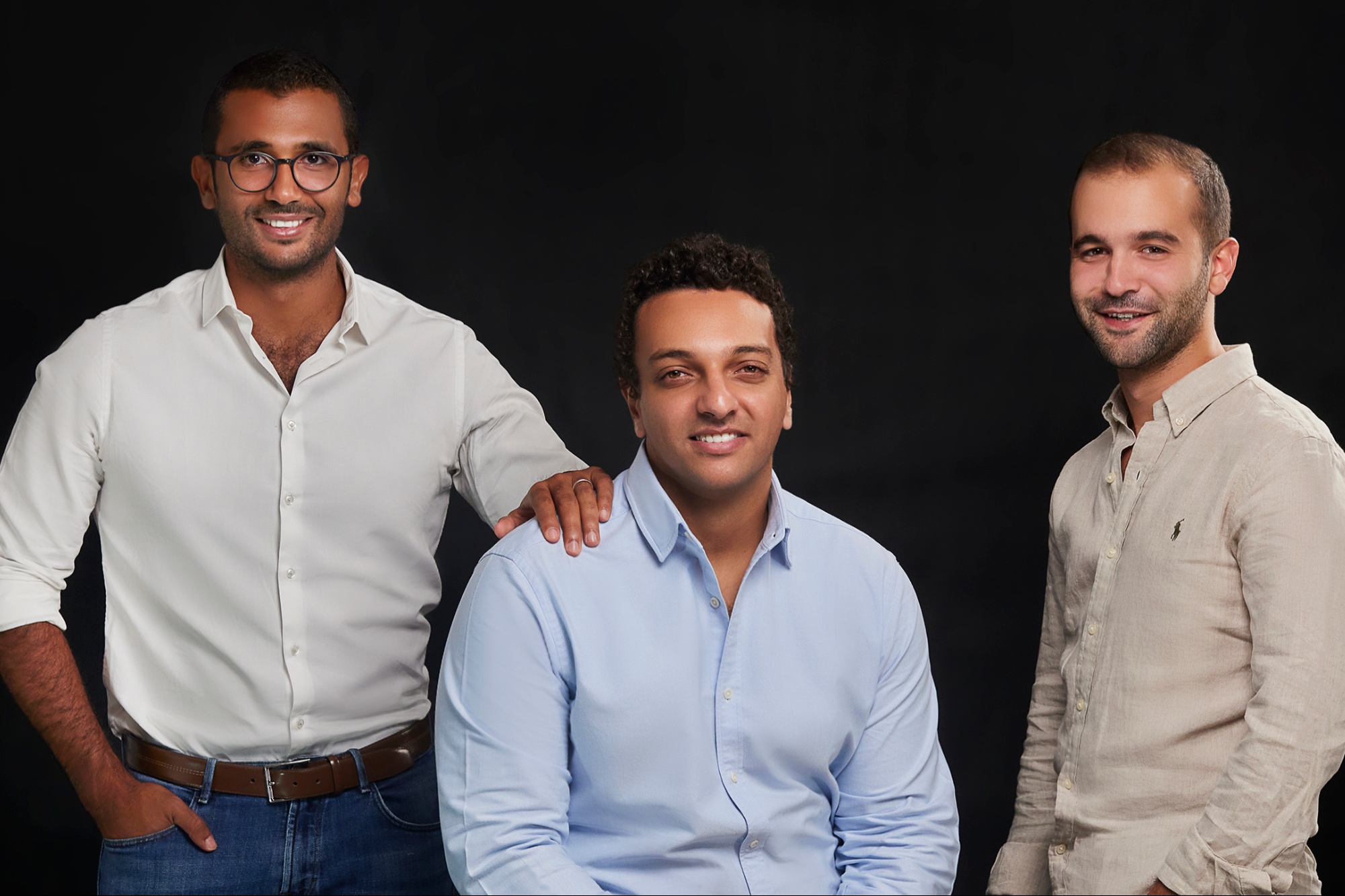
In 2013, Shawky joined Alain El Hajj and Mostafa Menessy to work on an Egyptian e-commerce platform. Approaching banks about a payment gateway exposed a gap between their proposed business and the services available to it. By 2015, the three had founded Paymob. The original venture had supplied something more useful than an order book: a problem shared by other businesses.
Years later, Shawky could laugh about the change of direction. “We were actually building an e-commerce startup,” he recalled. It is a pleasingly unceremonious beginning for a payments executive. There was no lifelong vow to reform the checkout. There was a checkout, and it was in the way.
That distinction helps explain the career that followed. A shopkeeper experiences payment as part of selling; a financial institution sees a service with technical, commercial and regulatory requirements. Shawky had arrived at the meeting from the shopkeeper’s side. His business would have to become fluent in both languages. The inability to finish one venture became the reason to start another.
Fifteen months of hearing no
The three founders had met at the American University in Cairo. Shawky graduated in 2015 with a Bachelor of Science in mechanical engineering; his partners studied computer science. Their eventual roles divided the work: Shawky as chief executive, El Hajj as chief operating officer, Menessy as chief technology officer. An engineering education had led Shawky toward an unexpectedly different kind of machinery.
The first mechanism to get moving was a partnership. El Hajj later described banks politely showing the young founders the door. They spent 15 months hearing refusals before a bank agreed to work with them in 2016, enabling their first transaction. In that account, the waiting was also an education: they learned how to present a worthwhile service and how to engage with institutions that would have to trust it.
It is easy to make rejection sound glamorous after the fact. Fifteen months is a less glamorous unit of time. It is long enough for a promising idea to become a tiresome explanation. The interesting part of their account is the adjustment it describes. Persistence involved improving the proposition, rather than simply repeating it louder.
There was an obvious difficulty in the arrangement. A bank asked to help a new company move money has reasons to want evidence. A new company needs a working relationship to produce that evidence. Shawky’s early career lived inside that circle. Before scale, before a regional map, there was the much smaller task of getting somebody to permit the first payment.
The university becomes the customer
In 2018, Paymob’s work returned to the campus where its founders had studied. The university introduced AUC Coin, a prepaid system powered by Paymob that let students, faculty and staff pay for purchases using their university IDs. Food outlets, the bookstore and the Copy Center were among the places accepting it. An identification card acquired a second job.
By the university’s October account, the system had handled more than 12,000 transactions worth almost one million Egyptian pounds over three months. A student welcomed the disappearance of the hunt for change. A coffee-shop manager described easier, faster work. These were modest observations beside the language of a digital economy, and rather better evidence of what people wanted from one.
For Shawky, the project joined an old setting to a new occupation. He spoke about preparing a generation for a digital future. The concrete achievement was wonderfully ordinary: people could buy lunch or a book with less fuss. A payment system earns its place in daily life through moments like that. Few customers want an inspiring experience at the till. Most would prefer an uneventful one.
A phone, a merchant, a reason to use it
Paymob worked on both sides of the transaction. It built mobile-wallet products for financial institutions and telecom operators, while enabling merchants to accept different forms of payment. That mattered because a wallet becomes more useful when there are places to spend from it. A place to accept payment becomes more useful when customers have a way to pay.
Shawky’s goal was access to financial services through phones. His colleagues described systems that allowed people using different wallet providers to transact with one another. The ambition went beyond a pleasant button on a website. It required connections between businesses and institutions that could otherwise remain separate, each with its own customers and arrangements.
The practical meaning of inclusion appeared in a campaign aimed at women running small businesses. Paymob’s #AcceptTheChange campaign offered messages tailored to established merchants, new businesses and prospective entrepreneurs. A published case study recorded Shawky saying the campaign had reached 2.4 million women and prompted 21,000 social-media engagements in two months. Paymob had to double the onboarding team and adjust registration processes.
Those figures describe outreach, rather than a count of merchants won. The operational consequence is the telling detail. A campaign can invite somebody in; registration still has to let her through. For a founder whose own venture had stumbled at a gateway, the distinction has a certain symmetry. The promise made in public eventually arrives at a desk, a form and a person trying to get started.
The company behind the company
Support entered Shawky’s story through relationships as well as capital. In a 2020 funding announcement, the founders paid tribute to founding board member Khaled Bichara. They described a connection that began with a university case study, became a business partnership and grew into friendship. They credited his teaching and support with helping Paymob reach that point.
That history gives the usual investment vocabulary some human weight. A cap table records ownership. It cannot record a lesson from a mentor, or the difference made by someone willing to take young founders seriously. Shawky’s company needed both the resources and the judgment of people beyond its original trio.
In 2021, the university recognized the three co-founders’ inclusion in Forbes Middle East’s 30 Under 30. In 2022, all three were selected as Endeavor Entrepreneurs. The recognition attached to a team whose partnership had survived the move from a proposed shop to a financial-services business. Their names continued to travel together.
Shawky’s own advice to founders is economical: “Don’t build a company focused on the exit.” He has described learning from mistakes and hiring people who can solve unfamiliar problems. Taken alongside his origin story, the advice has a specific meaning. The first plan can be wrong; the need encountered while pursuing it can still be worth years of work.
“Don’t build a company focused on the exit.”Islam Shawky / 2022
Across the border, back into a bank
In November 2022, Paymob announced the UAE as its regional hub. The expansion plan focused on microbusinesses and smaller enterprises, with products intended to make accepting digital payments more accessible. Moving into another country extended Shawky’s original question: what would a merchant need before the next transaction could actually happen?
A January 2024 partnership with Mastercard put cost near the center of the answer. The agreement covered Tap on Phone, e-commerce gateways and payment links, aiming to widen adoption among smaller businesses. Each route reduced the distance between a seller and a customer who wanted to pay digitally. A payment link, for example, could travel to the customer instead of requiring the customer to arrive at a conventional checkout.
In Oman, Shawky signed a partnership with National Bank of Oman chief executive Abdullah Zahran Al Hinai in January 2024. The bank described supplying gateway integration, point-of-sale terminals and corporate internet banking. Years after the first reluctant bank meetings, a bank partnership still sat at the center of entering a market.
The UAE Retail Payment Services licence, announced in January 2025, brought another practical issue into focus: how quickly merchants could receive their funds. Shawky discussed Aani, the UAE’s instant-payment platform, and the advantage of instant settlement. Cash has a formidable selling point here. Once it is in the till, nobody needs to wait for Monday.
That observation keeps the story grounded. Digital payment adoption involves more than persuading people that software is modern. A merchant has bills, stock and timing to consider. Shawky’s interest in settlement speed recognizes the everyday standard against which the technology will be judged. The future still has to pay the supplier.
A bigger map, the same small obstacle
The business had grown beyond acceptance alone. An EBRD investment description listed payment processing alongside bookkeeping software, payment netting and advanced settlement. The list traces what happens after a sale: money has to be accounted for, obligations managed and funds made available. The transaction opens a set of other jobs.
In September 2024, Paymob announced a $22 million Series B extension and profitability in its core Egyptian market. This was an important qualification to the growth story. Success at home and expansion abroad were related projects, each with its own economics. For Shawky, building across markets meant keeping the original business working while adding new ones.
On September 21, 2026, Mubadala announced its investment in Paymob’s $35 million pre-Series C round. Over the preceding 18 months, Paymob reported threefold consolidated revenue growth and sevenfold GCC revenue growth. Close to half its revenue was then coming from GCC markets. The figures describe a change in the company’s center of gravity, as well as its size.
The next product plans include services for small businesses and agentic commerce, where software agents participate in commercial transactions. These remain ambitions to execute. Shawky has spent much of his career working on the gap between a promising model of commerce and the arrangements needed to make it function. Another model is now arriving at the door.
He still describes the starting point in plain terms. In a September 2026 LinkedIn post, he recalled founding Paymob because digital payments were too difficult for a small business in the region. He thanked the team and investors supporting its next phase. The scale has changed; the inconvenience that gave him a career remains recognizable. Someone wants to sell. Someone wants to buy. Shawky’s work begins in the space between them.
Keep following the transaction
- Paymob website ↗
- Islam Shawky on LinkedIn ↗
- The accidental founder: 2022 interview ↗
- AUC Coin on campus ↗
- The first bank partnership ↗
- UAE licence and settlement interview ↗
- September 2026 investment announcement ↗
- Listen: VC Sandbox with Islam Shawky ↗
- Watch: Web Summit Qatar 2025 panel ↗
- Paymob on LinkedIn ↗
- Paymob on X ↗