Santiago Suarez’s route into financial technology began somewhere less glamorous than a trading floor: the shopping mall. His family worked in retail, and as a boy in Colombia he visited stores with his father on weekends. Years later, after Yale, New York and Silicon Valley, he would return to the transaction at the center of those visits. A customer wants something. A shopkeeper wants to sell it. Between them sits the question of how to pay.
It is a modest scene on which to hang a career that includes JPMorgan and LendingClub. It is also a scene with consequences. If a customer can pay over time, a purchase becomes possible; if the only available option is cash today, it may remain on the shelf. Suarez co-founded Addi in 2018 to bring digital credit to that meeting between shopper and merchant. The ambition began at the checkout and kept expanding.
The more revealing part of his story is what happened after the launch. Suarez once argued that venture-backed businesses in Latin America needed to reach Brazil or Mexico quickly. Addi entered Brazil, then withdrew. He went looking for lessons in Kazakhstan. The founder who came home with experience from American finance had to acquire another skill: revising his own instructions.
Before the balance sheet, the tour guide
At Yale, Suarez studied political science, graduating in 2007 with a joint bachelor’s and master’s degree. He founded the Yale Economics Association, helped establish the Student Micro Finance Initiative, and co-led the university’s tour guides. It is a pleasing combination: someone interested in how institutions distribute money, and someone practiced at explaining institutions to people who have just arrived.
His college awarded him the Roosevelt L. Thompson Prize for public service. The citation singled out his optimism and sociability, alongside his contributions to the university community. Before there was a company biography full of financing rounds, there was a student organizing things with other students. The connection to microfinance is especially suggestive, although it would be too tidy to turn a campus activity into a complete explanation for his later business.
A Branford fellowship funded travel during his undergraduate years. In his later account, he described how little of the world he had previously seen outside Colombia and the United States. Months in other countries changed his willingness to move for an opportunity. His education had supplied more than a credential. It had made distance feel negotiable.
A suitcase, a crisis, and a bank
After graduation, Suarez joined McKinsey in New York. The financial crisis gave him an unusually close view of large banks under pressure. He later moved west to a late-stage venture capital firm and worked on an artificial intelligence startup with MIT-trained colleagues. The sequence matters: he had seen established institutions, investment decisions and the uncertain work of building a young company before starting Addi.
By 2015, he was writing about strategy work at JPMorgan in New York and London, and about helping establish its New Product Development group. He led product development and business operations, while managing some relationships with startups. That placed him near the awkward seam where a large financial institution tries to adopt unfamiliar technology. A bank can see an opportunity and still take considerable effort to act on it.
He subsequently led strategy and corporate development at LendingClub in Silicon Valley. Colombia remained the place where he wanted eventually to build something of his own. On visits home, he saw improving access to technology alongside financial services that seemed much slower to change. The gap gave his return a business rationale. Familiarity with finance was useful; familiarity with the country made the problem harder to dismiss.
The first loan came before the polish
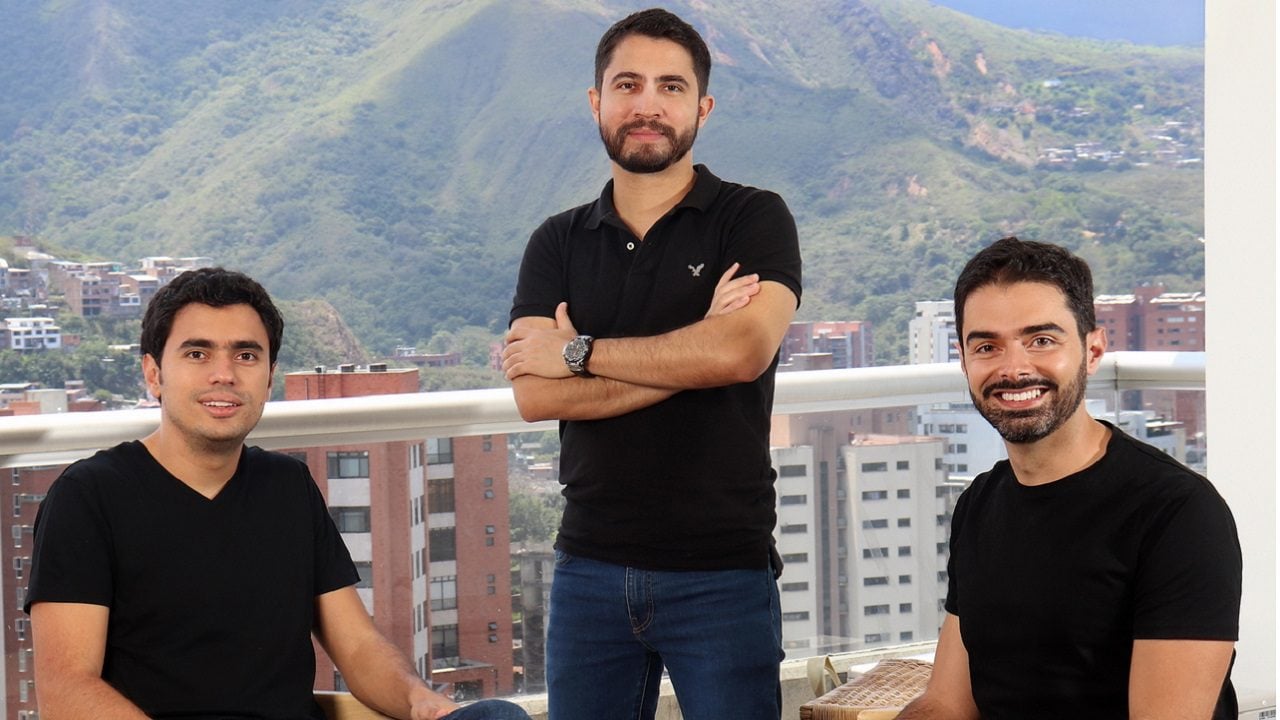
Addi’s founding team brought together Suarez, Daniel Vallejo and Elmer Ortega, three founders from Cali. Vallejo had worked with banks through McKinsey. Ortega brought risk-management experience and had taught himself to code to build a platform for hedge-fund operations. The team combined knowledge of financial institutions with the practical ability to construct something those institutions were not providing.
The company was incorporated in September 2018 and made its first loan that November. In his account of the launch, Suarez described a prototype built in 30 days, followed by a period of hiring technical staff and concentrating on a digital, paperless product. There was little ceremony available. A lending company becomes real when it lends, and the first transaction arrives well before the company has answered every question about its future.
An early coffee with investor Angela Strange supplied another unexpected acceleration. Suarez had gone to San Francisco seeking advice and introductions. He left with an offer from Andreessen Horowitz to lead the seed round. Their connection predated Addi, going back to his years in finance. The meeting is a useful reminder that a founder’s return home does not erase the relationships built abroad.
The map got smaller. The task got bigger.
In July 2020, Suarez published a pointed argument about building for Latin America. Venture capital required very large markets, he wrote, and founders needed to operate in Brazil or Mexico quickly, preferably both. Colombia could serve as a starting point, but he doubted it could always support the growth investors expected. These were public views, expressed while Addi was preparing its own expansion.
By late 2021, the company had raised more than $200 million in a combination of debt and equity, and reported a valuation above $700 million. Brazil was part of the growth story. Then the market changed, and so did the company’s plans. Addi exited Brazil and concentrated on Colombia. In March 2024, a new financing package paired $36 million in equity with $50 million in debt; Suarez said the valuation had fallen to roughly half its previous level.
That is the sort of revision a founder cannot disguise with a new slide design. Money has become more demanding. A geographic ambition has been abandoned. An earlier argument about the market now needs reconsideration. For Suarez, the answer was to pursue more of the Colombian customer’s everyday financial and shopping activity. Serving one country could still involve solving several connected problems.
Milestones describe changes in strategy, not a continuous growth measure.
A boardroom with room for dirty laundry
His operating habits changed too. During the funding slowdown, he increased the frequency of board updates and made difficulties central to the conversation. “We treat every board meeting as a dirty laundry event,” he explained. The phrase has the merit of making a normally solemn corporate ritual sound like a household chore. It also tells directors what they are there to do: help with the things that are going wrong.
From August 2022 to August 2024, profitability became Addi’s single guiding metric. Engagement followed once that objective was sustained. In 2024, Suarez also began spending Wednesdays visiting merchants, watching customers use the product. A shop’s complaint about a callback could lead to an immediate phone call to the responsible colleague. For a former tour guide, this was another useful tour: the company as its customers actually encountered it.
We treat every board meeting as a dirty laundry event.
Santiago Suarez · 2025
The founder who writes about the plumbing
Suarez’s personal blog gives a different view of him from the fundraising announcements. Its subjects include lending economics, debt facilities and securities settlement. He has written about the distinction between a software company’s economics and a lender’s need to put capital behind transactions. A product can attract customers while consuming money in ways a conventional technology-company spreadsheet fails to capture.
“Debt investors worry about the downside,” he wrote in 2020. His guide to negotiating a first lending facility distinguishes the ambitions of equity investors from the repayment concerns of lenders. It spends time on flexibility, fees and operational requirements. These are subjects that rarely make a thrilling company slogan. They do explain why an apparently simple purchase paid in installments requires so much work behind the screen.
He has also invested in and advised startups including Truora, Ubits and Chiper, and describes himself as a Village Global network leader on his personal site. Building Addi sits within a wider interest in how young companies work. His writing makes that interest unusually concrete: the glamorous business of changing finance still involves reading the terms.
A simplified illustration of the financing cycle. Approval and terms depend on the credit product.
A detour through Kazakhstan
When Suarez and Vallejo wanted to understand a broader commerce-and-finance business, they traveled to Kazakhstan to study Kaspi. It was an instructive destination for founders reconsidering the idea that scale necessarily required a long list of countries. Kaspi offered a model of payments, shopping and finance built around frequent use within a market.
The appeal was practical. Addi could connect credit to a marketplace and work with delivery specialists rather than try to become a logistics operator itself. Its partnership with Coordinadora followed that division of labor. A shopper does not organize a day according to the boundaries of financial-industry categories. Paying, buying and receiving a purchase belong to the same sequence. Suarez’s ambition increasingly followed that sequence too.
Back across the table from JPMorgan
In April 2026, Addi announced a $150 million structured credit facility with JPMorgan and Fasanara Capital. Suarez had once worked inside JPMorgan; now he was negotiating with it as a founder. The transaction required more than a year of work. Familiarity with a bank had not made the bank casually hand over money. It had helped him understand what the process would demand.
The year also brought authorization for Addi CF to operate as a financing company, opening a path toward savings products. In July, Addi raised an $85 million Series D led by Citius and co-led by BTG Pactual, with GIC and Monashees participating. The rounds served different purposes: equity supported the company’s development, while credit facilities helped fund the loans behind customer purchases.
By September, Suarez said Addi reached nearly four million Colombians and around 60,000 merchants, across 1,050 municipalities. He reported eight consecutive profitable quarters. He also said 47 percent of its users had no credit card. That last figure gives the business a human outline: many of the people using it are entering the checkout with a different set of financial tools from customers who can simply reach for a card.
Figures reported by Suarez. Addi also reported eight consecutive profitable quarters.
His childhood weekends at stores and his adult years in international finance now meet in the same business. The work still contains risk, negotiation and the possibility of another revision. But its test is intelligible without a finance degree. Can a person complete a purchase on workable terms? Can a merchant make the sale? Suarez has traveled a considerable distance to keep asking those questions at home.