Profile
Running North Africa's
digital infrastructure
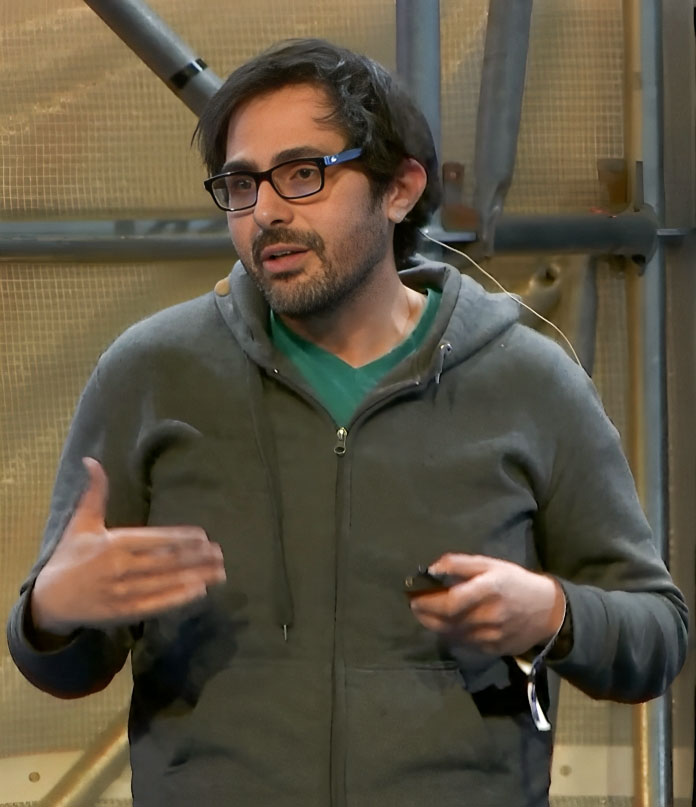
He runs Yassir from Palo Alto - an irony that would bother a lesser entrepreneur. Noureddine Tayebi left Algiers at the end of the 1990s with an engineering diploma, headed to Illinois, then Stanford, then straight into Intel's R&D labs. He spent eight years there working on DNA sequencing technology and filing patents until there were more than fifty of them. Then he quit, founded a nano-motion sensor company called InSense, sold it to a smart contact lens startup called Mojo Vision, and turned his attention to the problem he'd been watching for years from Silicon Valley: 150 million francophone Africans with smartphones and no reliable way to hail a ride, order food, or move money.
Yassir launched in Algeria in late 2017. Within eight months, it was profitable. That detail matters more than it sounds - most on-demand platforms burn cash for years before seeing a margin. Tayebi built it differently. He and co-founder Mahdi Yettou priced Yassir not as a loss-leader land-grab but as a real business in a real market. The name itself - Yassir, from the Arabic for "making things easier" - was a mission statement embedded in the brand before a single line of code shipped.
"Our business model from day one was a super app model and getting into payments."
- Noureddine Tayebi, TechCrunch Interview, 2022
The playbook was sequential and deliberate. First, build trust through rides. Algerians who'd never trusted an app with their location would use Yassir to book a car, then order food, then groceries. Each transaction was a proof point. Each proof point made the wallet launch easier. Tayebi describes it as "solving immediate needs around where people spent their money" - a framing that sounds obvious in retrospect but was genuinely contrarian in a market that investors consistently dismissed as "not sexy enough."
Those investors were wrong, and Tayebi eventually had the receipts to prove it. Yassir closed a $30M Series A in 2021, then a $150M Series B in November 2022 led by Bond - the firm run by Mary Meeker, the person who wrote the original "Internet Trends" report. DN Capital, Dorsal Capital, Quiet Capital, Stanford Alumni Ventures, and Y Combinator's Continuity Fund all joined. Total raised: $193.25 million. At the time, it made Yassir the most valuable tech startup in North Africa.
The company today has more than 2,000 employees and roughly 600 engineers. It operates in Algeria, Morocco, Tunisia, Senegal, Canada, and France - serving diaspora communities as well as domestic users. Three out of every five on-demand transactions in Algeria reportedly flow through Yassir. The endgame, as Tayebi describes it, is not just rides and deliveries - it's cash digitization. His network of drivers doubles as a fleet of mobile agents who convert physical cash into electronic money, pushing the unbanked population into the digital economy one transaction at a time.
Tayebi lectures occasionally at Stanford. He mentors founders at StartX, the Stanford alumni accelerator. He describes his largest ambition not as a valuation target but as a cultural outcome: "My biggest dream with Yassir is that every person that goes through Yassir would one day start their own company." For a man who turned a gap in a market that everyone else ignored into a company worth hundreds of millions, that is not a throwaway line.