At a business gathering in Marbella, the useful moment might arrive after the microphone has been switched off. Someone asks what you do. Someone else knows a person you ought to meet. A conversation acquires a second appointment. At September 2026’s Liderar para transformar, where Efrén Miranda joined a panel of community leaders, introductions were part of the morning’s design. There was a networking breakfast before the discussion and more conversation over lunch afterward.
That arrangement offers a useful way into Miranda’s company, El Club del Emprendimiento. The club connects entrepreneurs, small-business owners and self-employed professionals with information, education, advice and one another. Its audience includes people considering their first venture and people with an established company. A business need not be young to have a question.
- Registration is free; each service has its own terms.
- The club reports 100,000+ registered members.
- Its offer ranges from business guides to six-month mentoring.
- Partner programs bring the community into smaller working groups.
The price of a useful introduction
On the registration page, the first financial barrier is pleasantly absent. Membership is advertised as free. That matters to someone who wants to investigate support before commissioning it. The wider offer includes training, forums, afterwork events and specialist advice. Free entry gives a visitor somewhere to begin; the particular course or engagement determines what comes next.
The club puts its registered community above 100,000 and its social following at roughly 200,000. Those figures describe reach, according to the company. They do not measure how many businesses have become profitable. A member list is the supply of possible connections. The work consists of making a few of them relevant.
Company-reported community size.
An audience count, not a business success rate.
Its position in the market follows from that distinction. A business school organizes learning; a specialist adviser tackles a defined problem; an accelerator usually selects a cohort. The club spreads its invitation across these needs. Alternatives include chambers of commerce, volunteer mentoring through SECOT and acceleration through mentorDay. Choosing between them starts with the question you need answered.
The man who left at three
Miranda’s earlier career included banking and a public-sector entrepreneurship program in Gran Canaria. In a Holded interview, he described banking as work that left him dissatisfied. Supporting entrepreneurs gave him a direction he wanted to pursue. After three years in the public role, he left a secure job with an eight-to-three schedule to work independently.
The cost he describes is recognizable: certainty exchanged for responsibility and longer hours. He wanted to do things his way. An earlier collaboration with Emprendedores magazine eventually ended; he continued the support activities through his own club. The company dates its beginning to 2012. His account suggests continuity of purpose through a change of organization.
“I don’t know whether better or worse, but my way.”
Efrén Miranda, speaking to Holded · translated from Spanish
Six months, with homework
The club’s 180 DÍAS PARA EL ÉXITO offer supplies a more concrete description of assistance. It advertises six months with experienced mentors, beginning with a free diagnosis. The stated work covers strategy, feasibility, marketing, operations, administrative organization and finance. These are subjects that force an appealing idea to answer awkward questions.
A prospective participant should turn that list into a brief: the decision to make, the evidence to gather and the person responsible for each task. Ask how meetings work and what the engagement costs before committing. The program’s optimistic name is an invitation to inquire. A sensible buyer still needs a defined scope.
- 01Name the problem
- 02Request a diagnosis
- 03Agree the work
- 04Review the evidence
There is homework for investors, too. The published Business Angels syllabus specifies six three-hour sessions, including project evaluation, investment strategy and entry and exit negotiations. It explicitly includes unsuccessful cases. That is a useful editorial choice: a charming founder and an investible business are separate matters, and studying the difference takes time.
The educational catalog goes wider. Two published master curricula separate entrepreneurship from business management and entrepreneurship. Their topics include market validation, finance, marketing, leadership and growth. For someone comparing options, the syllabus is a starting point: ask about the teaching format, practical assignments and qualification attached to the course. A list of subjects becomes education through the work a student actually does.
A big audience, a small room
The smaller numbers are especially revealing. An Ourense accelerator announcement described ten startup places, a February 20, 2026 start and participation without fees or equity transfer. Organized with AEPA and INCIBE, it targeted eligible incorporated businesses less than five years old. Personalized mentoring and objective-driven work were central to its offer.
That program’s conditions matter. Someone with an unincorporated idea cannot assume the same eligibility as a young operating company. Nor should the terms of one supported cohort be generalized across the club’s entire catalog. The practical lesson is to inspect the actual invitation, rather than shop by the word “accelerator.” Even a well-matched program requires time from the founder. Introductions cannot replace customer demand, and a mentor can challenge a decision only if the owner brings real evidence to the meeting.
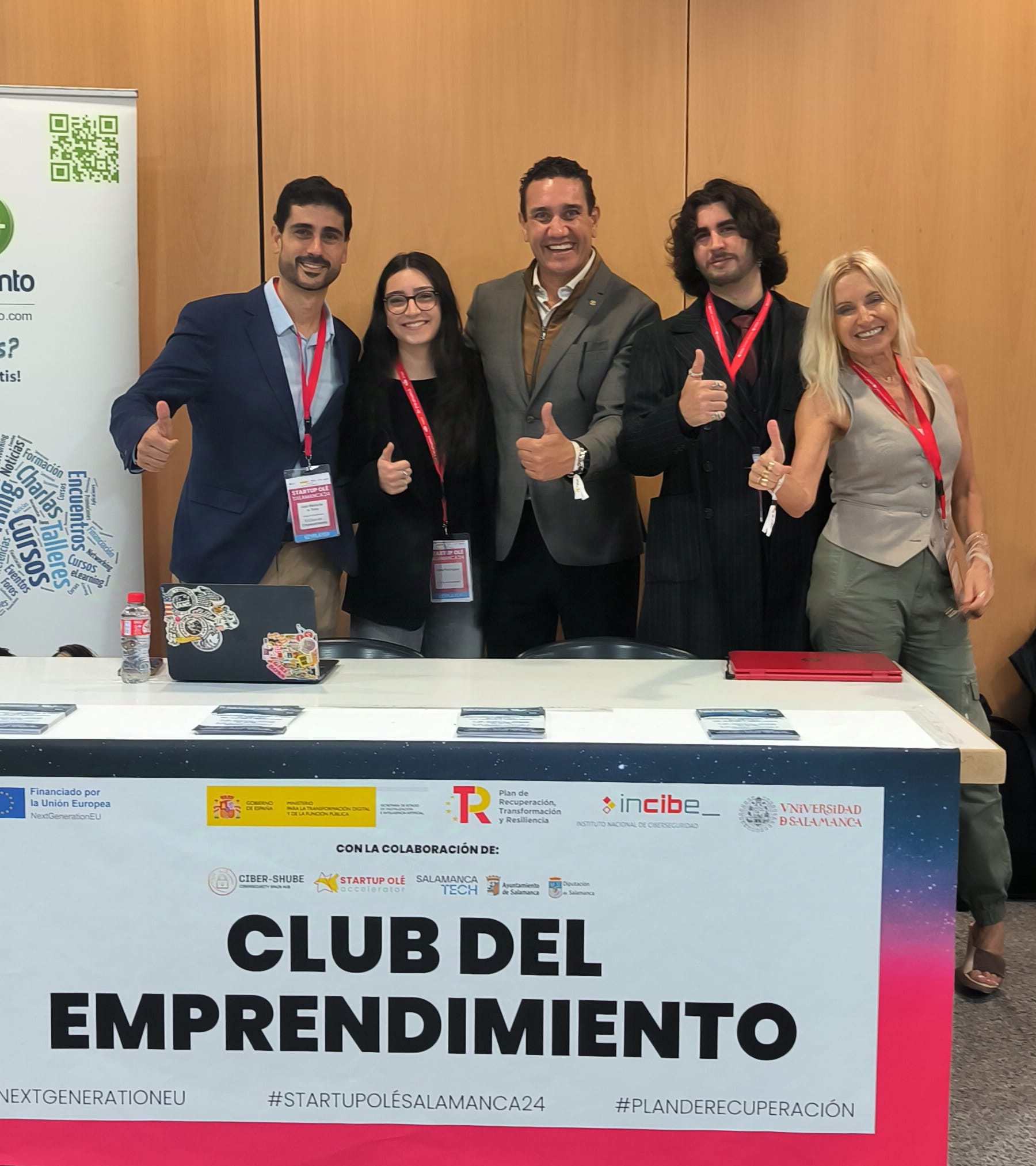
The cybersecurity relationship has evidence beyond a badge. INCIBE lists a fourth club incubation program under Emira Consultores. Afundación also records a June 2025 session for application-development students, covering web vulnerabilities and a practical audit. Here, entrepreneurship support reaches the technical choices behind a product.

The invoice deserves a headline
Publishing supplies another entrance. The club lists media collaborations with Cinco Días, EFE and RTVE, while its own blog deals with ordinary business decisions. An October 2026 pricing guide asks readers to count overhead and their own salary. A September guide considers AI for routine administrative work. The subjects are modest; their consequences arrive in the accounts.
The commercial shape is a free community connected to training, advisory services and institutional collaborations. Its website also directs visitors to TeleAsesor and La Gestoría del Emprendedor. For a reader, the useful habit to copy is specific: bring one problem, choose the relevant resource, then leave with an action and a date. A pleasant breakfast becomes valuable when it changes what happens on Monday.