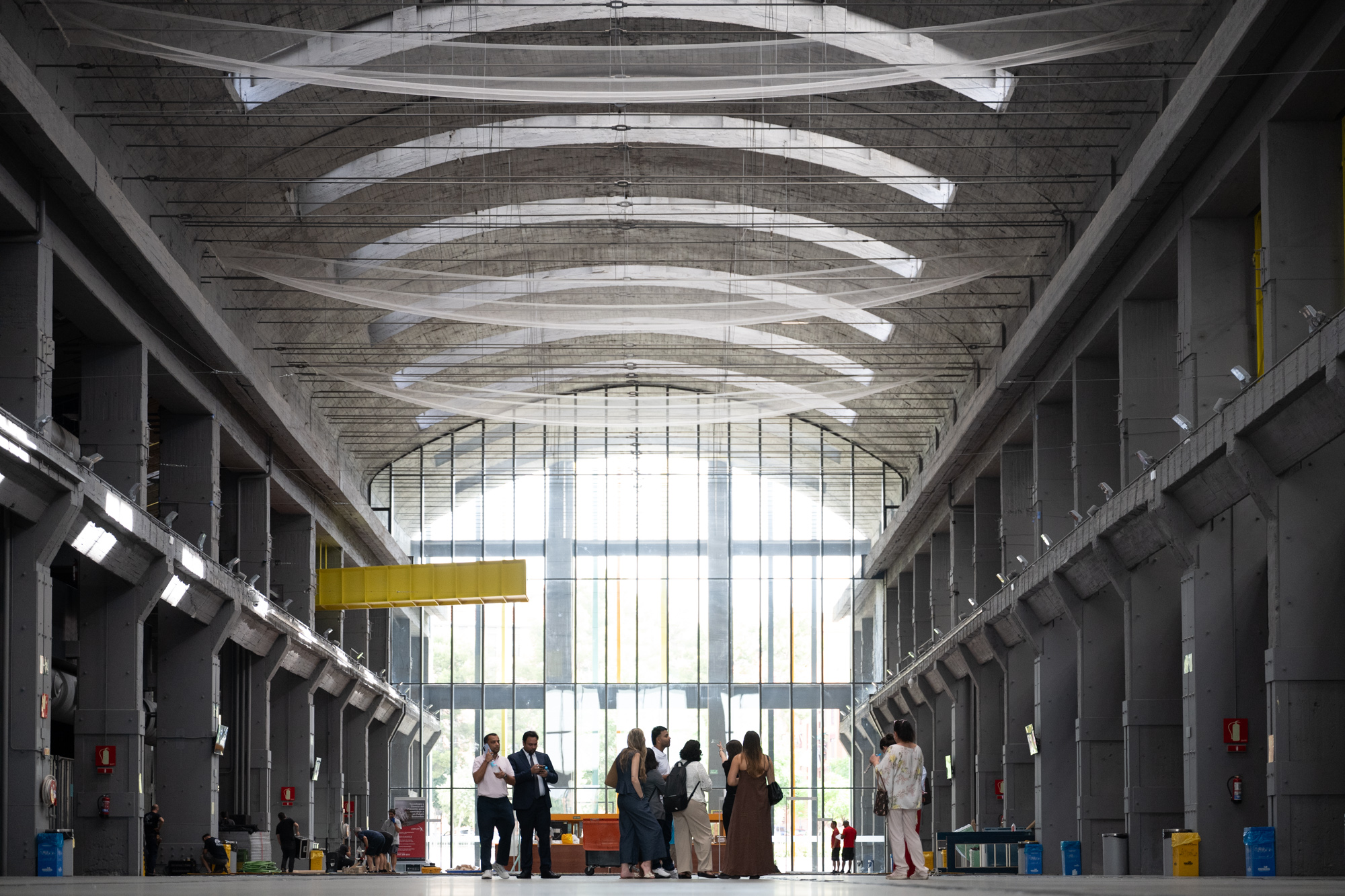
An elevator factory is a promising place to think about getting somewhere. For decades, the Boetticher building in Madrid’s Villaverde district did that quite literally. Today, La Nave offers another kind of ascent: a place where someone with a prototype can find advice, a workspace and, occasionally, the contact who makes the next experiment possible. The old roof remains. The machinery beneath it has changed.
- Public startup support, with a free, equity-free core accelerator.
- Different routes for an early idea, a working product and a scaling business.
- Training and events bring citizens, founders and potential partners together.
The tempting explanation is architectural. Put clever people in an enormous room and wait for cleverness to spread. La Nave’s history suggests a less convenient answer. A restored factory needs an operating system. Somebody must decide who comes in, what they work on and how a conversation becomes a customer, a pilot or a better business decision.
A splendid roof is only the beginning
The factory’s industrial life ended in 1992. It became municipal property in 2003. Rehabilitation began in 2009 and finished in December 2012, costing more than €34 million. Final acceptance did not arrive until March 2015; deterioration during the interval required further work. The building had been rescued. Making it useful remained a separate assignment.
In 2017, Madrid established the program that gives La Nave its present identity. Innova Next, part of Barrabés.biz, won the initial management-support competition against six other bidders. The contract was worth about €841,000 annually, initially for two years. These are historical costs for construction and management, respectively. A founder’s free workshop still has somebody paying for the lights.
Two different bills. Historical figures announced in 2017.
The customer has more than one face
La Nave belongs to the city’s Madrid Innovation network. Its users include entrepreneurs, investors, corporations, students and residents. Some want a company. Others want digital skills, a job opportunity or somewhere to hold an event. That mix explains the three verbs running through its work: train, accelerate, connect. A conventional office lease would struggle to describe the arrangement.
The building provides 13,000 square meters divided among a central hall, tower, classrooms and auditorium. Its systems include geothermal and solar-thermal energy, rainwater collection and a vegetated roof. Reuse is part of the proposition: Madrid is placing new economic activity inside an old industrial asset, rather than waiting for a startup district to appear elsewhere.
For a founder comparing it with private acceleration or commercial coworking, the practical distinction is the package. The core accelerator is free and takes no equity. It offers workspace, training, mentoring and investor access. An introduction is an opportunity to make a case; the program does not promise a cheque simply because somebody likes the pitch.
A prototype needs a different conversation
La Nave’s programs divide the founder’s predicament into stages. Its latest incubation call sought 10 projects to work on customer problems, business models and a minimum viable product. The eighth acceleration cohort, welcomed in September 2026, contains 35 startups with validated solutions. Their six-month itinerary combines individual mentoring, training and encounters with companies and investors.
- 01 / IncubateTest the problem.
Build the MVP. - 02 / AccelerateDevelop the business.
Prepare for partners. - 03 / ScaleMake growth repeatable.
Prepare the organization.
Scale-Up addresses a narrower problem: a company can win customers while becoming steadily harder to run. The 2026 edition is designed for five technology startups, with eight workshops, 15 personalized mentoring sessions and four strategic encounters. It targets businesses with market traction and roughly €1 million in revenue or investment, or equivalent growth. Sales, operations and cash need to survive the next step together.
For international companies, the July 2026 Softlanding cohort brought 12 startups into a year of support around entering Spain and Europe. These programs make a useful distinction between having an idea, operating a business and expanding into unfamiliar territory. There is considerable money to be wasted by confusing those three situations.
The introduction that earns its keep
Consider Solaris Vita. Its solar technology is designed for greenhouses, allowing useful light through to crops while generating electricity. At an April 2025 Demo Day, founder Miguel Iglesias described moving from La Nave’s incubation program into acceleration. A contact made there, he said, had opened a route to a pilot with Universidad Politécnica de Madrid to validate the technology.
That is a more instructive outcome than a photograph of people networking. A proposed pilot gives an entrepreneur a specific next test. In a separate interview, Aitaca founder Paz Vega described what changed when she joined the community: she had been programming at home without knowing the next step. Meeting other entrepreneurs brought her into contact with financing.
“Con ellos aprendí a salir de la caja y a hacer comunidad.”
Paz Vega, Aitaca / Innovaspain, 2023
“With them, I learned to think outside the box and build community.” Translation.
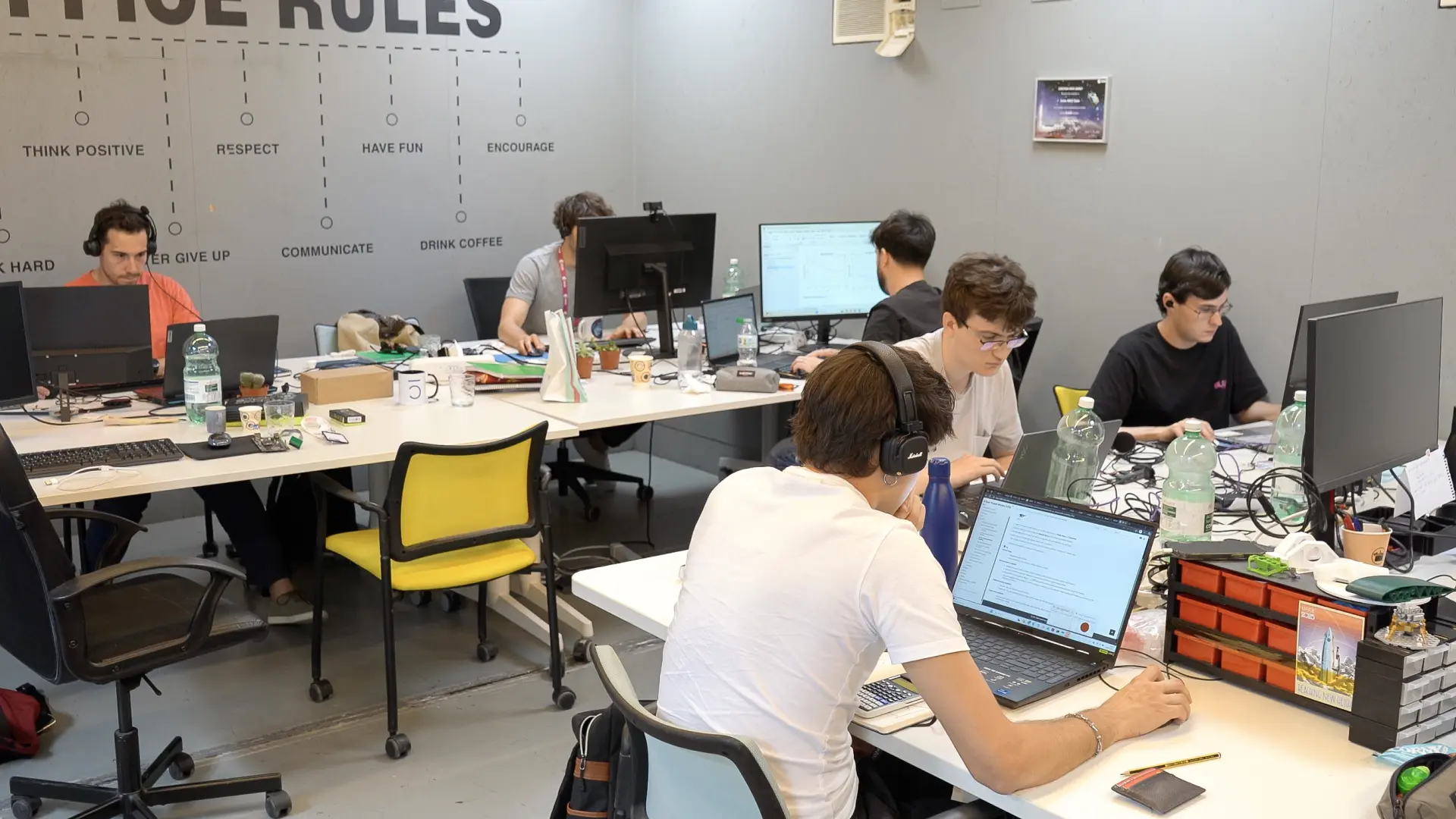
Ayúdame3D offers a physical version of the same change. In a 2022 local newspaper interview, its founder recalled starting at a small desk in La Nave’s tower in 2019. After the pandemic, a larger space accommodated 25 printers. The organization, which makes assistive devices, had grown to seven staff. Advice mattered; so did somewhere to put the equipment.
Count the companies, then examine the work
Coverage of La Nave’s 2025 positioning report gives cumulative totals of 468 supported startups and €160.8 million raised by their companies. Those are ecosystem figures, not the center’s turnover. Economic multiplier estimates answer a broader regional question; they cannot tell an individual founder whether next month’s customer will buy.
There is also an ordinary lesson in La Nave’s response to disruption. Madrid’s retrospective says 85% of activities moved online during COVID-19. A place devoted to bringing people together had to change delivery. The copied lesson is straightforward: keep the useful work available when the room becomes unavailable.
A founder can borrow that discipline without borrowing the factory. Pick the program for the problem you have. Take a testable question to a mentor. Turn an introduction into a proposed experiment. The value depends on fit, selection and follow-through. La Nave can supply a setting and a network. The entrepreneur must still give both something to do.