A boiler works is an unlikely place to shop for business advice. But in Lyon’s Confluence district, the industrial shell of Halle Girard has acquired a new trade: bringing entrepreneurs into contact with people who might help them. H7 opened here in April 2019. The following month, its public inauguration included a live performance by Berlin electronic act Modeselektor. The invitation to the neighborhood was audible.
Today the offer has a more prosaic entry point: €295 a month for a desk, excluding tax, on the dedicated Community program page. Along with the workspace come startup support and introductions. For a young company, that is a predictable monthly bill. Keeping the offer affordable gives H7 a more complicated assignment.
H7 operates where commercial startup ambition meets social and environmental purpose. Founders need customers, colleagues and experienced advice. Corporate partners want contact with emerging businesses. Lyon wants promising companies to develop locally. H7 has assembled a business around serving those overlapping interests, inside a building large enough to accommodate more than one kind of crowd.
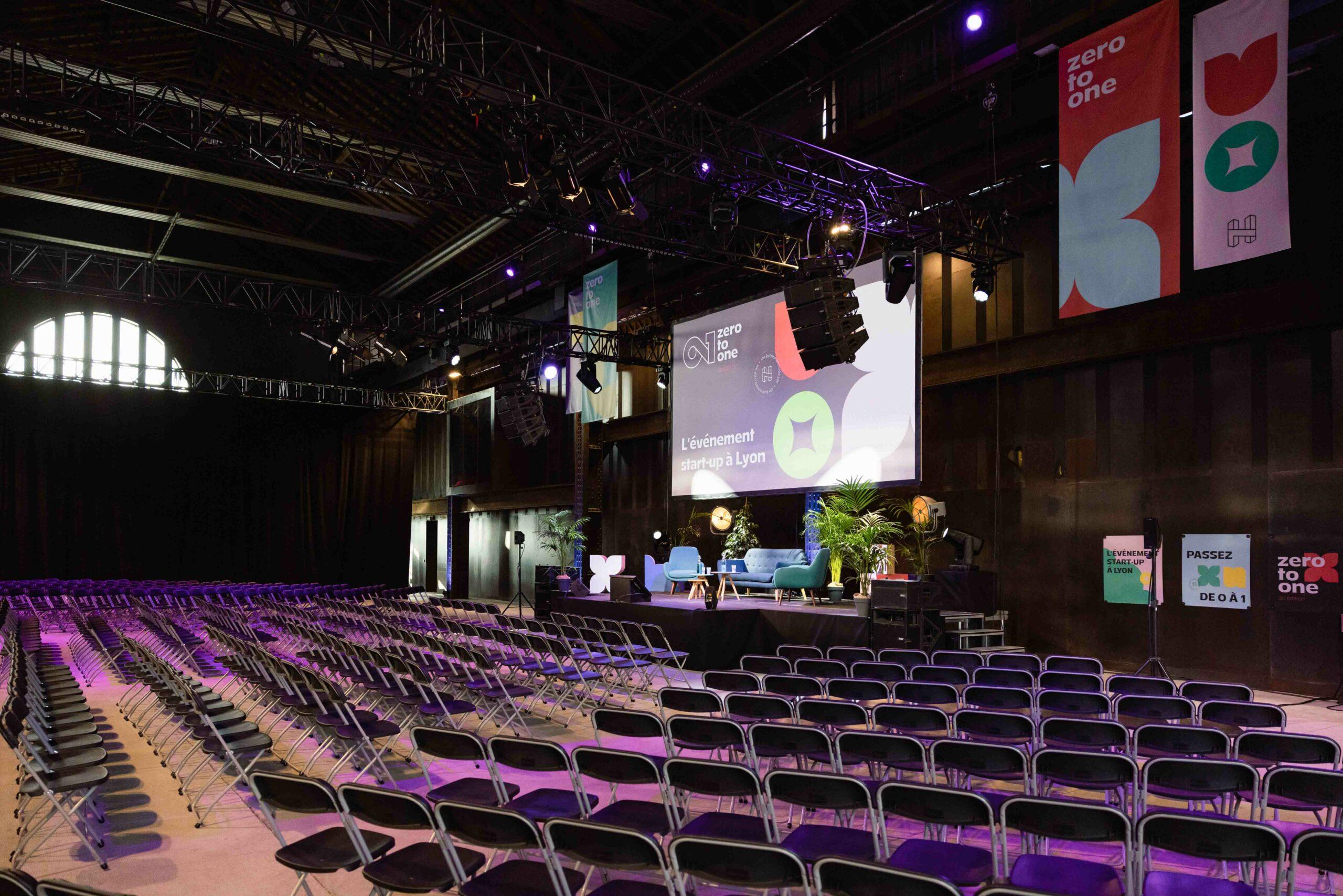
A public building, a private balancing act
The conversion took roughly €11.6 million, according to reporting ahead of the opening. That was investment in transforming the old industrial site, backed by the Métropole and region. It should not be mistaken for a startup funding round raised by H7.
The operator emerged from a consortium bringing together social-enterprise group SOS, cultural organization Arty Farty and accelerator Axeleo. Cédric Denoyel became its president. The combination helps explain why the place contains both entrepreneurial support and a cultural streak. Its shareholders brought different reasons for wanting people in the room.
In a 2024 interview, director Julien Marbouty described three income streams: services paid for by startups, partnerships and private event bookings. He presented them as a balance the operator adjusts, with startup fees deliberately kept accessible. H7 pays rent to the Métropole, which owns the building.
That arrangement makes the event hall economically consequential. A corporate gathering can help support a place whose everyday occupants are watching their cash. It also creates exposure: Marbouty pointed to reduced privatization during COVID. Revenue streams may be diverse on paper while remaining sensitive to the same basic condition - people being able to gather.
The financial record puts a useful scale on that balancing act. Pappers lists H7’s 2024 revenue at approximately €2.29 million and net income at €35,200, a net margin of about 1.5 percent. Revenue had risen from €1.8 million in 2022. This is an operating business with substantial activity and a modest bottom line. The community may look spacious; the financial room for error is narrower.
The launch was only the first job
H7’s arrival did not produce universal applause among Lyon’s existing startup organizations. Launch-period reporting in Le Journal des Entreprises recorded concerns that a prominent, publicly backed address would compete with the very network it was meant to strengthen. For a city, a flagship looks like coordination. For a neighboring accelerator, it can look like another bidder for the same founders.
The organization also changed quickly inside. After inaugural director Marie Esquelisse left in summer 2019, Denoyel described a shift from launch to consolidation. H7 planned to increase its startup managers from one to three and seek stronger advisory and analytical expertise. His explanation was operational: the next phase demanded more attention to the substance of accompanying businesses.
That episode punctures an easy assumption about innovation districts. Renovation buys space. Programming a community requires people capable of understanding what each company actually needs. H7’s early adjustment put more staff around that second job. The architectural opening was a milestone; the service still needed building.
Advice has to survive Monday morning
For an accelerator, the useful unit of work is often a decision: which customer to pursue, which hire to make, which message to change. H7’s programs try to bring outside experience close enough to influence those choices. The expertise spans finance, recruitment, sales, marketing and company organization.
Its more concentrated offer, shortcut, runs for three months and lists a €4,200 fee excluding tax. Participants meet a board of two to four dedicated mentors each month, alongside coaching, expert exchanges and opportunities to present their businesses. H7 says it takes no shares. Founders are buying a service with cash, which makes the quality of the advice a recurring test.
The model favors specificity. A mentor who has handled a recruitment problem or rebuilt a sales process can help a founder interrogate the next move. A long list of impressive names matters less if nobody has time to understand the company. The monthly board gives that relationship a defined appointment.
“I came for offices, but I had missed the point.”
Anthony Tabuyo, Urgentime cofounder
H7-published testimonial, translated from French
That customer’s change of mind captures the intended purchase: practical attention beyond the desk. It remains a testimonial selected by the operator, rather than an independent measurement of results. The sensible question for an applicant is what kind of attention their own business will receive.
per desk / month
program fee
Published prices exclude tax. Different formats and inclusions; confirm the applicable offer when applying.
Impact gets a specialist in the room
The partner programs make H7’s broad language about impact more concrete. With the Banque des Territoires and territorial partners, 13M supports organizations tackling digital exclusion. Its third edition lists eight participants and nine months of work on matters such as finances, internal structure, commercial development and social-impact measurement.
The participants need not resemble venture-backed software companies. ACIAH helps seniors and people with disabilities become more digitally autonomous. QOONTOO supplies internet access and connected services to vulnerable populations. Frello offers French-language training. These are distinct problems; bundling them under inclusion gives the cohort a shared concern without pretending their operating models are identical.
Other partnerships bring different expertise. iExec and H7 established Web3 incubation. The Barreau de Lyon works with H7 on a three-month LegalTech program, whose second cohort includes AI tools for legal work and a project helping women affected by economic abuse prepare their first legal steps. The accelerator supplies business support; professional partners bring a view of the work and users involved.
SUEZ has collaborated on climate and sustainable-food programs. A published climate-adaptation offer, for example, combines monthly startup-manager follow-up with SUEZ mentorship and introductions to circular-economy actors. That is a more inspectable proposition than a general promise to connect technology and sustainability: an applicant can ask exactly which specialist would help test which assumption.
In 2026, the problem is summer heat
A newer initiative with Urban Odyssey, Icade’s startup studio, shows how that approach develops. The call seeks innovations that improve thermal comfort in homes and workplaces. It covers building operation informed by actual use, efficient cooling technologies and ways to finance improvements at scale.
Selected projects can present to Urban Odyssey, Icade and other experts with possible collaboration in view. That wording matters: access to a potential partner is valuable, but a presentation is not a purchase order. The offer gives projects an audience with relevant assets and operating knowledge, while leaving the commercial test ahead of them.
A July 23, 2026 appeal published by H7 and involving 30 Lyon building-sector actors adds an instructive diagnosis. Thermal adaptation is hindered by fragmented responsibilities, mismatches between technical models and lived experience, and disagreement about acceptable summer comfort. Here the problem is partly collective decision-making. H7’s contribution is to convene people who hold different pieces of it.
The neighborhood gets an invitation
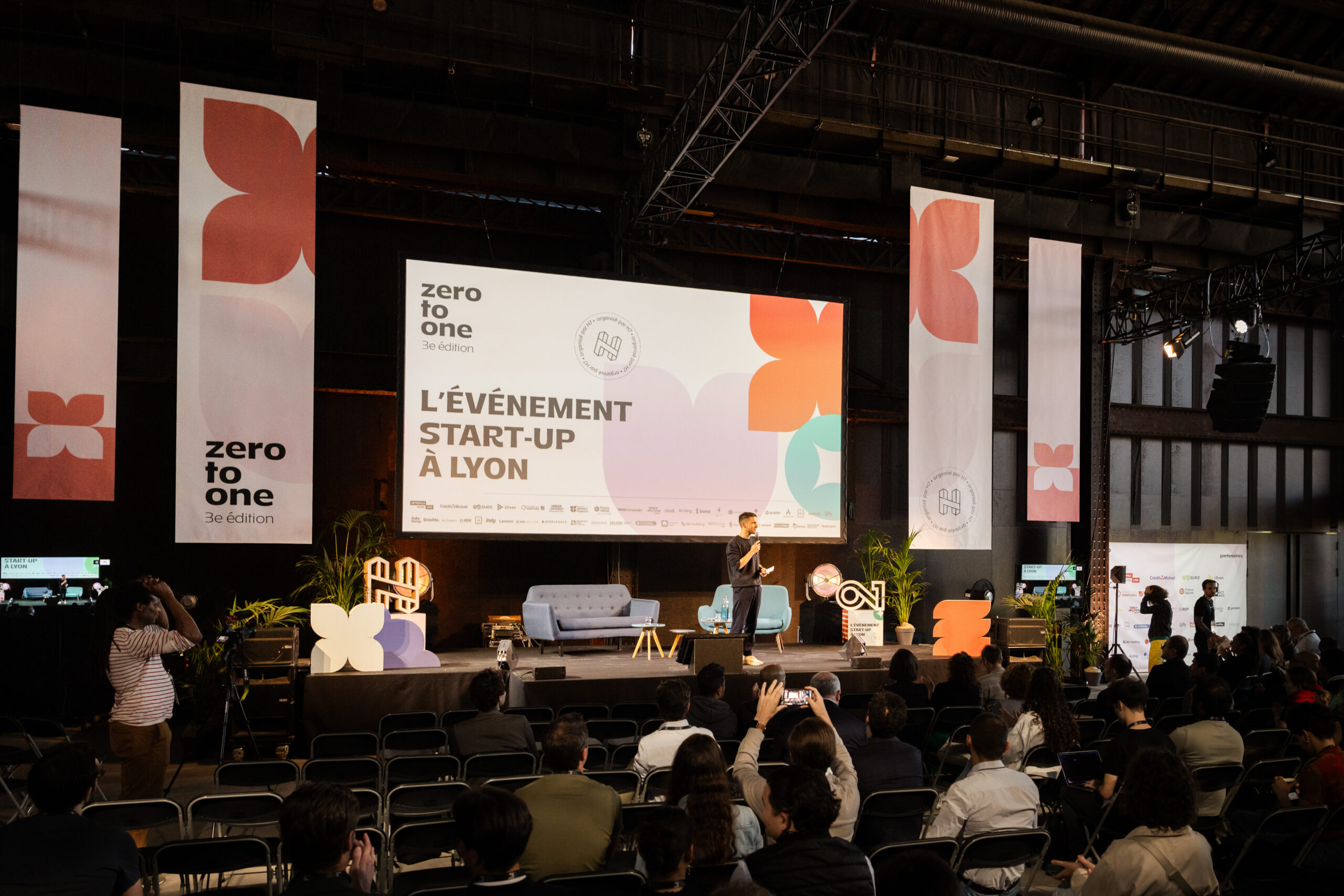
H7’s physical arrangement gives these professional encounters a public edge. Its venue offer includes meeting rooms and a large nave for conferences and events. HEAT, the adjoining semi-open food court, introduces another reason to visit, with rotating restaurateurs in shipping containers and space to eat, play and linger.
At launch, HEAT’s restaurant proposition was itself an experiment. Contemporary reporting described a roughly €400,000 investment and a 15 percent revenue charge for participating cooks, rather than a fixed rent. Those were opening-era terms, but the principle was recognizable: let a small operator test demand without committing to the full expense of a permanent restaurant.
For the wider startup audience, zero to one began in 2022 and remains part of H7’s calendar; its dedicated Lyon page lists May 28 for the 2026 edition. Talks and founder encounters extend the organization’s reach beyond residents. H7 also distributes interviews and practical material through its media pages and podcasts.
The useful part to copy
A founder considering H7 should begin with a bottleneck. The core Community offer is selective and in person, requiring full-time commitment, evidence of traction and a strong technology component. A remote team or someone still exploring an idea may need another route. Proximity earns its keep when people use it.
The portable lesson is to organize advice around a real decision, find someone with relevant experience and follow up. An introduction deserves a purpose. A workshop deserves a place on the calendar only if it advances work. Those habits can be copied without renting a former factory.
The factory does raise a longer-term question: where do successful residents go next? Reporting in 2025 described plans for roughly 4,000 square meters of additional space in Confluence, with a 2027-2028 horizon. The proposal would help growing companies stay near their existing network. H7’s next test may be whether the relationships remain useful when the companies need more than a few desks.
Find your way into H7
Explore the official website, Community program, shortcut and thermal-comfort call. For events and founder stories, visit zero to one, the H7 media library or its YouTube channel.