The interesting thing about a desk at TechQuartier is who might walk past it. A founder needs a bank to try a product. A bank needs evidence that the product will behave itself. Both can admire a pitch deck indefinitely. Somewhere between admiration and procurement, somebody has to arrange a useful encounter.
- Startups get curated introductions, free community membership and selective accelerator programs.
- Corporates get scouting, matching and access to founders working on financial, climate and agriculture problems.
- The new Tech & Data Lab adds controlled testing to a business built around relationships.
That is TechQuartier’s territory. It occupies the space between a young company’s ambitions and an established institution’s reasons for caution. Its customers and users sit on both sides: startups seeking market access, corporate teams seeking technology, and people who can supply expertise or capital. The interesting product is the arrangement between them.
Rival banks, shared premises
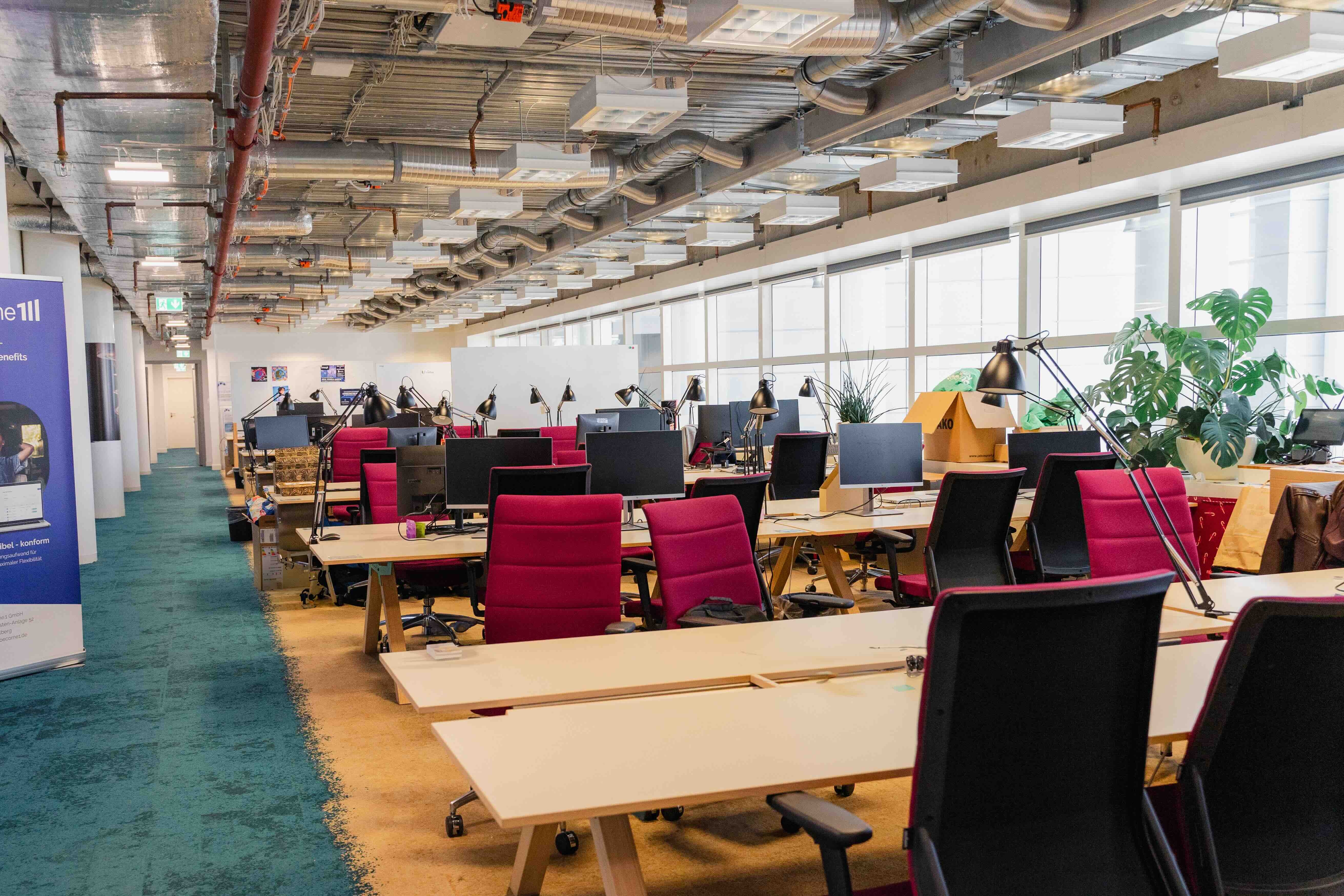
The hub opened in Frankfurt’s Pollux tower in November 2016. Sebastian Schäfer and Thomas Funke were its founding builders; Hessen’s economic ministry and the FinTech Dialogforum helped initiate it. WIBank and Goethe University were founding shareholders. This was an institutional undertaking with entrepreneurial tenants, which helps explain its particular character.
WIBank reported that all 120 initial workspaces were already rented at opening. A second floor was being developed. The coalition mattered as much as the floor plan: financial institutions that competed for customers could support the same meeting place. A founder could encounter several potential partners without immediately committing to one bank’s private innovation orbit.
There was money behind that hospitality. Reporting in 2017 listed annual contributions of €100,000 from each of six large financial sponsors, with several other sponsors contributing €50,000 each. Those payments helped support startup rents and management salaries. The figures describe the early model; they make the underlying transaction unusually legible. Established businesses paid to get closer to emerging ones.
The free program still takes seven weeks
Today, curated startup membership is free and open to digital-solution companies internationally. Space has a price: published starting rates are €190 a month for a hot desk, €335 for a private desk and €1,500 for a private office. Corporate partnerships, scouting, program collaborations and space rentals sit alongside publicly co-funded activities in the operating model.
The Digital Finance accelerator makes the offer more specific. Its 2026 calendar ran from May 11 to June 25, mixing visits in Frankfurt with virtual programming. It offered places for 15 startups and targeted Seed to Series A companies and beyond. The schedule included partner visits, an investor dinner, regulatory encounters and expert sessions.
The previous year’s named partners included Visa, ING Deutschland, GFT, Deka and Helaba, alongside legal, consulting and payments specialists. The program is free. Founders still contribute their attention and travel time. Its appeal therefore depends on fit: a team pursuing financial-sector customers has a clearer reason to invest those weeks than one seeking unrelated consumer distribution.
“TQ provided the opportunity to present our solution”
Rukayyat Modupe Kolawole, founder of PaceUP Invest, on the accelerator
That modest phrase captures the service better than a triumphal funding total. TechQuartier reports a network of more than 750 startups and more than 30 corporate partners. Its corporate page records 80 matches made in 2025. A match is a useful activity measure. A paying customer, deployed product or repeat contract would answer a different question.
After the meeting, a place to test
In March 2026, TechQuartier launched the Tech & Data Lab Frankfurt. The initiative gives its relationship work a technical counterpart: financial institutions, technology providers, researchers and startups can examine use cases together in a controlled environment. The aim is to reduce uncertainty before a company commits to a larger implementation.
The announced architecture has two tiers, with implementation planned over three to four years. NayaOne built the digital sandbox. A planned sovereign computing tier involves AI Factory FrankfurtRheinMain, Polarise and NVIDIA technology, intended to support more demanding AI experiments. The distinction between a launched initiative and its multi-year build matters when judging what participants can expect.
- 01DefineA business use case
- 02TestAn isolated environment
- 03DecideEvidence before rollout
By September, wealthAPI had joined the community and Lab, bringing Open Finance use cases and synthetic datasets. Its chief executive, André Rabenstein, argued that testing could establish value and cost in weeks rather than years. That is a partner’s expectation, not a measured result. It nevertheless identifies the ambition precisely: shorten the expensive interval during which nobody knows enough to decide.
The same announcement contained a telling observation from a banking discussion. Innovation teams can open doors; adoption depends on business units that own the use case, budget and implementation. A sandbox can help produce evidence. Someone inside the buyer still has to want the result, fund it and carry it into existing systems.
A different kind of Frankfurt address
Managing director Alice Rettig described the shift in a May 2026 interview: the physical meeting place remains, while the focus has moved toward later-stage FinTechs seeking growth and revenue. In another interview, she and Philip Viertel pointed to fragmented innovation and long development cycles. The response is a more structured route from conversation to experimentation.
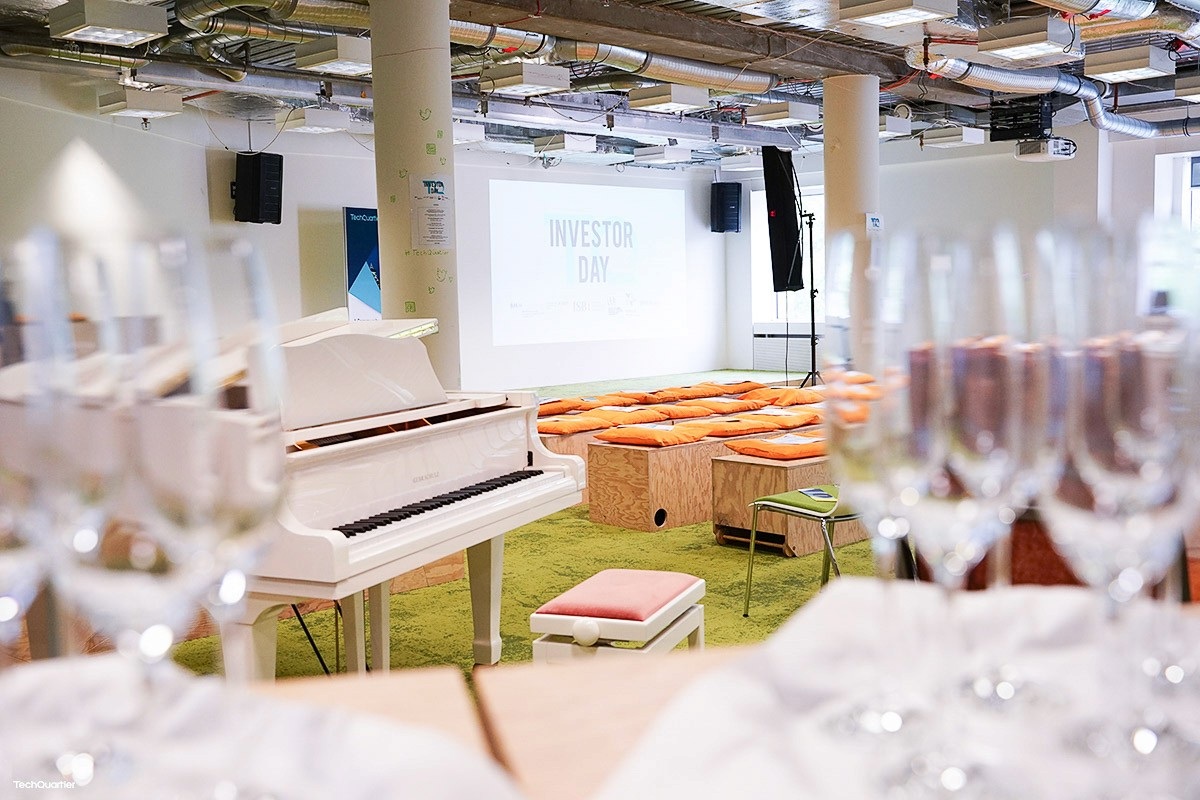
Finance is the center of gravity, but the method travels. TechQuartier’s agriculture programs with Landwirtschaftliche Rentenbank cover ideation, bootcamps and acceleration. Its EDITH consortium role handles networking and ecosystem activities for Hessen’s digital transformation work, supporting SMEs, startups and municipalities. The common expertise is convening people who need one another but rarely share a calendar.
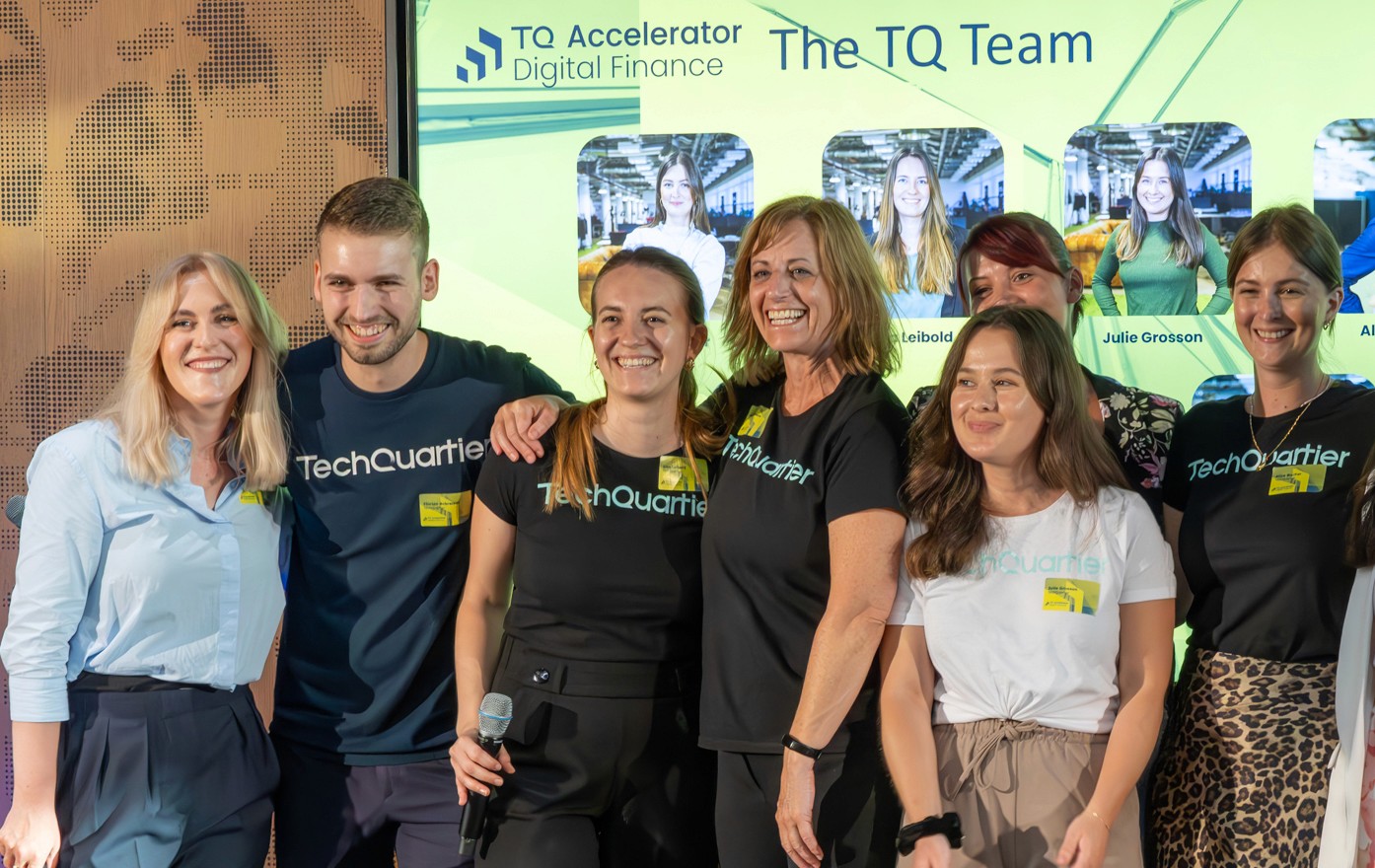
October 2026 additions sharpened the implementation theme. NTT DATA brought enterprise technology and banking experience. Data-Warehouse brought cybersecurity and cryptographic expertise. These are relevant companions for founders whose products must enter complicated institutions. TechQuartier’s market position rests on this combination of sector relationships, curated programs and testing infrastructure, with coworking providing a physical base.
The method is available to copy: name the business problem, identify its owner, arrange a focused encounter and design a test that informs a decision. It needs time, usable technology and someone with authority to act. For a founder who only wants cheap space, much of the machinery is unnecessary. For one trying to get a bank to try something, the machinery may be the point.
Get into the conversation
Explore programs and events, membership and the Tech & Data Lab.