RocketSpace had a sales pitch that office landlords could only envy: Uber and Spotify had worked there. A desk came with the possibility that someone nearby was building a company you would eventually use every day. For a young technology business, that was an appealing upgrade from arguing with the home printer. For a large corporation, it offered somewhere to meet the people who might rearrange its industry.
The San Francisco company, founded by Duncan Logan in 2011, sold workspace, introductions and corporate innovation services. It also pursued an international campus network, supported by a reported $336 million investment from China's HNA Group in 2016. By March 2020, Logan was publishing a farewell. The landlord of future business giants had reached the end of its own business.
That ending belongs near the beginning of any RocketSpace profile. This is a closed company's story, with a useful business idea inside it: assemble promising young businesses, understand what established companies need, and charge for making the connection useful. Its history also separates two achievements that are easily confused. Hosting successful startups and building a durable company around them are different jobs.
Alumni above $1bn valuation, according to Logan’s 2020 farewell. Their former host still closed.
Admission mattered more than the furniture
Logan gave RocketSpace a narrower brief than a general-purpose shared office. In a 2016 interview, he described two admission requirements: applicants had to be technology companies and have raised at least one financing round. The intended customer had already started building. RocketSpace would help with the next stage, when hiring, customers and somewhere to put the growing team became pressing problems.
The filter helped define the product. Founders could meet peers dealing with comparable challenges; corporations could approach a population already screened for a degree of commercial seriousness. Investors' previous decisions provided one signal. As Logan explained in a Moneycab interview, assessing the investors behind an applicant was part of assessing the company. Selection was doing work before anyone attended a networking event.
There was room for international arrivals, too. A Northern Ireland Assembly delegation's 2014 report described three Northern Irish startups using RocketSpace and a visiting trade mission hosted with the US Market Access Center. A small overseas team could gain a San Francisco base alongside introductions and local knowledge. The practical problem was entering an unfamiliar market without building every relationship from scratch.
This puts RocketSpace between several familiar categories. A conventional serviced office solves occupancy. An accelerator organizes support for company development. A consultancy helps an established client answer a business question. RocketSpace combined pieces of all three. Its campus model did not require taking equity in resident startups, giving founders a way to buy support without automatically giving the operator a share of their company.
One address, two sets of customers
The economics depended on serving both sides. A visiting legislative delegation recorded membership fees, corporate consulting income and training fees as revenue streams. In May 2016, Logan described the business as evenly divided between startup space and services, and corporate innovation consulting. It was a revealing split: counting occupied desks alone would have missed a substantial part of what the company sold.
Corporate innovation became a defined offering called RocketX. A June 2014 announcement put Michele McConomy in charge and named Hershey, Canon, LG Electronics and Liverpool Victoria as new members. More than 30 brands were participating at that point. The product included startup discovery, tailored demonstrations, access to the campus and reports on emerging technology markets.
Consider the assignment from the buyer's chair. A large business wants to explore a technology but faces thousands of possible vendors, unfamiliar founders and an internal process built for established suppliers. RocketSpace's researchers could narrow the field against objectives such as licensing, investment or acquisition. Its meeting programs then created a route from a list of names to a conversation about working together.
Pearson supplied a concrete example in that announcement: it had sponsored RocketSpace since 2011 and used space for an innovation team, startup recruitment and event development. This was ongoing assistance, rather than a single motivational afternoon. The expertise lay in finding relevant companies and arranging productive contact between organizations with very different operating habits.
“We’re a relationship broker.”Duncan Logan · May 2016
Technology + talent
Introductions + programs
Problems + pilot access
A pilot beats a business-card collection
Industry programs made the proposition more specific. RocketSpace and Kaleido's Logistics Tech Accelerator brought startups together with companies operating real supply chains. Lufthansa Cargo described a process that included explaining industry needs, working with selected teams and preparing pilots aimed at commercial solutions. The airline wanted help improving digitization across the air-cargo supply chain.
The participants show how tangible that work could become. The 2016 lineup included CargoSteps, with tracking software; OTTO Motors, with vehicles for moving materials; and Skuchain, developing blockchain-based business products. These were technologies to try against operating conditions. A warehouse or cargo business could offer a test environment and specialist feedback that a roomful of other founders could not.
By the second cohort announcement, corporate partners included Ingram Micro, Fiege, Lufthansa Cargo and MAN Trucking, alongside Kaleido. Ingram's involvement also offered startups access to its Shipwire fulfillment platform. Multiple corporate participants broadened the expertise available, although participation itself should never be mistaken for proof that every pilot became a paying customer.
Food followed a comparable approach. In June 2017, Nestlé joined Terra, the food and agriculture accelerator created by RocketSpace and Rabobank. Nestlé said it expected to support 20 startups across two six-month programs, working on how food was produced, sold and distributed. Product testing and feedback were central to the arrangement.
For someone borrowing this approach, the useful unit is a defined experiment. Choose an operating problem, identify a startup capable of addressing it, give both teams access to the relevant people, and decide what a successful test would establish. That is an editorial takeaway from the program design, not a promise about its results. The corporate name on the invitation is only the beginning.
What a place in the room cost
Some historical membership offers make the purchase less abstract. A GBx partner benefits page advertised San Francisco lounge and club-desk access at $150 a month for members using it fewer than ten days monthly. Mail handling cost $100 a month, including weekly forwarding to a domestic address. Private office suites carried a partner discount.
In London, the same offer listed flexible access at £50 plus VAT per day and a 10 percent discount on dedicated desks and private suites. These were specific partner offers, not universal list prices. They nevertheless show that RocketSpace could sell occasional access as well as a permanent base. A founder visiting a market did not necessarily need a full office.
Price alone could not explain the choice. A team mainly seeking quiet, cheap seating would value different things from a team trying to meet enterprise buyers. RocketSpace's commercial logic depended on members using its relationships and programming. Buying access without a reason to make introductions would leave a customer paying for possibilities it might never use.
London put the ambition in concrete
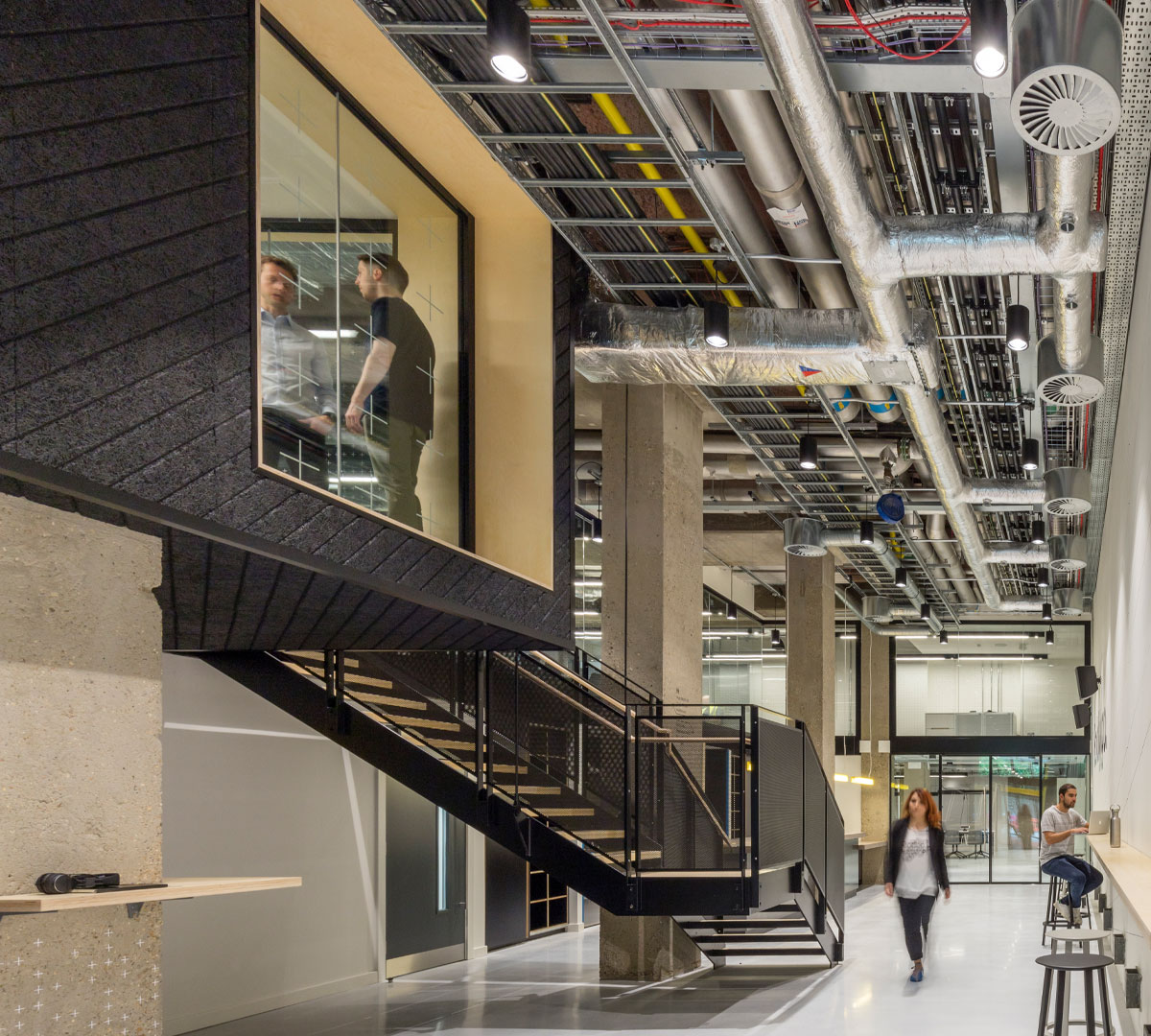
The London campus opened in 2017 in a former Royal Bank of Scotland cash-handling facility in Angel. Priya Guha, previously Britain's consul-general in San Francisco, led the UK business. The setting supplied a pleasing reversal: a building once organized around protecting money would now host companies trying to attract it.
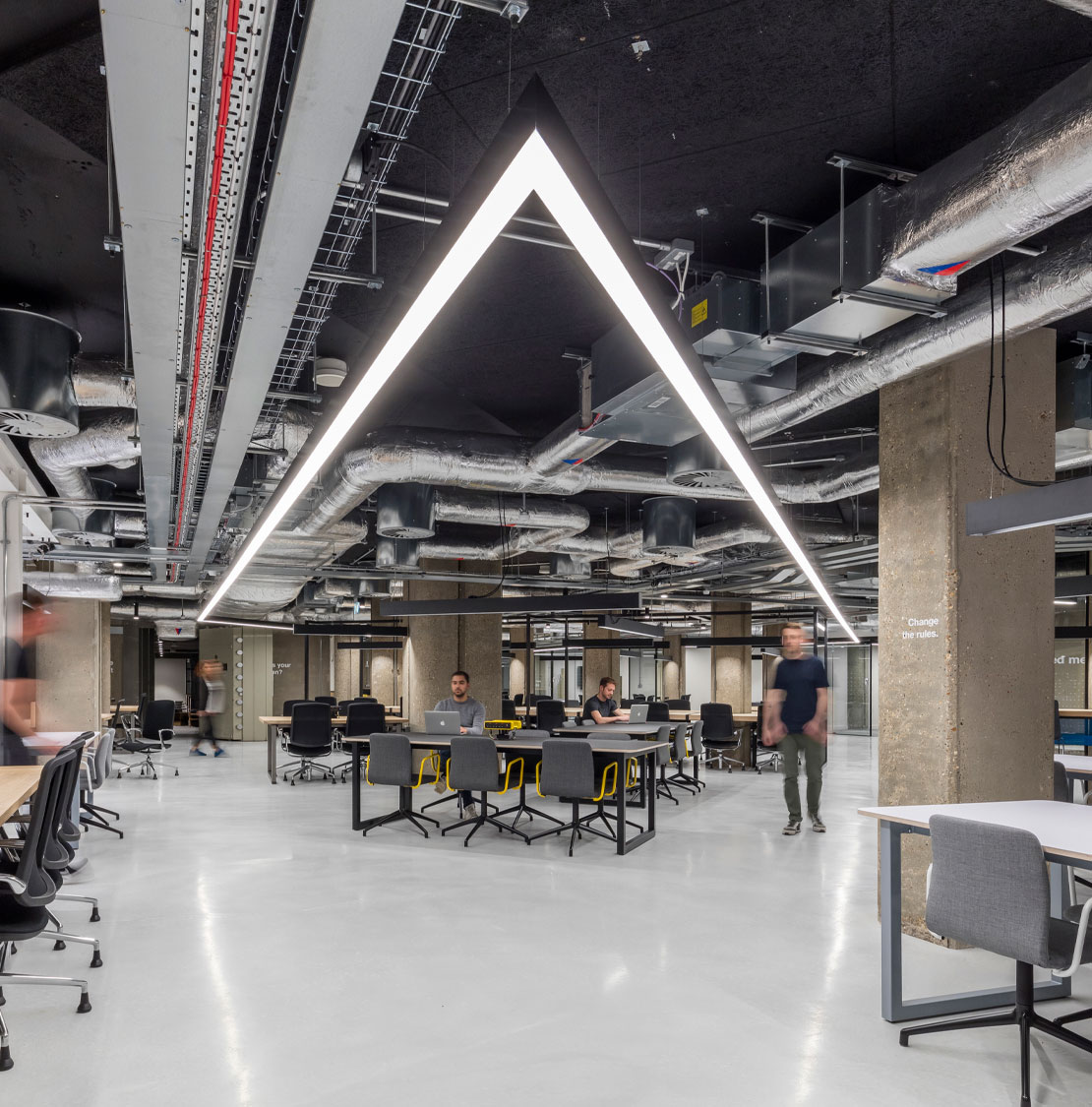
Architect LOM retained the building's exposed concrete character and turned the underground vault into a club and games room, keeping the vault doors. A double-height basement became an event and social area. Upstairs, dedicated workspaces and office suites accommodated different working arrangements. Even the architecture expressed the business plan: concentrate people, then give them reasons to cross paths.
Expansion had acquired a much larger financial backer. The August 2016 HNA transaction was reported as a $336 million investment under a strategic venture agreement. The intended direction included Chinese campuses and a wider international presence. That figure describes the announced investment; it should not be read as the London construction bill or the amount ultimately lost.
The proposition was understandable. RocketSpace had relationships in Silicon Valley; HNA offered support for expansion into China and beyond. But adding countries also added counterparties and commitments. The company's growth depended on whether its own plans and those of a major strategic investor would continue to fit together.
The retreat preceded the farewell
The visible contraction came before the final closure announcement. In December 2019, City A.M. reported that RocketSpace intended to leave the UK, with closure anticipated by April 2020. It cited a filing showing more than £9 million in debts due that year at RocketSpace Angel. The report also described plans to refocus on startup funding services.
By February 2020, a proposed Calgary location had become an expansion that never arrived. Local reporting revisited the city's 2017 announcement and obtained confirmation of the company's closure from Logan. He attributed the ending to a significant partnership with Chinese investors that had failed to work as hoped. That is the founder's explanation, rather than a complete accounting of the company's losses.
On March 11, Logan published “Closing RocketSpace.” His farewell said 26 companies that had passed through the community had exceeded $1 billion valuations, and that the innovation business had served more than 120 Fortune 1000 companies. Those were his retrospective counts. They describe the reach RocketSpace claimed, without establishing that its services caused those companies' success.
There is a selection problem in every famous-alumni wall. A program that recruits already-funded technology companies starts with a different population from an open-door business center. Uber and Spotify are meaningful evidence of who used the space. They are less useful as a forecast of what the next tenant will achieve. The distinction matters when selling founders a better chance.

Copy the introductions. Read the commitments.
RocketSpace leaves a practical set of questions for anyone buying or building an innovation community. Who is admitted? Which corporate participants can actually sponsor a test? What happens after the introduction? A narrowly chosen membership and a repeatable route to commercial work are more useful answers than a long list of event speakers.
The approach depends on matching needs. It loses value when startups are too early to test a product, when corporate participants lack authority to proceed, or when the local market cannot supply enough relevant companies. Those are conditions implied by the model, not documented explanations for RocketSpace's closure. Community cannot substitute for a buyer's budget or a usable product.
For operators, the ending adds a separate lesson: judge the funding relationship as carefully as the member relationships. The people in the room can be exceptional while the commitments supporting the room become untenable. RocketSpace understood the appeal of proximity. Its history asks a harder question of the next ambitious campus: who keeps the doors open when the expansion partners want different things?
Follow the conversations
Explore RocketSpace’s historical website, LinkedIn profile, Twitter / X and Facebook.
Read Logan’s farewell to RocketSpace, his office-as-a-service interview, and the report on the UK exit.
Watch: Duncan Logan interviewed by Moneycab · Logan on coworking, with Venture TV.