The photograph looks like the beginning of a school trip: a group gathered behind a bright blue banner, fists raised for the camera. The destination printed across it is San Francisco. These are participants in the 2024 Scale-up Incheon Global Challenge, a program run with The Vault Korea. The interesting detail is how few companies made this part of the journey. Twenty completed the first two phases. Eight advanced through every stage to the Silicon Valley visit.
- The Vault pairs startup support with connections between Korea and the US.
- Its services stretch from market-entry advice to company building and venture investment.
- The useful question for a founder: what will an introduction help you test?
A plane ticket can move a founder across an ocean overnight. Establishing why an unfamiliar customer should buy takes longer. The Vault has built a business around that less photogenic stretch of the journey.
01 / A room with a reason
The company’s roots are in collaborative workspace. Kevin Smith and co-founder Sanjay Mody helped create a community in San Francisco’s Jackson Square; company materials date its opening to 2014. A historical photograph shows exposed beams, mismatched seating and a foosball table. It is a setting designed to make staying after a meeting feel reasonable.

The promise extended beyond furniture. Dedicated desks and private offices sat alongside mentoring, events and corporate innovation programs. Founders, investors and advisors could occupy the same setting. In the company’s account of its origins, conventional coworking and accelerator offerings left gaps that an integrated service could fill.
That proposition occupies an awkward, potentially useful middle of the market. An office provider primarily solves for space. An accelerator organizes a period of company development. A market-entry advisor helps interpret unfamiliar commercial terrain. The Vault brings those jobs together. Whether that combination is valuable depends on which problem a customer actually has.
02 / The work before the welcome
By 2017, The Vault had established its Korean operation. Michael Jee, identified on its team page as founder of Vault Korea, became part of a cross-Pacific structure. Today the company lists San Francisco, Songdo and Pangyo as offices. The geography matters because preparation can happen near the founding team before introductions happen near prospective partners.
The 2023 KOEF GMEP US Funding Track gives that arrangement a timetable. Ten Korean startups, ranging from Seed to Series A, took part in a five-month hybrid program sponsored by the Korea Entrepreneurship Foundation and KISED. Preparation in Korea preceded six weeks in Silicon Valley, involving market validation, business development, mentoring and investor pitching.
Six US weeks were part of the five-month program.
The distinction is useful. A founder can rehearse a pitch at home; a local conversation can reveal whether the pitch answers a buyer’s question. As an editorial reading of the program, its sequence suggests a practical discipline: arrive with hypotheses that someone in the destination market can challenge.
The cohort also crossed product categories. Participants included WAVE’s robot-kitchen business, SAIB’s intimate-care brand and NoriSpace’s fraud-detection offering. Their routes to customers would differ. A single export slogan cannot specify a distribution partner, a procurement process or the evidence a buyer expects.
03 / Count the doors that open
The Vault reported that seven of the ten companies finished with some combination of distribution contracts, investor letters of intent, partnership memoranda or US advisors. Forty US and Korean venture investors participated in the closing demo day. Those are company-reported program results, and the categories deserve to stay separate.
A contract can create commercial obligations. A letter of intent records interest on particular terms. An advisor supplies expertise. Each can help a company move, but none should be casually converted into a claim that seven startups raised money. The sharper question is what happened next, and what each team learned from the response.
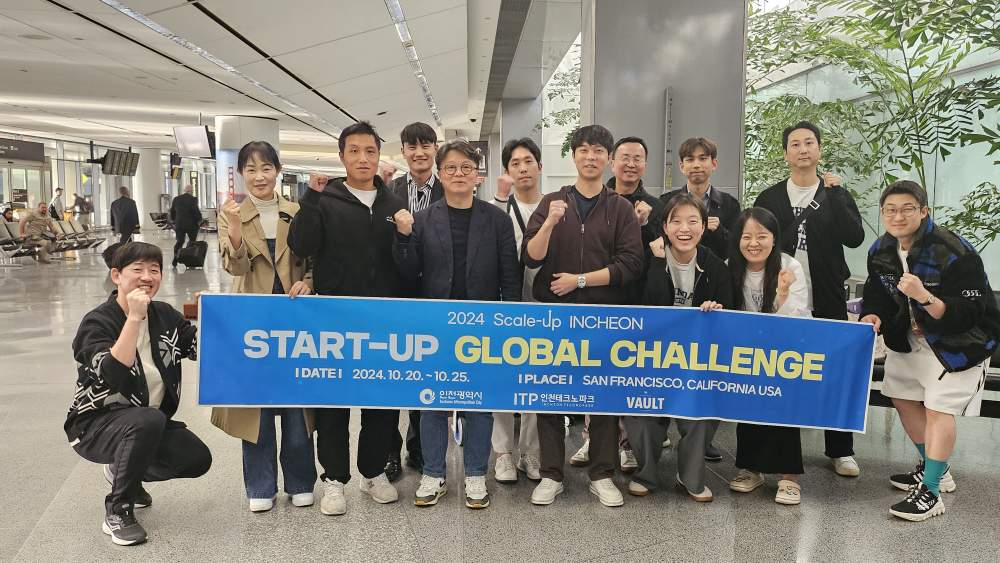
The 2024 Incheon program offers another view of the method. Working with Incheon Technopark and supported by Incheon Metropolitan City, Vault Korea helped teams prepare for overseas entry. Eight companies reached a week in Silicon Valley. The published account describes product showcases and pitches to potential partners and investors. Progress through selection is an activity measure; commercial success still needs its own evidence.
04 / The bill behind the bridge
The business has several ways to serve customers. Historically, workspace memberships and meeting or event rentals put a price on physical access. A 2016 guide listed monthly memberships between $610 and $670, depending on commitment. Treat that as a period detail. It describes the original desk proposition rather than a present-day expansion budget.
In 2018, The Vault announced training and consulting through Innovation Academy and Innovation Services. Its Launchpad offering described entity setup, market research, local hiring and strategic advice. These services make the customer broader than the person renting a desk: corporations and government organizations also have innovation problems to solve.
Building that business had costs for its founder, too. In an early interview, Smith described periods of little or no salary and identified raising funding too late as a growth constraint. The lesson has bite coming from someone helping others approach investors.
“We are people-first.”
The Vault’s published investment philosophy
05 / Take the question home
The venture operation emphasizes execution and teams with global potential. Its published portfolio spans businesses such as Cloud Lending Solutions, UNYQ and Inkshares. That range makes the connecting skill less about one technology than about company development and access to relevant people.
For a founder considering The Vault, start with a concrete request: identify a buyer segment, examine a distribution assumption, or find expertise for local setup. Ask how a program would answer it. A team needing only quiet workspace may value a different service. A team without a plausible overseas customer has more preparation ahead.
For example, a founder could ask an advisor to help map who authorizes a pilot, what a distributor needs before carrying a product, and how long a local sales decision might take. Those are proposed questions, not reported Vault outcomes. They turn a broad ambition into work someone can evaluate. Agree on the deliverable before joining a program, then keep a record of the assumptions that changed. An overseas visit earns its place in the budget when it helps resolve a decision the team could not settle from its home market.
The copyable idea is to organize expansion around decisions. Decide what evidence would justify the next commitment before collecting introductions. Then use the network to obtain that evidence. The flight becomes easier to justify when the founder knows what must be learned on arrival.
Keep a door open
Explore The Vault’s services, follow its community, or hear the founder discuss the early business.