Vanessa Gao’s investment philosophy contains a wonderfully inconvenient question: who is going to use this? A clever invention can survive a demonstration on charm alone. A company has to survive Monday morning. Somebody must decide to buy, somebody must learn to use it, and somebody must be able to explain why the change was worth making. Gao has spent her career working near that handoff, where technical promise meets an organization with its own habits and bills.
She co-founded Jiangmen Ventures in 2015, after 16 years at Microsoft. The timing puts her early-stage AI work well before the current conversation about generative AI. Yet the question running through her public discussions has remained remarkably practical. A technology needs a setting in which its abilities matter. For Gao, finding that setting is part of the investor’s work.
Sixteen years learning the other side of the table
Before she was a venture founder, Gao was a corporate operator. Her Microsoft career included sales, marketing, channel management, government cooperation, strategy, and investment. Those jobs gave her experience with the machinery that surrounds a product: the people who sell it, the partners who distribute it, and the institutions that decide whether it belongs in their plans.
Her work also included Microsoft Research and leadership of Microsoft Ventures and its accelerator in China. There is a useful tension in that combination. Research looks ahead; commercial organizations have decisions to make now. Working between them requires an appetite for possibility and a tolerance for the distinctly less poetic business of implementation.
In July 2014, Gao was Microsoft Ventures Accelerator Greater China’s CEO in Residence. The Beijing program was marking its second anniversary. Ten startups were demonstrating the results of their previous six months, and another class was preparing to begin. Gao described support spanning technology, training, recruitment, financing, and introductions to markets and users.
The list matters. It treats a startup as a collection of problems to work through, rather than a pitch waiting for applause. Technical help sits beside hiring help. Financing sits beside finding someone who might use the product. Her later venture model would continue to bring those different kinds of work into the same room.
By January 2015, Microsoft was celebrating an accelerator that had supported 100 startups in China. Its fifth-cohort Demo Day featured 15 companies presenting to more than 200 investors, media representatives, and industry professionals. The company put the total valuation of graduate enterprises above RMB 10 billion at that point. It was a dated program milestone, not Gao’s personal investment return.
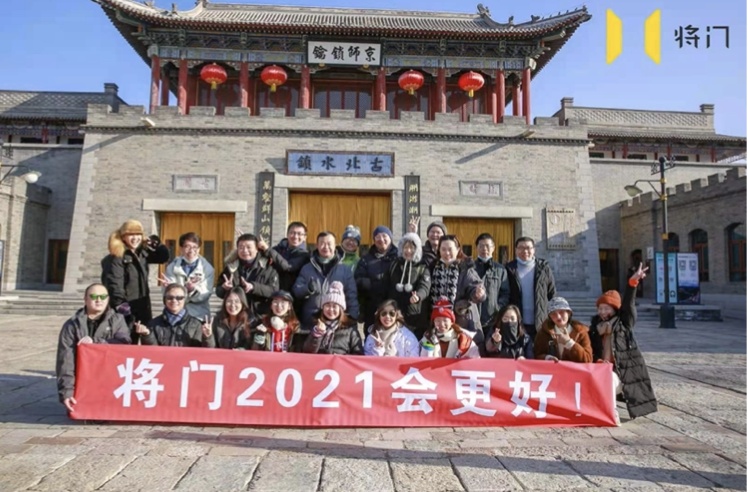
Within the same year she would begin an independent firm. The move carried a substantial operating education into a smaller organization. Founders asking how to approach a large customer could speak to someone who had worked inside a large technology business, across several of the functions they needed to understand.
A firm built around the handoff
Jiangmen developed three connected activities: early-stage investment, a technical community, and corporate innovation services. Each addresses a different part of the same practical challenge. Researchers and technical founders can explain what is becoming possible. Corporate users can describe a need in detail. Investment helps a young company pursue the work of bringing the two together.
It is easy to appreciate the value of that arrangement from either side of the table. A business may know the result it wants without knowing which outside team can deliver it. A startup may know its technology intimately while still learning which application makes a customer willing to try it. The match takes more than a mutual introduction.
Gao’s model makes room for that work. Innovation services provide contact with business needs and the process of testing a solution. The community provides contact with technical people and ideas. Those conversations can inform investment judgment. The investor gets to learn from the work around a company, as well as from the company’s own description of itself.
Choosing the first customer
In 2017, Gao described an investment approach concerned with the moment before a technology’s commercial application becomes clear. In English translation, her phrase was invest in the darkness before dawn
. The poetry came with conditions: the application should be able to activate meaningful value within a reasonably short period, and the surrounding technology and infrastructure should be ready enough to support it.
A promising direction can still require years of work elsewhere before a company can use it. That creates a timing problem for an early investor. Gao’s discussion separated the appeal of a long-term trend from the question of whether a particular moment offers a workable starting point.
She also urged startups to choose their early reference customers carefully. Those users can influence product form, positioning, and price. Her advice included attention to the department that would actually apply the technology, alongside the company’s chief executive. A senior endorsement opens a conversation; the working relationship must reach the people living with the result.
That detail gives her approach its texture. The first customer is participating in the product’s education. What the customer asks for, tolerates, rejects, or agrees to pay for can steer the company. A young business should pay attention to the direction in which it is being steered. The impressive name on the slide has a job to do after the slide disappears.
- 01Define the needWhat should change for the user?
- 02Find the fitWhich team can deliver it?
- 03Test in practiceWhat would count as success?
- 04Consider adoptionCan the result travel?
An editorial illustration of her publicly described approach, not a performance forecast.
The experiment has an address
A 2019 example of Jiangmen’s work involved building energy management at two Wanda plazas, in Guangdong Luogang and Nanjing Jiangning. Jiangmen helped connect the business setting with an energy technology provider and supported pilots. The 2018 trials involved adjusting heating operations through models of water temperature and building behavior.
The reported result was daily gas savings of roughly 150 to 240 cubic meters at the two sites. The estimate for heating-season heat-source operating cost savings was 4.2% to 6.8%. Those numbers describe that pilot and its estimate; they are not a promise about every building.
For a profile of Gao, the interesting feature is the specificity. The innovation has addresses. It has an operating system to fit into and a measure by which people can judge it. A conversation about technology reaches the level of how a building runs. There is less room there for adjectives to do the heavy lifting.
Her discussion of corporate innovation emphasized breaking a broad objective into workable applications, choosing suitable providers, and validating the result. The example shows why that sequence matters. A business decision becomes possible when the people involved can examine a change in their own setting.
A room full of people who know something you don’t
Alongside that applied work, Gao has helped build a world of technical exchange. Jiangmen’s TechBeat community brings together Chinese-speaking AI scientists and practitioners internationally. Her 2025 Zhongguancun Forum biography put the community above 30,000 participants. It is a substantial gathering of people whose expertise can help a young company understand both a possibility and a limitation.
A community of specialists offers a different sort of access from a customer list. It can help people discuss research, compare approaches, and meet others working on nearby problems. Convening those people is part of Jiangmen’s structure. It gives the firm a continuing conversation with the technical world in which it invests.
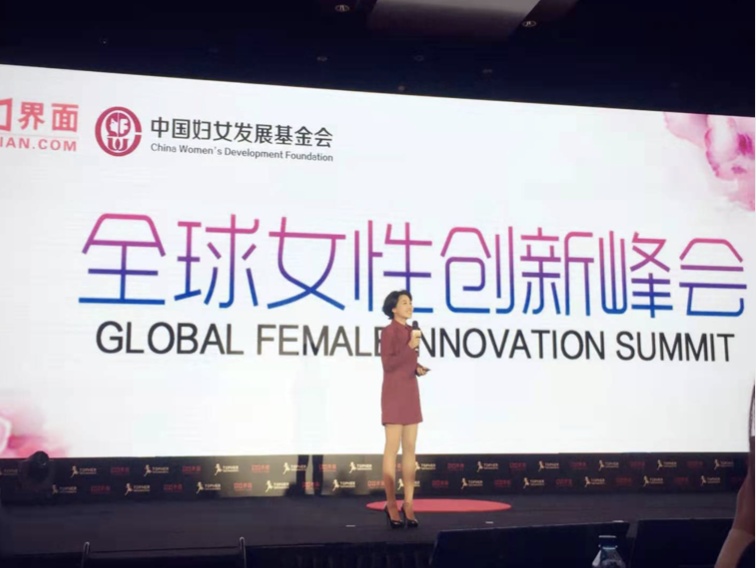
Gao has also continued to convene people from her Microsoft world. At the 2023 alumni gathering in Redmond, she moderated a discussion with alumni entrepreneurs from Asia. The 2025 Connect program advertised her as moderator of Startup Mavericks: New Ventures, Bold Ideas, with Lucas Joppa, David Millard, and Melissa Quintanilha. The role suits a career spent bringing different professional experiences into conversation.
From the research lab to the road
Jiangmen’s portfolio gives the approach a set of concrete applications. It includes Zhipu AI in large language models, WeRide in autonomous driving, Hesai in LiDAR, and DeepGlint in computer vision. These companies work on different pieces of the technical and commercial landscape. The association is with Jiangmen’s portfolio; it should not turn every company milestone into a personal achievement for Gao.
Still, the range is revealing. Language models, sensing, driving, and visual interpretation ask different things of users and infrastructure. Each makes the question of application unavoidable. A technical capability has to meet the circumstances in which people will rely on it. Gao’s interest in commercialization has room for that variety.
For her, early-stage investing has involved both companies and the relationships around them. The corporate background, the researcher community, and the work on validation all contribute to the same inquiry: what makes a promising capability useful enough to support a business?
The next room is still a classroom
Gao completed the Tsinghua-INSEAD Executive MBA, and INSEAD identifies her as TIEMBA ’09. Her connection to the school has continued beyond the degree. The Aspen Institute’s biography records her receipt of INSEAD’s Diamond Salamander Award. INSEAD’s 2025 donor report includes her discussion of supporting a research fund and the need for academic observation and guidance as technology develops.
Her involvement with the AI Venture Lab adds a founder-facing expression of that connection. The Lab announced her participation in its 2025 Founder Sprint and currently lists her among its advisors. It brings her experience back into an environment concerned with young ventures and the choices involved in building them.
“I believe innovation is globalization.”
Vanessa Gao, 2021
There is also a quieter boundary in her account of work. In 2021, Gao described protecting breakfast and school drop-off with her daughter, avoiding business dinners, and putting away her phone during family time. The calendar of a venture founder had room for a deliberately ordinary morning.
That detail belongs beside the investor’s practical questions. Time, like technology, needs a place to go. Gao has built a career helping people turn ability into something useful, while deciding where her own attention belongs. The invention may be exciting. Her story keeps returning to what happens when someone has to live with it.