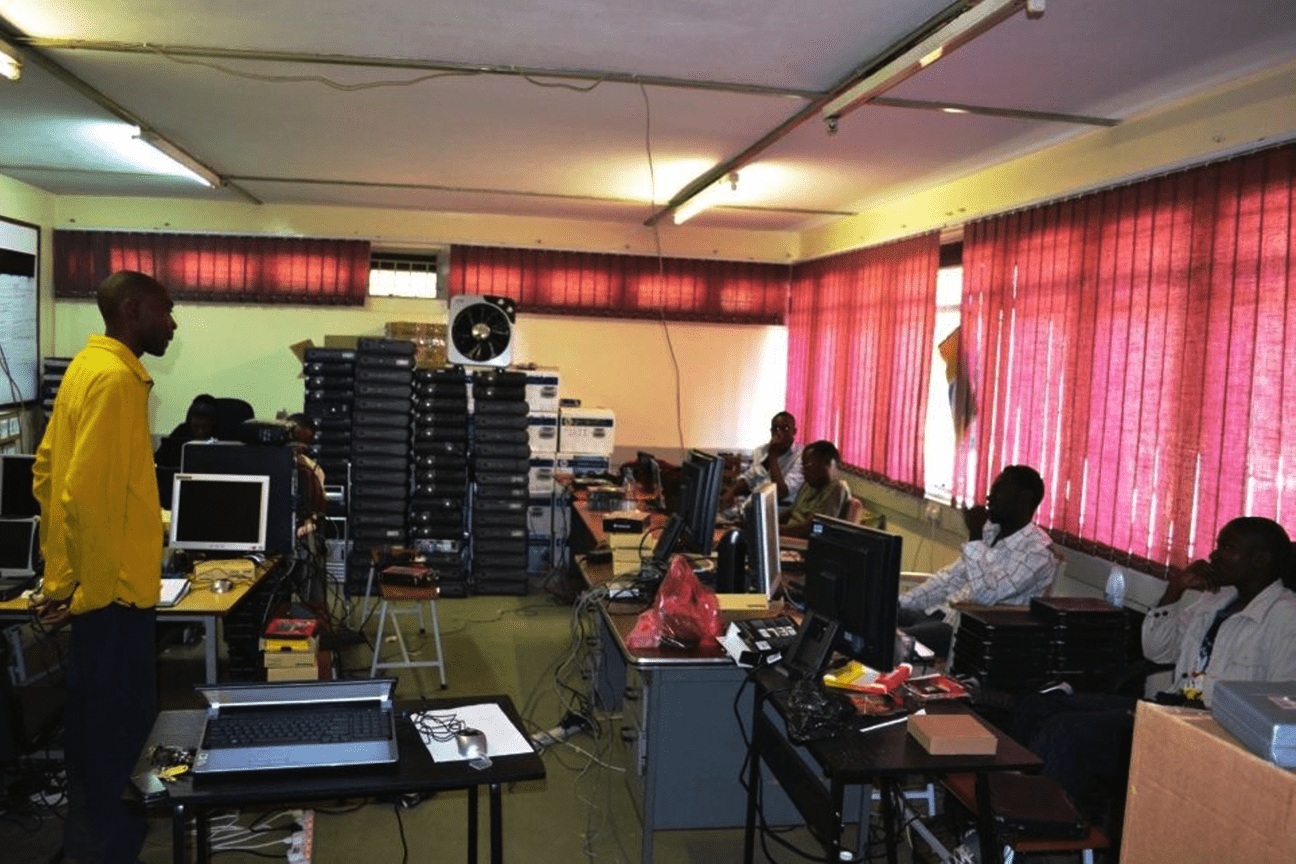
The photograph is wonderfully unceremonious. Red blinds. Fluorescent lights. A stack of computers occupying space that people could probably use. This was BongoHive’s beginning: a borrowed room inside Lusaka’s Ministry of Education complex. In May 2011, Lukonga Lindunda, Simunza Muyangana, Silumesii Maboshe and Bart Cornille opened a technology hub. The room supplied something Zambia’s scattered builders needed: somewhere to find one another.
THE STORY IN THREE POINTS
- BongoHive grew from a developer gathering place into a business that supports founders and builds technology for organisations.
- Its offer combines entrepreneurship programmes, consulting, software, AI and coworking.
- The useful lesson: find the next obstacle before you prescribe the next workshop.
Fifteen years later, the interesting question is what had to be added. A founder needs a place to work, certainly. But a place cannot teach a missing skill, find a paying customer or explain a financial regulation. BongoHive’s evolution is a story about discovering those gaps, one inconvenient detail at a time.
The first missing piece was the skill
The original assumption sounds reasonable: bring technically capable people together, help with their ideas and introduce them to useful contacts. Lindunda later told TechCabal that many arrivals needed to learn how to build an app first. Business fundamentals needed attention, too. BongoHive responded with more structured support, matched to a venture’s stage and sector. The community had supplied the correction.
There was a deeper reason for building the institution. Lindunda’s work in development had left him questioning whether solutions would survive after projects ended. In a 2022 interview, he described wanting local people to have more ownership of the problems they were solving. The founders borrowed the hub idea from a wider African movement, including Nairobi’s iHub, and adapted it to Lusaka.
“we take a back seat and we get comfortable with the fact that we are not the experts.”
Lukonga Lindunda · Aid, Evolved, 2022
That stance changes the job. The organiser must learn what the founder lacks, rather than arrive with a finished answer. BongoHive’s current entrepreneurship offer moves through validation, business capability and investment preparation. Customer interviews, financial management and governance sit beside pitching. An idea gets a sequence of practical tests.
The bill has several payers
The money story has useful specifics. Comic Relief’s grant register records £358,377 for BongoHive Innovations Limited’s “Building an Entrepreneurial Ecosystem” project, with a September 2015 award date. It belongs in the history as programme support. Counting it as a venture-capital round would give the reader the wrong picture.
Queen’s Young Leaders Grants Programme
Recorded award date: 9 September 2015
Participants sometimes pay, too. An archived February 2021 announcement priced Discover, a two-week virtual pre-accelerator, at ZMW1,000 per startup. That bought a specific historical programme. Today’s coworking page asks prospective members to enquire for prices and advertises a free day pass. There is no single tariff covering everything BongoHive does.
Its business model brings together consulting and technology fees, training, workspace services and funded programmes. That variety matters because its customers have different budgets and needs. A corporate team can commission a digital product; a development partner can fund an accelerator; a freelancer can rent working space. Each buys a different piece of the institution.
For a buyer, that puts BongoHive across several familiar markets. A founder might compare its programmes with another incubator, such as Zambia’s Jacaranda Hub. A company commissioning software might compare it with a development agency. Someone seeking a desk has a simpler workspace decision. BongoHive’s distinctive proposition is the connection between those services: the mentor, the developer and the prospective institutional partner can be closer together.
A fintech needs more than a demo
Consider FinTech4U, developed with the United Nations Capital Development Fund. Five fintechs entered its first cohort in January 2020. The initial classes finished in April, with another three months of support built into the programme. Customer understanding and regulatory navigation were central to the work. A functioning payment product still has to operate within financial rules.
The subsequent Regulatory Playbook for Zambian FinTechs, published in 2021, made that knowledge reusable. Its preparation included mapping regulatory gaps and sessions with financial-sector regulators. This is a particularly useful form of startup support: take a recurring obstacle, work through it with the relevant institutions, and leave behind something the next founder can use.
customers
business
regulation
A product has to make sense to its users, its business and its regulators.
Partner programmes create other routes to capital. The 2025 Women in Tech offer, delivered with Standard Chartered Foundation and Village Capital, advertised five equity-free grants of US$10,000. Separately, Zambia’s technology ministry announced five MineTech innovators selected for US$25,000 each in September 2025. These are awards for selected ventures, not promises to every applicant.
Now the room also builds the software
BongoHive’s corporate work takes the same attention to missing pieces into established organisations. Its technology portfolio names the Zambian Geological Survey, agricultural platform Panuka and education company Koloso among its projects. The service spans research, design, development, testing and support. Its AI Lab adds research, adoption support and implementation to that mix.
There is also a product: IdeaSpring, software for managing innovation and entrepreneurship programmes. Submissions, evaluations, events and analytics belong to the same workflow. BongoHive names First Capital Bank, GreenTech4CE and SC Women in Tech as users. A company that runs programmes has built a tool for other programme operators.
In September 2026, BongoHive explained its paired Innovation Consulting and Technology Consulting teams. The problem it wants to address is familiar: a strategy passes to a separate builder, and context disappears in the handover. Keeping both capabilities together is its proposed advantage. Buyers should judge that proposition by the delivered work.
The practical test is specific. A founder with an untested idea needs customer evidence before an investor introduction. An established business may need an engineering team and maintenance arrangements. A grant applicant needs to match the programme’s eligibility and timetable. Choosing the service by the next constraint makes more sense than assuming every business should enter the same accelerator, follow the same curriculum or seek the same money.
Let the user interrupt
A recent workshop provides a smaller, sharper example. Women in Tech Cohort 6 founders brought working products to an accessibility session with Sightsavers Zambia and ZAFOD. Users with disabilities tested them with their own assistive technologies and everyday strategies. The company’s account describes overlooked usability gaps coming into view.
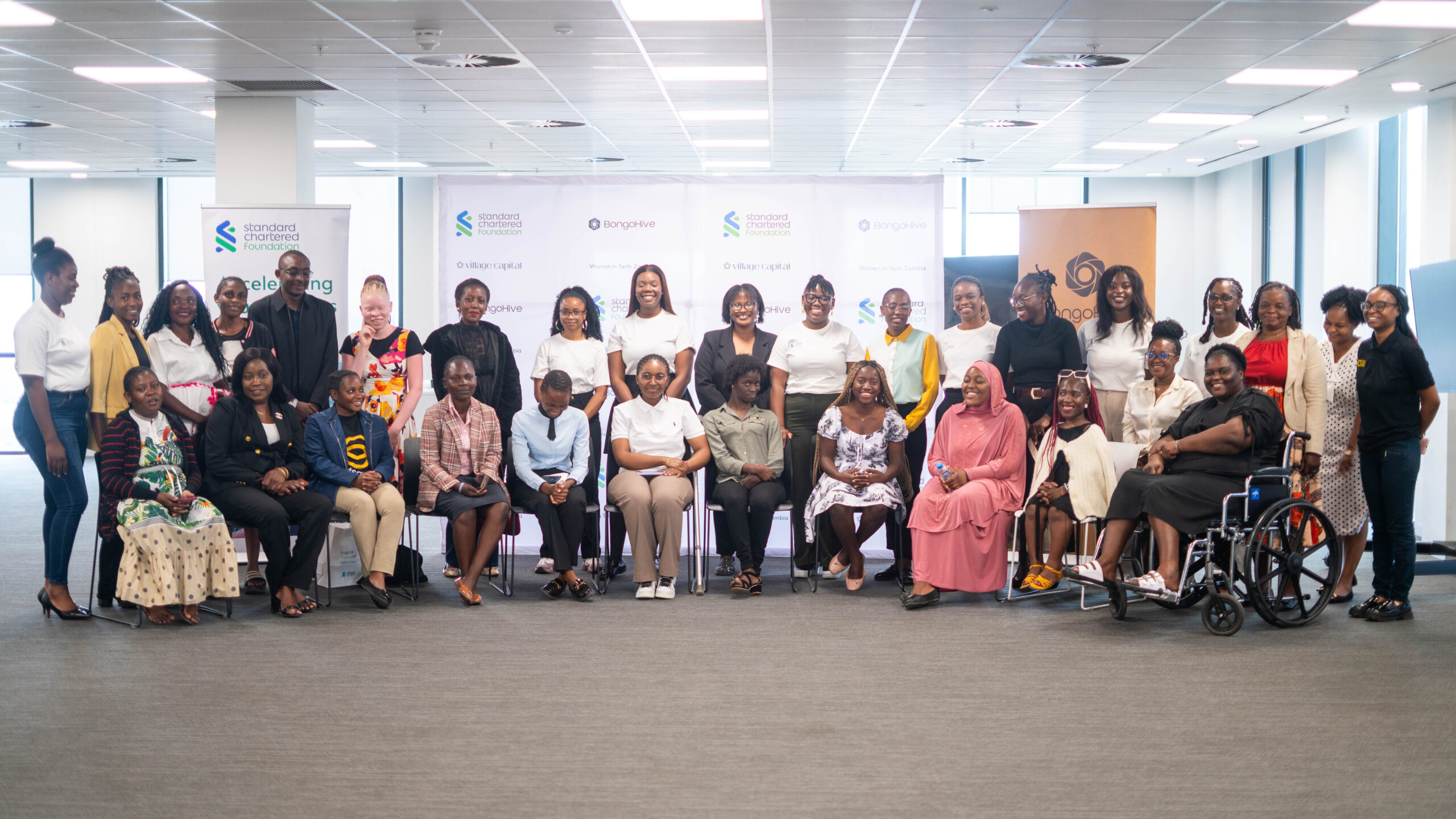
That is a method another organisation can copy: bring users into the process while changes are still practical. It requires real access to those users, time to listen and a team able to act. Without those conditions, a workshop can end with the same product and a better photograph. BongoHive’s borrowed room began with proximity. Its continuing challenge is turning proximity into useful work.
Keep exploring
FOLLOW THE COMMUNITY
READ / WATCH / LISTEN