Umut Alkan’s team had reached the stage. Their mobile application had not. After a 48-hour Meta Llama hackathon held with YTU Startup House, their prototype still ran only in a local emulator. While their name was being called, Alkan was configuring a server. The audience never saw the mobile demo.
- Idea-stage founders get training, mentoring and checkpoints.
- Product-ready teams get support for sales and expansion.
- Specialist tracks connect AI builders with engineers and corporate needs.
In his public account, Alkan describes continuing for two more nights, deploying the application and getting NutriVerse into YTU’s pre-incubation program. Eventually, friends could run it on their own phones. It is a modest, revealing achievement: something that worked for its maker had become something another person could use.
“I failed to deploy our app live on stage”
Umut Alkan · hackathon participant
That gap is a good place to understand YTU Startup House. The Istanbul organization combines Yıldız Technical University’s academic expertise with Yıldız Teknopark’s industrial connections. Its services include mentoring, incubation, acceleration, workspace and access to partners. The interesting question is how those services help a founder get past a particular obstruction.
Six months after the weekend
A hackathon supplies a deadline. A business needs a longer calendar. YTU’s pre-incubation program runs winter and summer cohorts, teaching design thinking, storytelling, sales and user-centered product development alongside individual mentoring. The curriculum treats explaining a product and selling it as work that belongs beside making it.
The university’s account of the 2025 winter cohort makes the arrangement tangible: 35 ventures, six months, training across 17 subjects and more than 300 one-on-one mentoring sessions. Regular Checkpoint meetings tracked each venture’s progress. Those meetings are a detail worth borrowing. A recurring appointment turns an intention into something another person can question.
Incubation serves a different starting point. Its applicants have completed idea and product development and want to grow existing sales. The offer includes technopark incentives, technology-transfer support, R&D guidance and domestic and international office facilities. A founder still deciding what to build and a founder trying to sell more of it need different conversations.
An editorial map of program purposes, not an automatic progression.
Start with the buyer’s brief
The Microsoft partnership offers a particularly practical version of this thinking. Announced in November 2025, the AI Accelerator for SaaS Enterprise connects startups with defined AI requirements from nine corporations. The list includes Migros, Garanti BBVA, Enerjisa, TürkTraktör and Tofaş. Applicants can inspect the requirements and identify the problem their product addresses.
There are filters. The program targets AI-first SaaS businesses with enterprise-client experience and Azure-compatible infrastructure, or an easy migration path. This is a specific fit for a specific commercial setting. A team with an interesting model but no enterprise experience would have more preparation to do.
The distinction matters in a market crowded with incubators. İTÜ Çekirdek, another Istanbul university incubator, also offers mentors, workspace, corporate connections and technology benefits. YTU’s combination brings together its university and technopark resources, overseas office access and particular partner programs. Founders should compare those connections against the customer they actually need to reach.
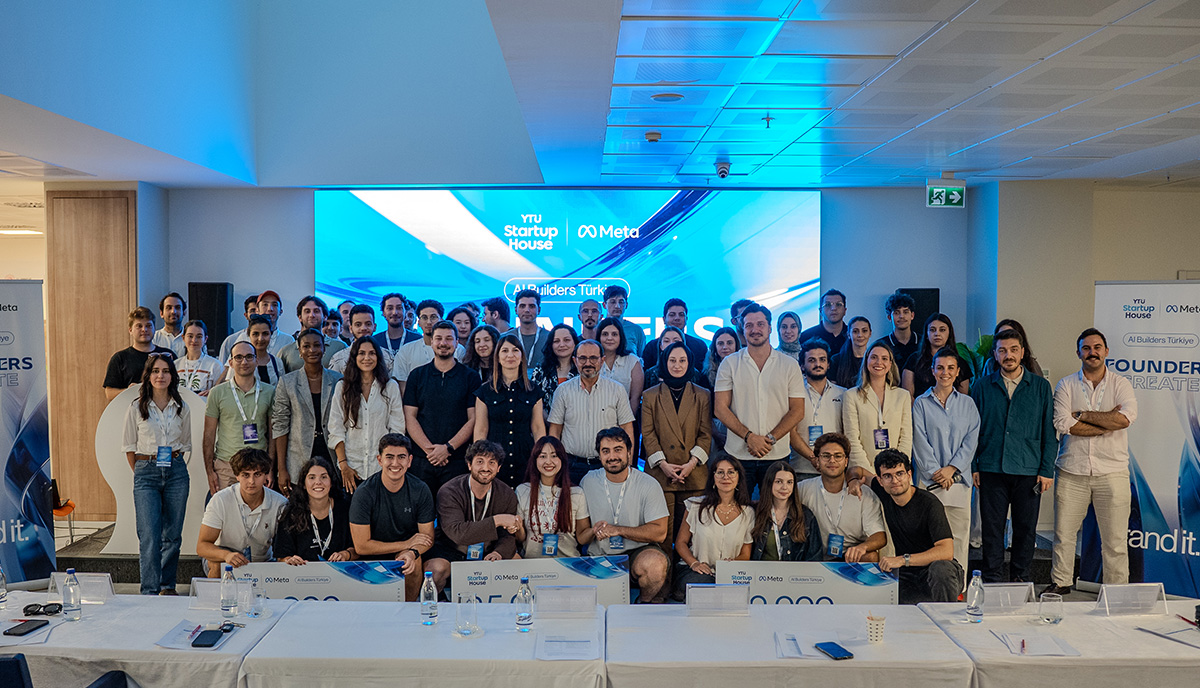
At Founders Create, held with Meta on August 22-23, 2026, the brief demanded a public-facing business. Selected from more than 100 applications, 28 teams had 36 hours to deliver brand and market-entry materials. Their assignments included live social channels, content and an investor pitch. A $10,000 prize pool gave the deadline extra bite.
Two teams, Dresskit and kervansar.ai, received direct acceptance into pre-incubation. The handoff matters. A weekend can expose the holes in a proposition; a longer program gives a team time to work on them. The event and the incubator become adjoining rooms.
A price tag, with conditions
Some offers have a straightforward price. The October 2026 AI Engineer Bootcamp with NVIDIA is free: three weeks, taught in English, for developers, software engineers and technical founders who already write code and know basic LLM concepts. Its syllabus includes production RAG, evaluation, security and deployment. Alkan’s experience makes that last item feel less academic.
StarBİGG involves a different exchange. The current program, led by Yıldız Teknopark with Türksat, advertises TRY 1,350,000 from the TÜBİTAK BİGG Fund for 3% equity in eligible ventures. Applicants face educational, ownership and previous-support requirements, followed by evaluation. The investment is conditional, and it goes into selected startups.
NVIDIA AI Engineer Bootcamp
Three weeks · English · technical prerequisites
Current StarBİGG investment route
Eligibility and TÜBİTAK selection apply
The dated amounts deserve attention. In December 2025, YTU announced five ventures eligible for TRY 900,000 each under that period’s StarBİGG call. The projects ranged from an oral spray to RF-design automation. A founder comparing programs should read the current call’s terms rather than carry last year’s number into this year’s plan.
For beginners, the Meta student training starts earlier in the learning curve. Its September announcement describes four free, recorded evening sessions in Turkish, beginning with no assumed LLM experience. Students who finish the training receive priority consideration for the subsequent hackathon. The later announcement schedules that event for December 4-6, with a $6,000 prize pool and pre-incubation places for winning teams. Learning a tool leads to an occasion to try making something with it.
Student access also comes with distinctions. Yıldız Kaşifleri offers mentoring, equipment and competition support, followed by help with scaling. Its published rules allow students from universities across Türkiye, while requiring a Yıldız Technical University student to lead an entrepreneurial team or project team. Club support is reserved for YTU clubs. These details make the institutional connection concrete: the university supplies both resources and boundaries around who can use particular parts of the offer.
An office is only the beginning
YTU’s current directory lists three Istanbul locations and offices in Amsterdam, Dubai, London and Skopje. For an expanding company, that network offers places to work and connections abroad. Whether it helps depends on the next task: meeting prospective customers, understanding a market or building a local business relationship.
Partner benefits can also ease the early workload. The incubation program lists AWS and Microsoft cloud credits, NVIDIA support and development tools including GitHub and Atlassian. These resources address infrastructure and operating needs. Founders still have to establish whether the product solves a problem someone will pay to remove.
There is a useful habit here even for someone who never applies: name the bottleneck before choosing the program. Then give the next milestone a date and a person who will ask about it. NutriVerse’s progress offers an appropriately small image of success: the application finally running on somebody else’s phone.