A founder can learn to pitch beautifully and still leave the room without a cheque. AwakenHub has built its work around that awkward fact. The social enterprise brings women entrepreneurs together across Ireland, helps them develop their businesses, then connects them with an investment community through its sister organisation, AwakenAngels. The proposition is practical: improve the business, make the introduction, and get more women involved in deciding where money goes.
It began in July 2020, when lockdown had business owners searching for ways to survive and other women considering a company of their own. The first Zoom event attracted 70 people, including attendees overseas. By the 2023 Rose Review progress report, the mailing list had passed 2,500 founders, experienced supporters and allies. A conversation had acquired a constituency.
Today, AwakenHub’s story page reports more than 3,000 subscribers and around 400 private-community members. Those are different measures: a subscriber has not necessarily completed a programme, raised investment or become a paying member. What matters is the connection between the broad audience and the smaller groups where founders work on specific business problems.
The people who make the introductions
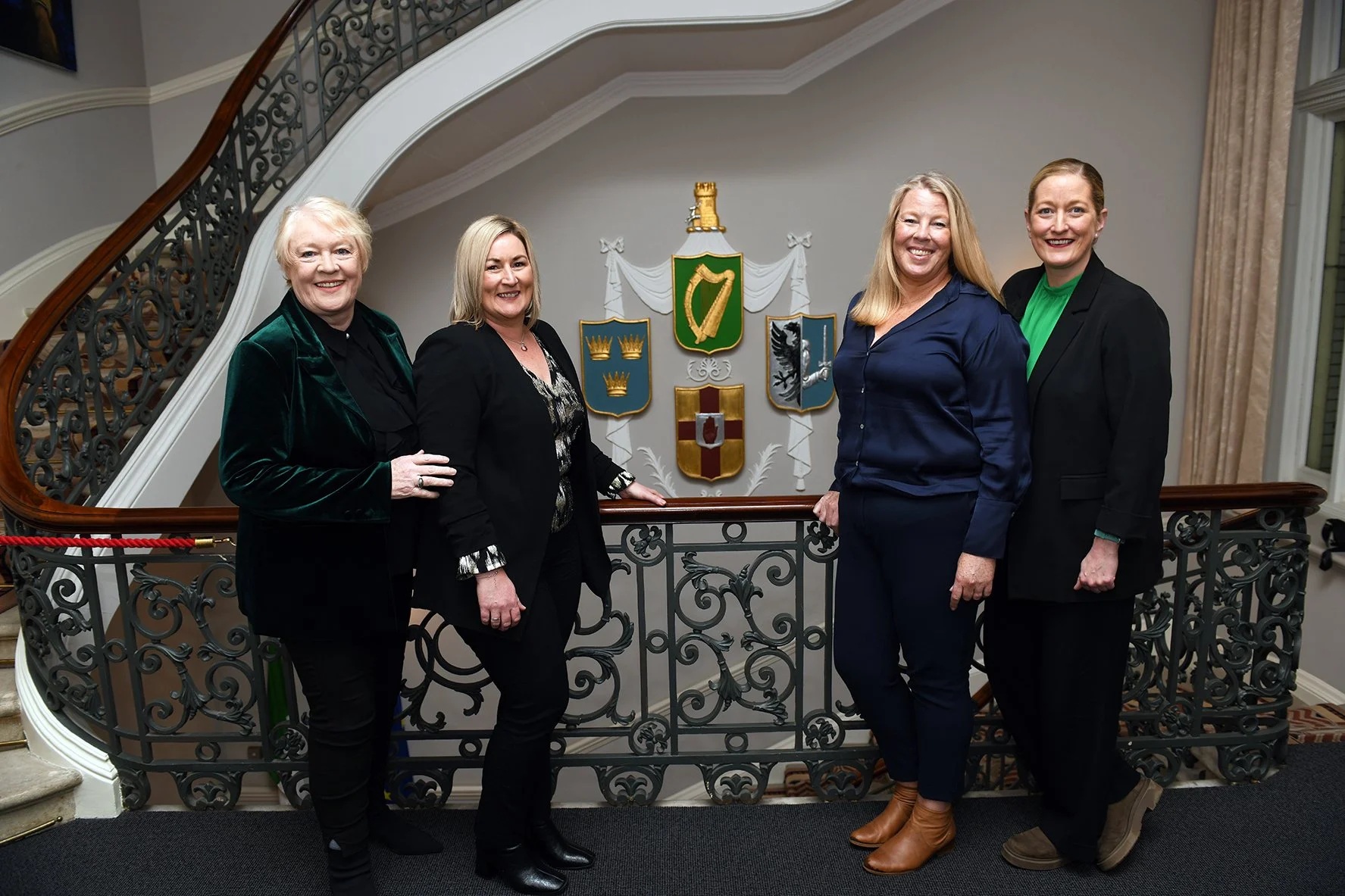
The current leadership brings together chair Mary McKenna, chief executive Clare McGee, community director Sinead Crowley and investor-relations director Denise McQuaid. Earlier founding accounts also name Mary Carty. The present team and the original founding history are best understood together.
McKenna co-founded the online-learning business Learning Pool and subsequently exited it. McQuaid’s career has taken her through the US, China and London. In a 2026 Irish Post interview, she said growing activity and investors’ appetite for more personal contact helped bring her back to Ireland in 2025. These are useful credentials for an organisation selling access: someone has to know whom to call.
The legal structure is also telling. AwakenHub Ltd was incorporated in Northern Ireland on July 20, 2020 as a company limited by guarantee without share capital. Its public LinkedIn profile lists Dublin as headquarters; its registered office is in Derry/Londonderry. Its market spans both jurisdictions. Geography is part of the service.
Big Sisters, small rooms
AwakenClub, launched in 2021, is the private community within the wider organisation. It offers founder drop-ins, events, shared information and access to experienced entrepreneurs, investors and company builders called “Big Sisters”. Small working sessions tackle particular subjects; a five-part legal workshop series runs from starting a business to raising finance. Selected founders can practise before pitching to AwakenAngels.
The language is deliberately familiar. Even some male allies serve as Big Sisters. The organisation welcomes men who support its mission, while its private founder community and bespoke programmes centre women. That combination gives the club a defined audience without pretending useful experience belongs to only one group.
Its customers include founders who are still testing an idea, owners developing a small business and entrepreneurs preparing for international growth. Their needs differ. Someone struggling to identify a customer does not need the same intervention as a business negotiating investment terms. A continuing community lets people ask the next question after the workshop finishes.
That is AwakenHub’s position in a crowded support market. General accelerators, local enterprise services, business networks and investment-readiness programmes offer overlapping help. AwakenHub combines an all-island women-founder community with staged learning and a relationship to an angel syndicate. Founders can use it alongside agency support; the organisation explicitly describes WeScale as complementary to existing provision.
From “who buys this?” to “where next?”
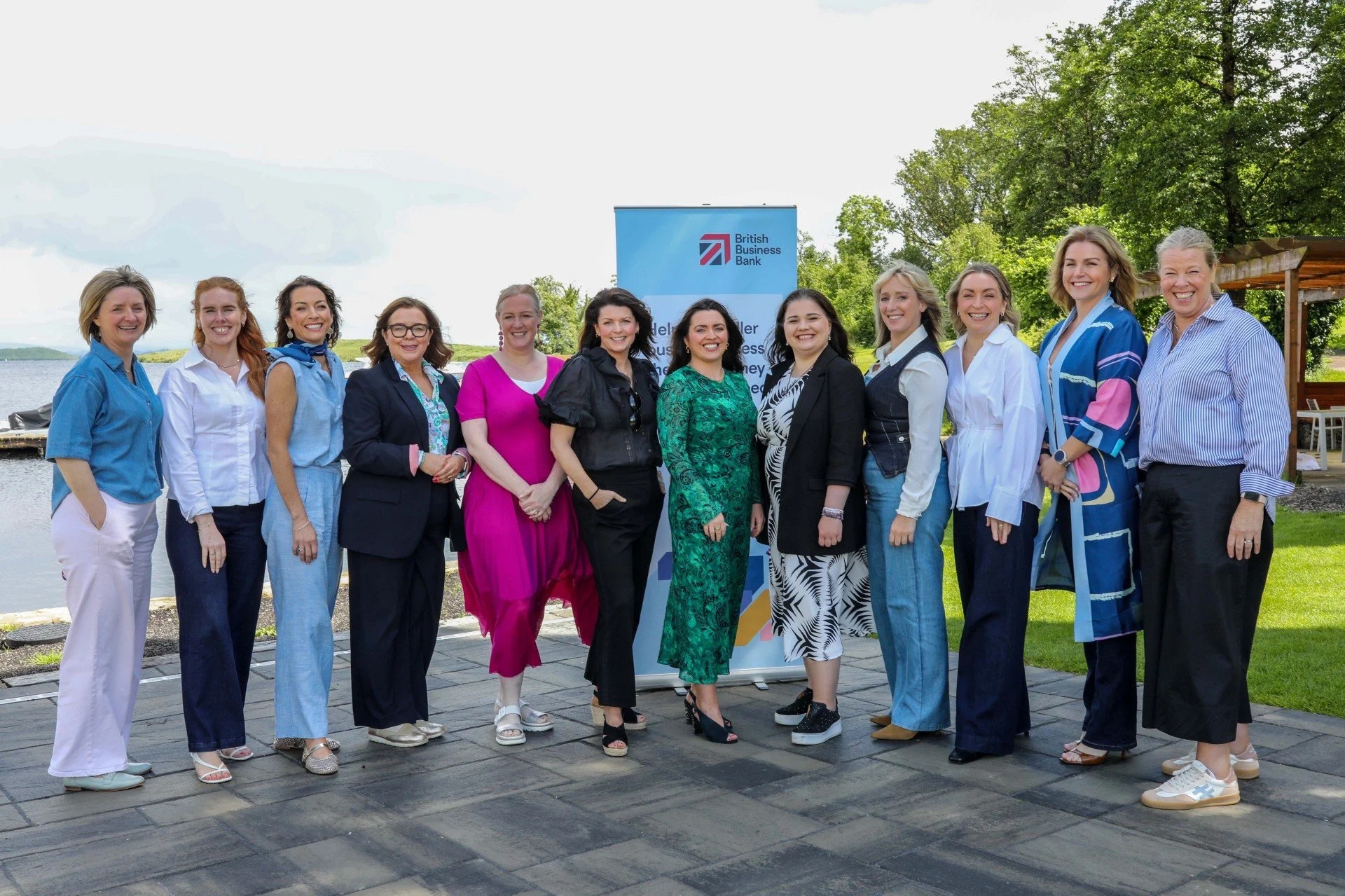
SheGenerate is the early-stage entry point: an accelerator-lite built around practical development and peer support. Initial backing from Ulster Bank Northern Ireland and Rethink Ireland helped it launch in 2021. The first programme supported 56 women. Its fifth cohort celebrated 23 participants in 2026, with AIB and the British Business Bank thanked as sponsors.
A useful example comes from Emma McCleneghen of Genysys Engine. In AwakenHub’s programme testimonials, she describes a return to the basics: identifying a target audience, talking to prospective customers and understanding their frustrations. She reports subsequently winning international customers and collaborating with another participant. The lesson is specific enough to borrow: before polishing the pitch, check whose problem the business actually solves.
The next stage began with the SheScales pilot, whose first 16 graduates were celebrated in 2025. It has developed into WeScale, delivered with Cranfield University. The work shifts toward strategy, leadership, operations, investment preparation and overseas markets. Participants include businesses as different as Chimac, Beauty Buddy and StimOxyGen.
Chimac co-founder Sofie Rooney describes joining at a moment when a new facility had created options but the business needed direction. In her account, the programme helped turn competing opportunities into a clearer strategy. This is a less photogenic outcome than a funding announcement, and potentially more useful: knowing which opportunity deserves the team’s next six months.
The price tag has several lines
AwakenHub’s homepage lists pay-as-you-go community events at £10, with regular events included for AwakenClub members. Its shop also lists a £100 community annual pass. That is the advertised pass price; it should not be assumed to purchase every programme, coaching place or trip. Some opportunities require selection.
WeScale is publicly funded under the Government of Ireland’s Shared Island Enterprise Scheme, led by InterTradeIreland with Enterprise Ireland and Invest Northern Ireland. The programme has no participation fee. InterTradeIreland says participants generally cover their own travel and accommodation. Time is another real contribution: attendance and active engagement are expected.
For the next cohort, applications close at noon on September 21, 2026, with mandatory in-person onboarding in Dublin on October 13. The programme combines nine core modules with optional services and mentoring. Pre-revenue businesses can apply, but registration, an innovation-driven scalable model and international potential still matter. “Free” does not mean open-ended access.
AwakenHub’s operating model combines paid access with sponsorship and funded delivery. In an early retrospective, Crowley described the first two-and-a-half years as largely voluntary work with very limited resources. The Rose Review says programme profits are reinvested in the social mission. Anyone copying the model needs to account for the labour behind the introductions, follow-ups and sessions. A busy calendar is an expense before it becomes an asset.
*Travel, accommodation and founder time are separate. Offers and selection requirements differ.
A better pitch still needs a willing investor
The structural problem was visible early: supporting women founders leaves part of the funding equation untouched if women remain scarce among investors. AwakenHub’s own explanation makes that point directly. AwakenAngels adds an investment community beside the founder community, with education intended to make angel investing more accessible.
The syndicate’s FAQ lists a minimum investment of £2,000 per angel per deal. It draws prospective deals from AwakenClub, SheGenerate and wider networks, and says individual investors make their own investment decisions. The £2,000 is investor capital, not an accelerator fee paid by founders. Joining the community does not purchase a funding commitment.
That distinction is central to assessing the model. The useful mechanism is repeated contact between people building companies and people learning how to back them. Founders can understand investor questions earlier; investors can encounter businesses through an established community. Commercial scrutiny still belongs in the process. Access creates a chance to be assessed, not an exemption from assessment.
There is another route for a narrower audience. AwakenHub is a core partner in the 2026-2028 Women TechEU consortium, alongside Sploro and AcrossLimits. The initiative plans €12 million in equity-free funding for 160 women-led European deep-tech companies, with €75,000 for each selected startup plus development support. That is a European programme budget, not money raised by AwakenHub. Applicants first pass an eligibility stage before submitting a full proposal.
“Show me the money” came with a destination
At the 2026 SheVentures summit on Lusty Beg Island, the community’s request became unusually blunt. Clare McGee reported that delegates wanted capital and better access to customers, investors and international markets. Her summary included four words familiar to anyone who has outgrown an inspirational panel:
“show me the money”
Clare McGee, recounting delegates’ requests after SheVentures 2026
AwakenHub and AwakenAngels responded by announcing additional US missions. The Cleveland visit, scheduled for September 27-30, 2026, offers ten founder places and was developed with Team NEO and the City of Mentor. A San Francisco mission was announced for October, followed by New York and Boston in February 2027.
The existing mission model is self-funded by participants. Its appeal is organised access to diaspora businesses, consulates, investors and market briefings. For a founder, the sensible test is concrete: which buyer, partner or investor would make the trip worthwhile, and what must happen after the introduction? A suitcase full of business cards is a poor return on airfare.
Borrow the sequence, budget for the work
There is a repeatable idea here for other founder-support organisations. Gather people around a problem they recognise. Offer small, useful sessions. Build a more demanding programme when those people outgrow the first one. Give experienced members a reason to return, and connect the learning to customers or capital. AwakenHub’s sequence makes more sense than launching a dozen disconnected events.
Its limits follow from the same design. A founder seeking a guaranteed cheque will be disappointed. A business without international ambitions may get more from community sessions than a scaling programme. Someone unable to travel or commit working hours must weigh funded tuition against the practical cost of attending. Deep-tech grants serve a defined technical audience.
The revealing achievement is the continuity: an early founder can return with a different problem, and a more experienced founder can become useful to somebody else. AwakenHub’s wager is that those repeated exchanges will improve who gets heard, who gets introduced and eventually who gets funded. The next cheque, contract or expansion decision is where that wager meets the business.