Orbit Innovation Hub began with a problem that rarely appears in a pitch deck: who helps the person with the idea? In Ethiopia, a founder might understand an urgent need in healthcare or delivery and still struggle to turn that knowledge into a business. The distance between those two things is where Orbit works. Its tools include training, coaching, introductions and access to finance. The interesting part is how much the organization itself had to learn about making those tools fit.
- A health-tech offshoot backs founders across several sectors.
- The original pilot combined business support with $5,000 grants per founder/co-founder recipient.
- Regional incubation and enterprise communities now carry the work beyond Addis Ababa.
A Paris inspiration, an Ethiopian education
Pazion Cherinet, identified as Orbit’s founder and CEO in a 2023 ecosystem report, had an appealing reference point: Station F, the Paris startup campus. His experience in the United States also supplied ideas about entrepreneurial support. Ethiopia required some relearning. A model designed to attract investment had to make sense to the people, institutions and resources actually available locally. An elegant diagram, alas, cannot attend the meeting for you.
“The biggest challenge was finding a relevant and applicable model for the Ethiopian landscape.”Pazion Cherinet · 2023 ecosystem mapping report
One early ambition was a consortium centre with other local hubs. Agreement proved difficult. Organizations had different positions and business models; some were occupied with survival. Cherinet said Orbit consequently developed things itself, risking an overly broad remit. This was an early stumbling block in the support structure, rather than a documented collapse of a particular startup. The lesson was about coordination: having a shared problem does not settle who contributes what.
The pilot had a price tag
The hub emerged in 2020 as the social enterprise wing of Orbit Health, an Ethiopian digital-health business. A December partnership with the Mastercard Foundation funded its establishment and pilot. Addis Fortune reported funding of a quarter of a million dollars in January 2021. The plan was to incubate 15 technology startups, offering four months of training and mentorship, seed support and continued industry connections.
The selection process was concrete, too. Forty-nine companies applied. Screening, interviews and a final pitch were meant to separate an attractive proposition from one that could withstand questions. That distinction matters for healthcare: an application has to fit the working lives of professionals and patients. Technical talent is only one ingredient. A founder also needs a workable service, an intelligible offer and a route to customers.
First pilot · completion announcement · February 2022
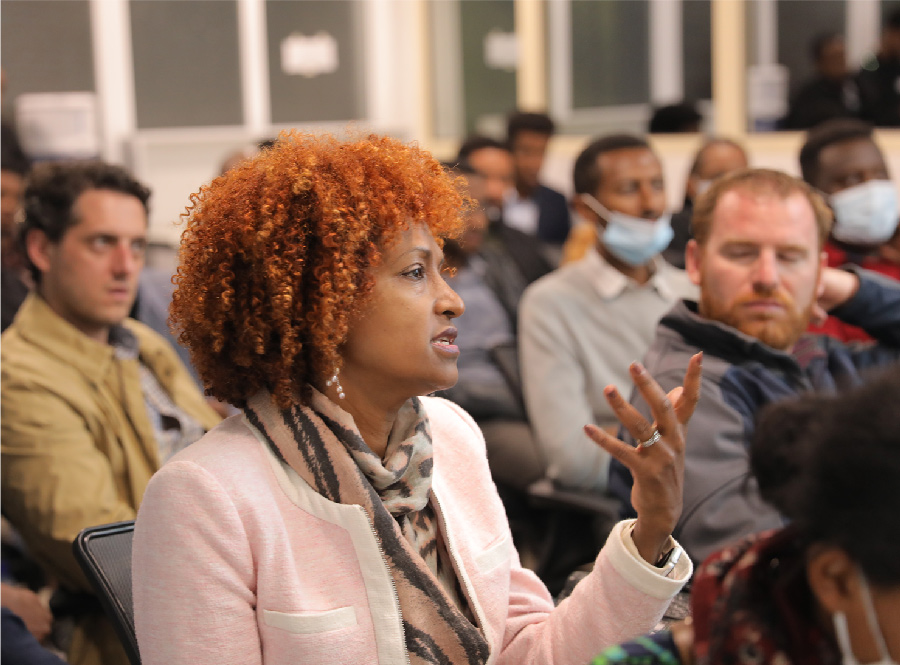
By February 2022, the completion announcement described a year-long pilot, 15 supported startups and 89 jobs created. Each founder/co-founder recipient had also received $5,000 to establish or scale a business. Those payments were one component of the intervention. Treating the whole budget as founder cash would erase the training, mentoring and organizing that made the programme a programme. The jobs figure, meanwhile, describes that reporting moment.
Doctors, delivery and the unglamorous customer
The participants make Orbit’s purpose easier to grasp than the word “innovation” does. TechMed, founded by four female physicians, offered home medical care using digital applications and short SMS numbers. Blue Health worked on emergency care. Medstore.et addressed medical-equipment trading. Alongside them were Shemach, a last-mile delivery platform, and Adey Rooms, an online room-booking company. Healthcare supplied the starting expertise; it did not dictate every business admitted.
Training covered finance, market research, marketing, fundraising, legal matters and administration. Orbit’s early users were founders at different stages, rather than customers buying a single software subscription. The hub helped them examine the business surrounding a product: who needs it, how to reach them, how to run the operation. For an entrepreneur, that can mean discovering which assumption deserves testing before another feature gets built.
Blue Health provides a later view of that work. A GIZ case study credits Orbit with mentorship, business development and market validation that helped turn a concept into a feasible business. It also describes subsequent support from the Ignite Accelerator. Useful incubation can be one stage in a longer journey; a founder need not find every future answer in the first organization that helps.
Making the introductions count
Orbit’s current service description follows a practical sequence: identify a community problem, establish that the proposed solution fits, test its market fit, then develop a route to market. Management coaching sits alongside appropriate mentors. Private businesses, NGOs and government institutions are also offered consulting on entrepreneurship, innovation and technology. Programme partnerships and institutional services together describe a social enterprise with several kinds of client.
- 01Community problem
- 02Solution fit
- 03Market fit
- 04Go-to-market
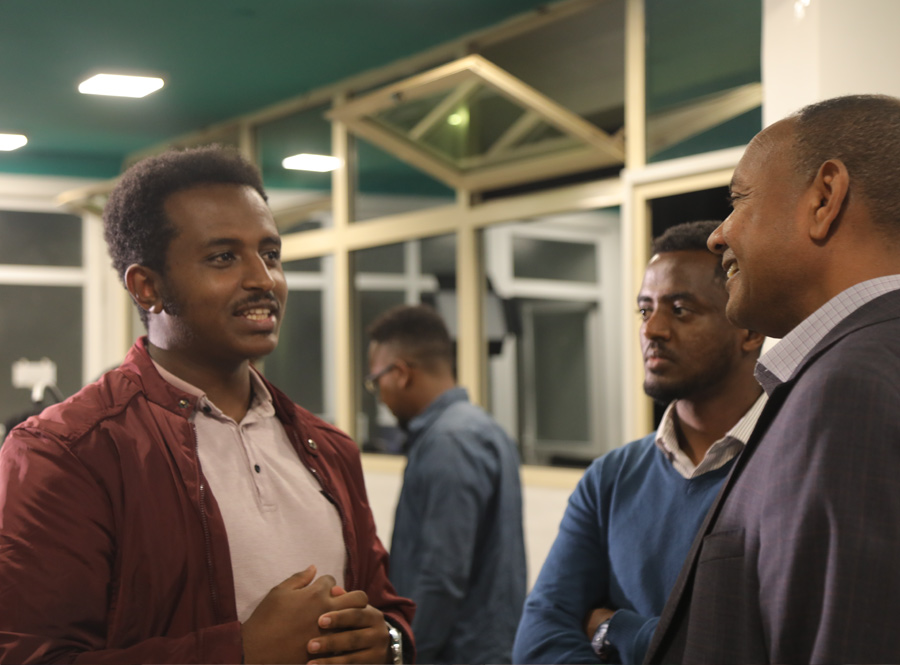
Startup Thursday adds an open door to that structure. Despite its weekly-sounding name, Orbit describes it as a monthly gathering with fireside conversations, elevator pitches and networking. In Ethiopia’s wider support market, alternatives include iceaddis, blueMoon and Startup Factory Ethiopia. Orbit’s distinctive combination is its health-tech operating background, foundation-backed founder support and community activity. A mentor introduction becomes valuable when it changes the next decision, not merely the address book.
The network leaves the capital
The later SEED programme puts Orbit inside an EDI-led consortium backed by the Mastercard Foundation. ACT describes the national initiative’s period as 2023-2028 and its ambition as one million jobs. Orbit states its own five-year contribution as incubating 1,000 startups across Ethiopia. These are programme targets. Keeping them separate prevents a large consortium ambition from masquerading as one hub’s completed result.
Orbit’s Q2 2026 ecosystem recap reports 177 startups welcomed to Cohort 7 from more than 720 applicants across five new cities: Adama, Bale Robe, Lalibela, Wolayta Sodo and Shire. It also reports Digital Market Linkage Labs in 12 cities. The direction is clear: supporting enterprises where they operate, while widening their access to peers and markets.
What can another organization copy? Pair business coaching with product advice; choose mentors for the customer’s industry; give founders recurring occasions to meet. Cherinet’s experience also suggests a condition: collaboration needs compatible commitments and enough capacity to honour them. Where partner organizations are consumed by survival, a shared centre becomes difficult to sustain. Orbit’s useful story is the work of building those connections, one decision and one region at a time.