A space startup can be stopped by something remarkably earthbound: a contract. Or a customer it cannot reach. Or the discovery that a clever prototype still needs a business attached. Civitta Hungary works in the gap between having an idea and being able to do something useful with it. Its tools include mentors, grant applications, commercial introductions and, increasingly, people who can build the software.
- Design Terminal joined Civitta in September 2024, bringing its entrepreneurship programs into an international consulting group.
- Its space incubator combines specialist advice with up to €60,000 in equity-free support for eligible startups.
- The April 2026 acquisition of dina.agency added a Budapest digital product team.
The name is new; the work has a history. Design Terminal’s institutional roots reach back to 2004. Its entrepreneurial mentoring program began in 2014, followed by a private nonprofit chapter in 2016. The present organization carries that startup-support heritage into a wider professional-services business. Advice, public funding and product development now sit within the same Hungarian operation.
A good idea meets a very ordinary obstacle
Consider geography. Hungary, Czechia, Poland and Slovakia are neighbours, but proximity does not arrange a meeting with a prospective customer. V4 Startup Force, launched in 2018 with support from the International Visegrad Fund, helps B2B startups make those connections. Civitta Hungary works with Campus, DEX Innovation Centre and Startup Hub Poland to turn a regional ambition into mentoring and business introductions.
There is a pleasing lack of glamour in this. A founder can put “international expansion” in a presentation in seconds. Establishing whom to call takes longer. The program addresses the second problem. NAK TechLab brings a comparable matchmaking approach to agriculture, with Hungary’s National Chamber of Agriculture and established industry partners.
That also explains the variety of customers. A startup wants access to expertise or a buyer. A public institution may want a program designed and delivered. A corporate team may need a digital product. The Hungarian website groups talent development, public advisory, consulting, funding support and digital solutions together. The commercial proposition is the ability to connect those jobs.
The space business is mostly down to earth
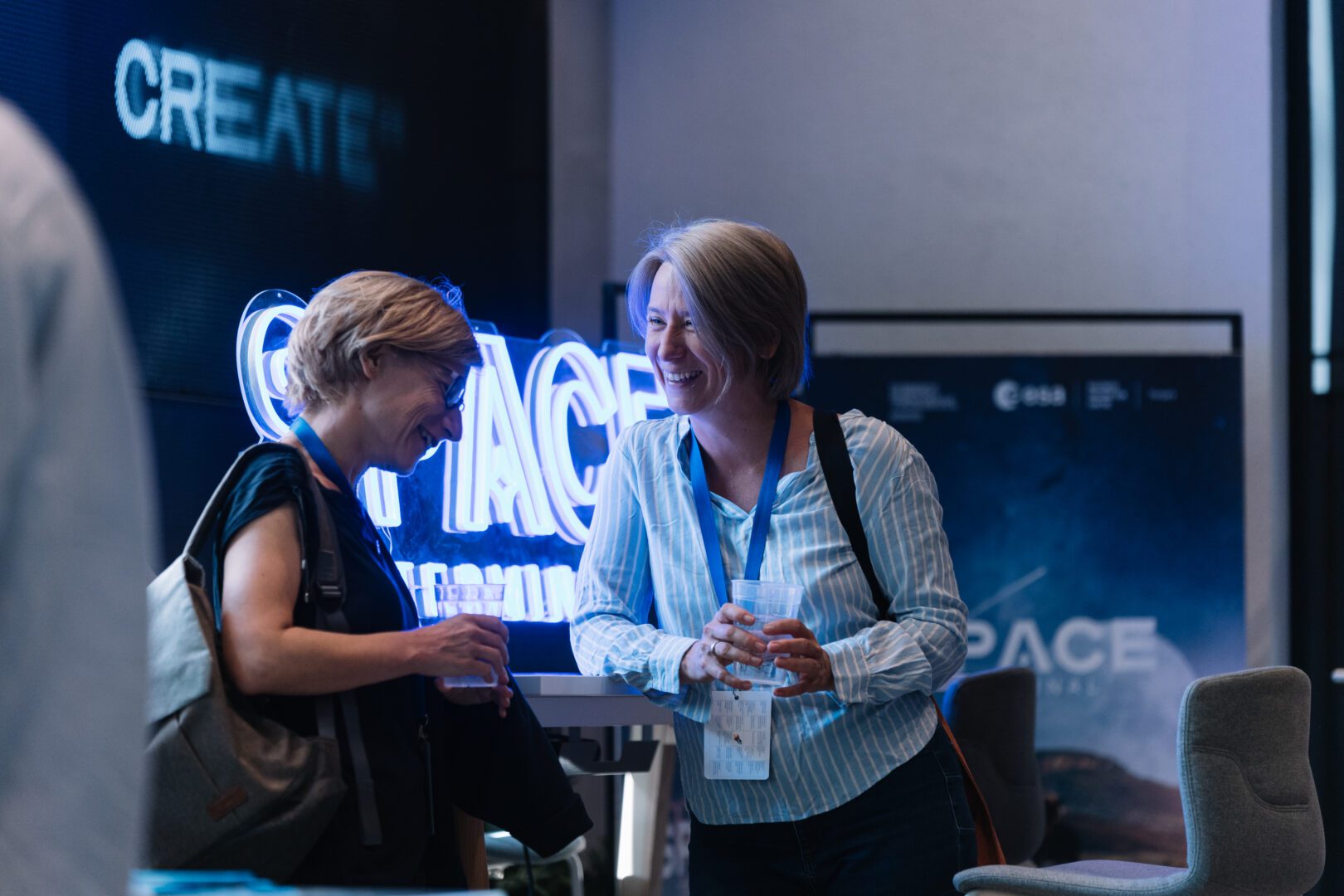
The clearest example is ESA BIC Hungary, which the team took over in 2021. Its published offer includes 50 hours of business consulting, 20 hours of technical mentoring and 10 hours of legal mentoring. Teams also receive monthly progress reviews, coworking opportunities and contact with investors. The paperwork has a seat at the table.
Eligible teams can secure up to €60,000 in non-repayable, equity-free incentive funding. That amount is support for the startup, rather than Civitta’s consulting fee. A valid space connection is required, although a business can use space technology or data here on Earth. Rockets are optional; eligibility is not.
The company’s case study reports 25 completed incubations and more than €1.5 million awarded. These measure program activity and funding, rather than proving that every graduate became a durable business. The useful design choice is putting commercial, technical and legal support around the same team. Money arrives with people who can help answer what it should accomplish.
An accelerator changes its timetable
Womenture reveals a different obstacle. The Horizon Europe project brought Design Terminal together with DEX Innovation Centre, Germany’s SpinLab and Estonia’s Tehnopol to support women founders. The EU record dates it from January 2023 to January 2025 and lists a €499,875 contribution across the consortium, including €124,625 for the Hungarian coordinator.
The project’s closing account reports 20 startups supported, 107 hours of training and an online community of 708 members. Those are consortium results. More revealing is what project leader Diána Kiss described in an April 2025 interview: analysis exposed structural barriers, so the team adjusted with flexible schedules, soft-skills training and relatable ambassadors.
The lesson is refreshingly practical. A program can recruit the intended people and still make participation unnecessarily difficult. Studying those difficulties changes the service itself. The transferable move is to investigate what prevents attendance and progress before adding another workshop. A splendid syllabus is little comfort to someone who cannot fit it into Tuesday.
“We didn’t get lost, we just grew together!”
Diána Kiss / on joining Civitta, April 2025
Kiss had also worried that joining a larger consultancy would dilute the local team’s identity. Her account describes that concern easing, and small teams receiving support from a wider structure. It is an employee’s view of integration, with its optimism attached to a named person rather than proclaimed as company folklore.
The people who can build it
In April 2026, Civitta acquired dina.agency, a Budapest studio founded in 2006. Its founder, Péter Lukács, joined as a partner. The announcement put Civitta’s Hungarian team at 50 people and described the addition of in-house digital delivery alongside innovation, funding and public sector work.

Dina’s portfolio includes Yettel, for which it helped establish a digital design system across several Central and Eastern European markets, and route-planning platform Utvonalterv.hu. These are practical product assignments: research, interface design and development. For a client, the acquisition potentially shortens the journey from deciding what should be built to finding someone able to build it.
- 2014Mentor founders
- 2024Join Civitta
- 2026Add product delivery
Borrow the sequence, not the slogan
The business sits between several familiar alternatives: a management consultancy, a grant specialist, an accelerator and a software studio. Its appeal depends on how many of those capabilities a client needs. For a narrow assignment, a specialist may suffice. For a project whose obstacles cross disciplines, having them within one organization is a sensible proposition.
Civitta sells professional services and delivers institutionally backed programs; publicly financed startup support follows its own rules. The sensible first conversation identifies the obstacle, the deliverable and the funding conditions. No mentor can substitute for demand, and a grant cannot make a product useful. What a reader can copy is the order of attention: define the problem, find the relevant expertise, secure suitable resources, then build and test.
Follow the work
Explore Civitta Hungary, the space incubation program and Womenture. Follow the team on LinkedIn, or its Design Terminal accounts on Instagram, Facebook and X. Read the digital studio announcement and company updates, or watch the Optimists first! interview with bedrock.farm.