For Singapore delivery company uParcel, Mumbai became more than a promising dot on an expansion map. Enterprise Singapore reported in 2023 that, after a pilot program with Startup Réseau, the company had validated local demand, established an office and hired staff to adapt its artificial-intelligence logistics tools for the market. A route-optimization product was getting its own route into India.
That sequence explains Startup Réseau better than the phrase “ecosystem builder” ever could. The Mumbai consulting company organizes the people, meetings and programs that help a startup find its next commercial opening. Its territory includes corporate accelerators, international expansion and founder development. Its useful output is a clearer path from a working product to someone prepared to take it seriously.
The distinction matters when assessing its work. An introduction is an intermediate step. An office, a local hire or a properly scoped pilot tells the reader more about what followed. The uParcel example supplies that next chapter, while illustrating the kind of problem Startup Réseau is hired to help untangle: a capable company arriving in an unfamiliar business environment.
The customer is on both sides of the table
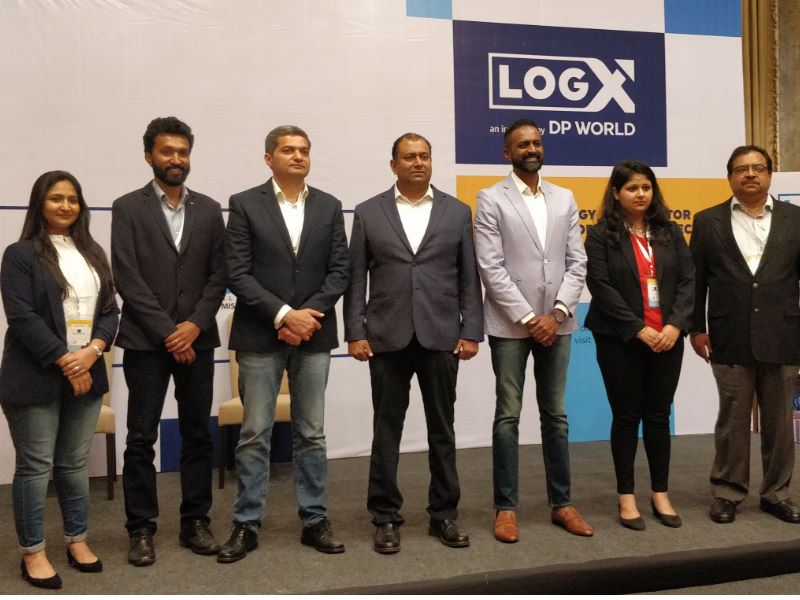
Startup Réseau serves two connected audiences. Founders need industry contacts, feedback and a way into new markets. Enterprises and institutions need someone to design programs, locate suitable young companies and manage the work of bringing them together. Those needs meet in assignments such as LogX, the logistics accelerator DP World launched in 2019 with Invest India, Kerala Startup Mission and Startup Réseau.
LogX gave that relationship an unusually concrete setting. Its brief covered smart trade and logistics technologies, including robotics, artificial intelligence and connected devices. Selected startups would work with DP World leaders and external mentors, with proof-of-concept development and longer-term engagement among the intended outcomes. The potential customer had an operational problem; the accelerator supplied a structured way to look for people who might solve it.
The company’s alumni list makes the brief tangible. Planys Technologies develops underwater inspection technology. SenseGiz works on industrial sensing and tracking. Instavans builds trucking software. Those businesses share potential relevance to an industrial customer, even though their products look nothing alike. Startup Réseau’s job is to understand that relevance well enough to organize a useful encounter.
A testimonial from DP World representative Ankush Huddar singles out finding “start-ups that are aligned to our strategy.” The important word is aligned. A startup can have an impressive demonstration and still be the wrong fit for a particular operator. Selection is part of the service, alongside the visible workshops and pitch sessions.
Six steps, with the business problem first
Startup Réseau publishes a six-part method for corporate programs: Scope, Scout, Source, Supplement, Surge and Succeed. It begins by working with business units, moves through scouting and selection, adds business-unit involvement, and advances toward pilots or proofs of concept. The final ambition is shared success. Read as a workflow, the framework places the corporate problem before the startup application pile.
- 01ScopeDefine the business need
- 02ScoutSearch the ecosystem
- 03SourceSelect from applicants
- 04SupplementBring in business units
- 05SurgeDevelop pilots / POCs
- 06SucceedPursue a joint outcome
The lesson a reader can copy is straightforward: identify the intended buyer and the problem before convening the cohort. As an editorial reading of the process, that order should make it easier to decide which introductions deserve follow-up. A room full of founders is an event. Giving a business unit a reason to keep talking requires more preparation.
This is where the company fits in the market. Its work overlaps with accelerator operators, corporate innovation teams and market-entry consultancies. A corporate team can run its own scouting; a university incubator can support a founder’s early development. Startup Réseau combines those program skills with international connections. Which alternative makes sense depends on the assignment: developing a founder, finding an industrial pilot or entering a country.
The foreign market gets a trial run
Startup Bridge Canada applied the model in the opposite direction to uParcel’s journey. Announced in December 2020, its inaugural program selected 35 Indian startups from 276 applications. The six-week virtual cohort began in February 2021 and targeted growth-stage businesses exploring Canada and the wider North American market. Provincial governments and economic-development organizations were among the partners.
These were companies bringing an existing business to a new geography. Reporting on the cohort put their combined prior fundraising above $26 million and annual recurring revenue above $16.5 million. Those figures describe the participating businesses at the time. They help explain why the program concentrated on market-entry strategy and introductions rather than turning an initial idea into a company.
Applicants selected for a six-week market-entry program.
For Singaporean companies looking toward India, Enterprise Singapore named Startup Réseau its Mumbai acceleration partner in October 2023. The launch announcement described a 12-week hybrid program combining virtual work, business meetings and an in-person component. It also reported uParcel’s Mumbai progress from an earlier pilot. That customer example gives the institutional partnership a practical reference point.
Startup Réseau’s dedicated GIA page now describes an Explore, Build and Grow sequence. Explore helps a company decide whether India warrants further investment. Build develops commercial connections. Grow asks for market readiness, a clear India plan and funds to support local activity. The staged design offers a useful principle: deeper commitment should follow better information.
That requirement also defines the fit. A company without the resources to pursue local leads would struggle to use a market-development program as described. Likewise, meetings alone cannot settle whether customers want the product. The value is in learning enough to act, including making a reasoned decision to defer entry. A well-informed pause can be a sensible result of exploration.
The pandemic cancelled the room
Ajay Ramasubramaniam brought experience in trade and startup programs to the company he created in 2019 with co-founder Sweta Tiwari. His earlier work included Tanzania, Ontario’s trade office in Mumbai and Zone Startups. That history helps explain why international business relationships feature so prominently in Startup Réseau’s services.
Then a business built around encounters had to change how people encountered one another. The Mumbai AI Summit was originally planned as a physical event. COVID-19 pushed it online for April 24 and 30, 2020. The announced format included more than 50 speakers across 23 sessions. The subject stayed; the venue became a stream.
“COVID has definitely impacted our revenues in different ways”
Ajay Ramasubramaniam
May 2021 interview with TamilCulture
In that 2021 interview, Ramasubramaniam described rethinking the business as digital delivery became more important. The evidence supports a specific adaptation: a planned gathering moved online, and the founder acknowledged revenue pressure. It also offers a copyable operational idea. When the delivery format becomes impossible, examine which parts of the service can still reach the same audience.
Tanzania, and a different kind of starting line
The African expansion brought another audience into the picture. Startup Réseau began its East Africa presence in 2021 and introduced Hindsight Ventures as its Africa-focused brand. Its regional fintech bootcamp enrolled 12 startups in a three-week program involving mentors, industry specialists and investors. Participants worked on problems including payments, savings and small-business credit.
Wazo Challenge Tanzania shows the institutional side of that work. Absa’s 2021 reporting says Startup Réseau managed the program, which selected 12 startups from 150 applications. It covered financial services, healthcare, agriculture, energy and education. Participants competed for a $10,000 cash grant, with selection criteria including market opportunity and the clarity of the business model.
The company’s stated #StartupsFirst and #GiveFirst principles sit alongside programs for people at different starting points. GrowthX WE Sprint offers women technology entrepreneurs a 13-week virtual accelerator. Its youth work includes Kettle, a six-month incubation program with École Intuit Lab. The common service is organized access to expertise; the curriculum and audience change with the assignment.
Free admission still takes time
One program gives founders a clear answer on price. SPJIMR’s 2024 EarthLab Bootcamp, delivered with Startup Réseau for sustainability entrepreneurs, was free to participants. It ran virtually for 30 days and asked for participation on two to three days each week. Mentoring, curriculum sessions and a speaker series led toward a demo day.
The offer also advertised access to up to $500,000 in technology-partner credits. Credits are a benefit to use under the relevant providers’ terms, not cash in the company bank account. Put beside Wazo’s grant competition, EarthLab illustrates why the economics need to be read program by program: admission fees, time commitments, credits and prizes describe different things.
Startup Réseau’s commercial offering centers on consulting and program delivery, including enterprise-sponsored accelerators and institution-backed initiatives. Founders use those programs, while corporate and public-sector partners commission or support the underlying work. That arrangement makes the quality of the match consequential for both sides: the startup needs a useful opportunity, and the partner needs a program suited to its objective.
Recent initiatives continue that pattern. A 2025 announcement with Copenhagen Fintech proposed a Mumbai market-entry journey for Nordic scale-ups. In January 2026, Startup Réseau promoted a BharatNetra roadshow discussion about taking India’s digital public infrastructure to global markets. The geography and subject move; the work still begins with getting relevant people into a conversation.
For a founder considering participation, the practical starting point is a specific commercial question. Which market needs testing? Which business unit could use the product? What evidence should a pilot produce? For an enterprise, the corresponding question is who inside the business will own the next step once a promising startup has been introduced. Startup Réseau’s most persuasive example remains uParcel: local demand tested, an office opened, people hired. The introduction mattered because the company could do something with it.