A friend had a job in Tanzania. Ajay Ramasubramaniam had finished his MBA. A consultant helped arrange a position that would let them work together, and in 2004 he left for East Africa. For someone who would eventually make a business of connecting people, it was an appropriately unceremonious beginning. No grand founding thesis was required. Somebody knew somebody.
Four years later he returned to India during the recession. An advertisement for Ontario’s trade office in Mumbai opened another door. Then came a Canadian education technology company, Zone Startups, and, in 2019, Startup Réseau. His account of the journey contains rather more unexpected invitations than a conventional career plan is supposed to permit.
The interesting part is what he made of them. Across trade promotion, agricultural business and startup programs, Ramasubramaniam kept returning to a practical question: who needs to meet whom for something useful to happen? Today, from Mumbai, he runs Startup Réseau and co-leads Africa-focused Hindsight Ventures. The introductions have acquired an operating system.
The education between the introductions
His early work in Tanzania included projects funded by the World Bank and African Development Bank. Agriculture was part of that education. In his professional account, he describes spending two years building a social-impact business in the agricultural inputs supply chain, working with local government, credit cooperatives, microfinance institutions and international donor agencies.
He also describes assembling a local team, financing relationships and a sales network. The business reached a $1.5 million revenue book in less than 18 months, according to that account. It is a revealing detail because the work extended well beyond persuading someone to buy a product. Distribution, people and access to finance all had to fit together.
His subsequent five years representing Ontario’s business interests in India made that connecting work more explicit. He says he helped more than 100 Ontario companies develop business in India. A foreign company arriving with a product needed local understanding, an appropriate counterpart and a reason for that counterpart to take the meeting. A contact list, by itself, could do very little of this.
- 2004TanzaniaProjects & agricultural business
- 2009Ontario ↔ IndiaTrade & investment relationships
- 2014Zone StartupsIndia accelerator operations
- 2019Startup RéseauHis own company
- 2020Hindsight VenturesAfrica-focused programs
Looking back on those two periods, he credits Tanzania with drawing out the entrepreneur and salesperson in him, and Ontario with teaching him how networks actually work. He has led market immersion visits to India for participants from countries including Australia, Canada, France, Nepal and Uganda, as well as visits to Canada and Kenya. The international element runs through the work rather than sitting decoratively at the end of his biography.
Eighteen floors above the market
By 2014 he was helping build Zone Startups India. Its address supplied a pleasing piece of symbolism: the eighteenth floor of the Bombay Stock Exchange. Young companies trying to establish themselves were working inside an institution associated with companies that had already arrived. The distance between the two was considerably greater than a lift ride.
There was a commercial reason for Mumbai. In 2015, Ramasubramaniam explained that banking, financial services, media and entertainment companies were concentrated there, along with capital. An accelerator could place its founders close to the organizations they hoped to sell to. The location was part of the business development strategy.
He described an approach that involved helping startups find customers, mentors and investors while observing how they performed. At that point, the operation had worked with 63 startups. His account included companies that had failed as well as those that had raised money. Even in an industry fond of the victory lap, he was willing to include the scorecard’s less photogenic columns.
Flexibility became a recurring concern. In a March 2015 interview, he described admitting companies at different stages and avoiding a fixed maximum stay. The practical implication was simple: a company’s next useful intervention might arrive on a different timetable from its neighbour’s. Putting both through the same calendar could make administration easier without making either business better.
By 2018, Zone’s India portfolio exceeded 160 startups. The team had grown to 20, and corporate programs included work with Barclays, Axis Bank and the Lodha Group. Ramasubramaniam described a model built around validation, mentorship, industry connections and investor access. These were separate needs, and a founder might need help with one long before another.
That distinction helps explain his later company. Helping a startup get into a room is only useful if the right people are in it. A mentor who understands an unfamiliar industry, a customer who can test a product and an investor who understands the stage of the business each bring something different. The useful work begins with knowing the difference.
A port operator enters the conversation
Startup Réseau began in 2019. By October, it was the accelerator partner for DP World’s LogX initiative, alongside Invest India and Kerala Startup Mission. Here was a particularly tangible version of the problem Ramasubramaniam had been working on: a large logistics operator wanted technology that could help its business, while young technology companies needed a route into industrial use.
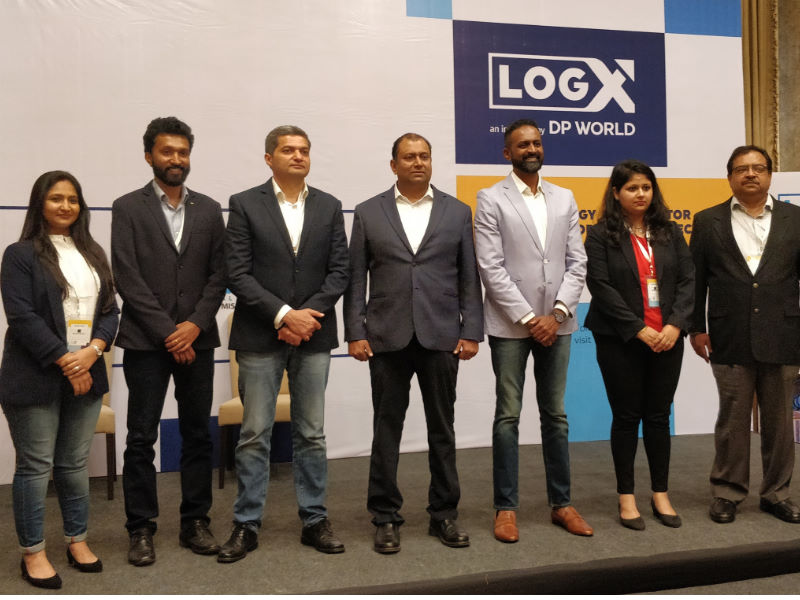
The announced program would identify up to ten startups for pilots, with mentorship from DP World leaders and external specialists. Its technology interests included artificial intelligence, robotics and connected devices. Proofs of concept and longer relationships were intended destinations. The launch photograph records the ceremony; the proposed pilots explain why everyone had assembled.
Startup Réseau’s present work covers corporate innovation, founder programs, international market access and connections to capital. Those activities have a common difficulty: each participant arrives with a different definition of progress. An enterprise may want a solution to an operating problem. A startup may want its first serious customer. The program has to make those intentions compatible enough for work to begin.
An editorial reading of the LogX program’s design.
His public work also includes Fintegrate Zone, the finance and technology conference he co-founded, and initiatives such as PitchRight and empoWer. The formats vary: a conference, an elevator-pitch series, a program for women technology entrepreneurs. Together, they show the range of settings in which he has tried to bring founders closer to experience, attention and commercial opportunity.
In 2021, he also led an orientation session for AIM-iLEAP, an initiative organized by Atal Innovation Mission with Startup Réseau and Visa. Its stated purpose was to help startups overcome market and investor access bottlenecks. The participant selection criteria included the founders’ backgrounds, the scalability of their solutions and their potential contribution to the peer group.
The border is where the detail starts
In October 2023, Enterprise Singapore named Startup Réseau as its Mumbai Global Innovation Alliance acceleration partner. For Ramasubramaniam, the arrangement extended beyond helping Singapore companies enter India. He described opportunities for technology transfer, joint ventures and links between industry and universities. The trade office experience had found another application.
His own writing on international expansion is unusually attentive to the small things that make large plans awkward. Communication styles differ. A brand name can carry an unexpected local meaning. A company may need help choosing a country before it needs help opening an office there. These are questions for someone who understands the market in context.
The published GIA Mumbai program reflects those different levels of readiness. Explore offers two weeks of initial learning, Build is a six-week accelerator, and Grow provides twelve weeks of customized support for companies with a clearer India plan. Choosing a route becomes part of the work. Everyone crossing the same border does not need the same itinerary.
Africa remains another part of the picture. Hindsight Ventures, which he co-founded with Jagruti Bista in 2020, works with early-stage technology businesses and entrepreneurship-support organizations. Its stated mission includes job creation, economic development and opportunities for underrepresented communities. For Ramasubramaniam, this returns to a region where his own working life began.
A coach’s interest in the whole team
Cricket provides a more personal way into his thinking. Ramasubramaniam is a certified ICC Level 1 cricket coach. He writes about sport, including its relationship to management, and his public posts return to the combination of tools, effort and results. A good-looking team sheet has to survive contact with the match.
There is a clear connection to his business work. An accelerator brings together people whose abilities should complement one another. Founders, corporate executives, mentors and investors occupy different positions. The quality of the group depends partly on whether people understand what they have been brought in to do. Collecting impressive names is the easy part of selection.
“Accelerators cannot operate in isolation.”
Ajay Ramasubramaniam, 2018
His 2026 commitments extend that interest to the people who run innovation programs themselves. In July, Hindsight Ventures listed him among the facilitators for the third edition of its eight-week Innovation Managers Executive Leadership Program. The format combines practitioner sessions, peer discussions, office hours and a capstone project. Experience is being organized so other operators can use it.
He was also listed as a juror for the 2026 AFRISE Challenge, aimed at African entrepreneurs aged 18 to 35. The published plan called for thirty founders in an accelerator and fifteen presenting at an international demo day. These are program targets, with a defined sequence of selection and support, rather than a claim that every introduction guarantees a business.
The pattern across his career is easier to see than a master plan. A friend helped him begin in Tanzania. Trade work taught him to organize access. Accelerators gave that skill a setting, and his own companies have carried it across markets. For Ajay Ramasubramaniam, knowing someone has become a professional responsibility: understand what each person needs, make the introduction useful, and give the conversation somewhere to go.