The first thing that went wrong was the address. Before WERK1 became a Munich startup hub, its predecessor, b-neun, occupied an industrial estate in Unterföhring. It had an intended audience: startups with web ideas. Those founders did not want to be there. In a tenth-anniversary interview, founding leader Franz Glatz recalled deciding in 2010 to create something downtown, something unlike conventional Munich. A contact in the games industry introduced him to the former Pfanni site. Here was a different proposition.
- Startup offices plus coaching, with no equity taken.
- Coworking from €29 a day, before tax.
- Temporary homes for startup hires, rented by their company.
- Selective office admission; coworking is the easier entry point.
The address nobody wanted
There is an appealing sequence to this patch of Munich near Ostbahnhof. Pfanni’s potato business used the building as its administrative headquarters in 1955. The surrounding industrial district later became Kunstpark Ost, then Kultfabrik: a landscape of clubs, bars and music. In early 2013, b-neun moved in and became WERK1. A place accustomed to keeping people awake acquired tenants with rather different reasons for losing sleep.
The useful detail is the decision behind the move. Glatz listened to a preference that might have looked superficial. Where founders wanted to spend their days affected whether the centre could serve them at all. WERK1 initially retained a games-sector emphasis, then widened its remit. The café opened in 2015; an insurtech accelerator followed in 2016. The support offer grew around the people showing up.

A desk with a support system
Today, WERK1 serves digital and technology startups across sectors. Its expertise lies in helping founders organise a business around their product: business-model coaching, financing preparation, introductions and mentoring. BayStartUP provides coaching whose cost WERK1 covers for resident startups. An expert pool adds experienced founders and specialists to the available help.
There are three office tracks: pre-incubation, incubation and scaleup. Membership carries expectations. Teams agree milestones after arrival, receive an informal check-in at about six months, and face an evaluation at about nine. The published maximum stay is five years. An office can therefore be a useful foothold without becoming the company’s permanent address.
For workspace alone, Munich Urban Colab offers another setting for coworking and collaboration. UnternehmerTUM’s incubator offers a structured route for technology founders. WERK1 occupies the overlap between a landlord and a founder-support organisation, with temporary housing added to the mix. The combination matters more than any individual meeting room.
The price of arriving
A prospective member has several doors to choose from. Coworking offers a €29 day pass and monthly memberships from €99 for five days to €249 for unlimited use, all before tax. Startup offices start at €29 per square metre per month, net, with infrastructure included. The offices are unfurnished, so “all-inclusive” does not mean somebody has selected your chair.
Day pass: €29 net. Advertised prices checked October 2026.
Then comes the problem that begins after hiring someone. They need somewhere to live. WERK1’s coliving, opened with WERK1.4 in 2023, offers 63 furnished micro-apartments. A standard room is advertised at €849 monthly, net, plus seven per cent VAT. Stays last one to six months. Coworking can be booked separately.
The contract belongs to a startup or scaleup, rather than an individual searching for a flat. That restriction reveals the purpose: accommodation helps a company bring people into Munich. Most apartments average about 18 square metres, with a private bathroom and shared community facilities. A kitchen and a bed can be consequential pieces of startup infrastructure.
A public bet, not a venture round
WERK1 charges for offices, coworking, accommodation and other services, while public support helps sustain its wider mission. It operates without taking shares in incubated startups. A founder can receive support without exchanging a slice of the company for it. The bill arrives in more familiar forms.
In July 2026, Bavaria announced roughly €30 million of support covering 2027–2032. This funds the hub; it is separate from investment in its resident companies. WERK1’s 2025 recap reported more than €420 million in venture capital raised by startups and alumni. That figure belongs to those businesses. It cannot tell us how much of their fundraising the building caused.
Public support for the hub.
Expansion has followed. WERK1.4 took the site beyond 10,000 square metres in 2023; a Startup Hub in a Stadtsparkasse building lifted the total above 11,000 in 2024. WERK1 placed ninth in the 2026 European startup-hub ranking. Managing director Robert Richter’s wider ambition is a connected district with 200–300 startups and scaleups by 2030. That remains an ambition.
A building full of borrowed experience
The alumni roster includes Scalable Capital, Edurino, Cartken and Tacto. Their presence gives a newcomer something more useful than an inspirational wall: people who have encountered the next problem. WERK1 launched mentoring and expert programmes in 2025, making that accumulated experience easier to reach.
“For example, we have already moved into our fourth office within the building.”André Petry, CEO and co-founder, Tacto
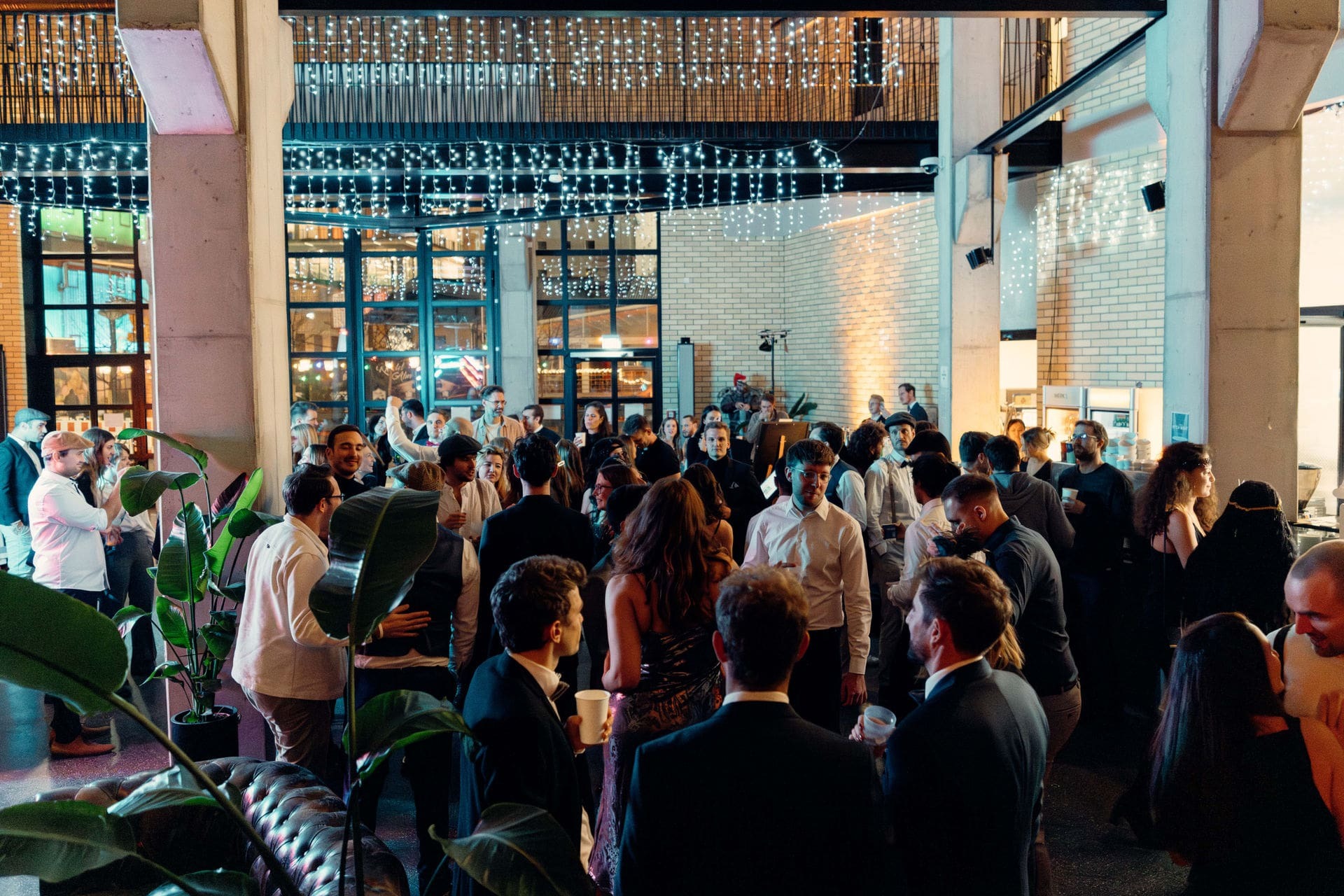
That testimonial illustrates one practical advantage: a team can change rooms while keeping its neighbours. The café, breakfasts, workshops and AFTERWERK gatherings offer repeated opportunities to meet them. WERK1 reported 46 events with more than 5,000 guests in 2025. An introduction still requires someone to have a conversation.
What a founder can copy
The first copyable move is to listen when customers dislike a basic assumption. The next is to put recurring needs together: workspace, useful advice and somewhere for arriving colleagues to stay. Experienced alumni can supply perspective, provided someone makes the match. A founder elsewhere can borrow those habits without reproducing the entire campus.
Using WERK1 itself requires a fit. Office applicants need a scalable digital or tech idea, at least two founders, an independent company no more than five years old, and a Bavarian base or relocation plan. A solo founder is directed toward coworking. Teams needing permanent premises, specialist laboratories or a guaranteed investment cheque have different requirements. WERK1 can shorten a founder’s search for help. The founder still has to build something customers want.