Governance. Say it at a dinner party and watch the table reach for their drinks. Pete Foley heard the same word and saw a market. While the rest of the AI world raced to build models that could write poems and price loans, Foley co-founded ModelOp around a question almost nobody was asking out loud: once you have a thousand models running inside a bank, who is actually in charge of them?
That is the bet. ModelOp, headquartered at 227 W Monroe Street in downtown Chicago, builds software that inventories, monitors, and governs every AI model an enterprise runs - the in-house ones, the third-party ones, the large language models quietly embedded in tools nobody remembers buying. The pitch is not "build smarter AI." It is "know what your AI is doing, prove it, and don't get caught off guard." In a field addicted to acceleration, Foley sells the brakes - and insists the brakes are what let you drive faster.
He would put it more elegantly. "We make governance feel like acceleration, not bureaucracy," he says. It is the kind of line that only lands when the person saying it has spent decades watching enterprise software succeed and fail on exactly that distinction.
The chatbot nobody owns
Ask Foley what keeps enterprises up at night and he doesn't reach for the science-fiction answers. He reaches for an org chart. "The biggest blind spot is ownership and oversight," he says. "Who owns a chatbot that's built with a third-party LLM?" It is a deceptively small question that detonates into a large one. The model was trained by someone else, deployed by a vendor, wrapped in a product, and pointed at customers - and when it goes wrong, the accountability evaporates into a fog of "not my department."
ModelOp's answer is unglamorous and exactly the point: a single place where every model has an owner, a paper trail, a risk rating, and a set of guardrails matched to what it actually does. Foley calls the three enemies "fragmentation, accountability, and visibility." Beat those, and AI stops being a liability waiting to happen and starts being something a board can sign off on.
Early to a party that filled up
Foley co-founded ModelOp before "ModelOps" was a category and years before generative AI made governance a boardroom emergency. "Everyone was focused on building ML and AI models," he recalls, "but few had figured out how to operationalize it at scale." When ChatGPT turned every executive into an overnight AI strategist, the unsexy problem Foley had been circling for years suddenly had a deadline attached. Regulators started writing rules. Legal departments started asking questions. And the company built to answer them was already standing there.
In 2024 that timing paid off: ModelOp raised $10 million led by Baird Capital to accelerate the growth of its AI governance platform, part of $16 million in total funding. Foley has since stepped back from running the company day to day, handing the CEO seat to longtime product leader Dave Trier while staying on the board - the founder's version of moving from the court to the bench, still calling plays.
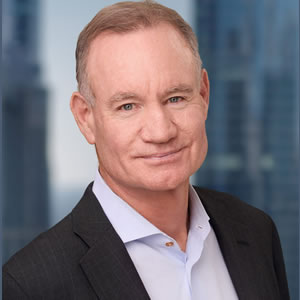 Pete Foley. Still keeping score.