The Dispatch
The person who reads the fine print of the machine
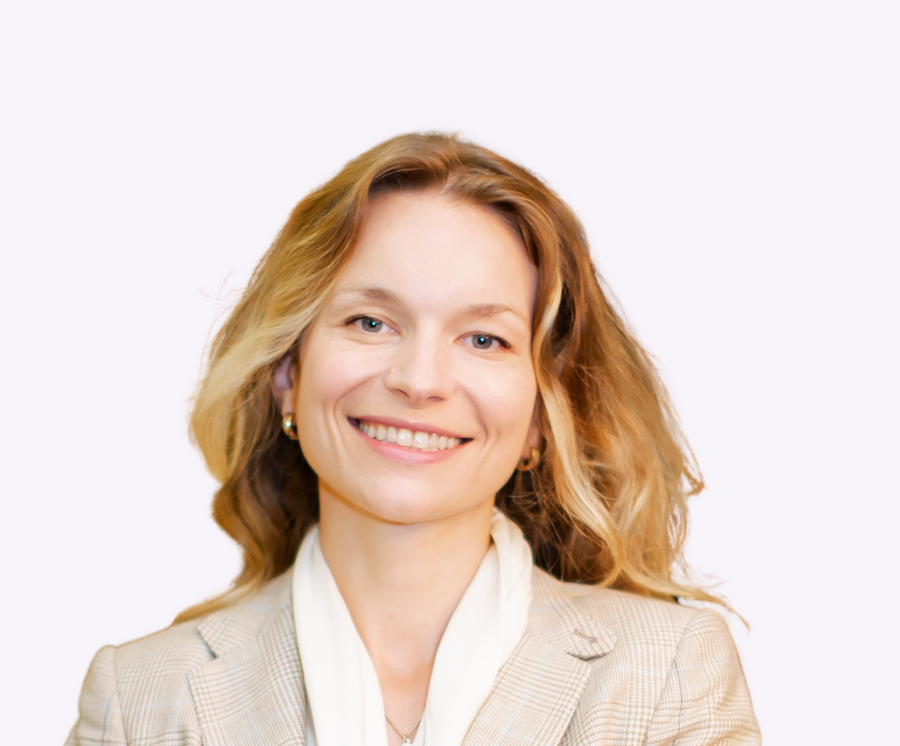
Most founders sell you a future where the software does more. Andreea Bodnari sells you a future where the software can prove it did the right thing. Her company, ALIGNMT AI, does the unglamorous work nobody puts on a billboard: it watches healthcare AI in real time, logs what it does, and asks it to account for itself. In a gold rush of clinical algorithms, she sells the audit.
The timing is not subtle. Hospitals, insurers and electronic medical record vendors are bolting AI onto decisions that touch real patients. Regulators - the ONC, NIST, the EU - are writing the rules as the planes take off. Bodnari built ALIGNMT AI to sit in that gap, turning "we think it's safe" into something a compliance officer can actually point to. In August 2025 the company came out of stealth with $6.5 million in seed funding led by AIX Ventures, with Sancus Ventures, Alumni Ventures and Dent Capital along for the ride.
Her pitch is blunt: "Healthcare leaders are recognizing that AI governance is no longer optional, it's critical infrastructure." Not a feature. Infrastructure. The kind of thing that, when it works, you never notice - and when it fails, somebody gets hurt.
"Transparency is fundamental to acceptance. It's fundamental to trust."
- Andreea Bodnari, ALIGNMT AI
She has stood on both sides of the algorithm
Bodnari is not a regulator who wandered into tech, or a technologist who discovered ethics late. She built the thing she now polices. At Google Cloud she founded and scaled the B2B healthcare AI product department - the engine room where clinical AI gets turned into product. Before that she was a VP of Product at UnitedHealth Group, one of the largest health companies on earth. She has shipped the models. She knows exactly where the bodies are buried, because at one point it was her job to bury them well.
That résumé is the whole argument for ALIGNMT AI. Governance written by people who never shipped a model reads like a parking ticket. Governance written by someone who scaled Google's healthcare AI reads like a manual. The company's product is governance-first compliance infrastructure: real-time risk monitoring, automated documentation, and continuous auditing that maps onto frameworks like NIST's AI Risk Management Framework, ISO 42001, the EU AI Act and ONC HTI-1 - while keeping HIPAA intact.
The origin is a cancer ward, not a garage
The usual founder myth involves a dorm room and a hoodie. Bodnari's starts in a cancer ward. As an undergraduate at Worcester Polytechnic Institute, class of 2010, she worked with UMass Medical School on a clinical decision support tool for pancreatic cancer patients. The stakes were not engagement metrics. They were people. That collision - hard math against human mortality - never left her.
It carried her to MIT, where she earned a PhD at the Computer Science and Artificial Intelligence Lab, specializing in natural language processing and healthcare informatics. Her doctoral work was, in essence, teaching computers to read the messy, abbreviated, deeply human language of clinical notes. Long before "large language model" entered the small talk, she was wrestling with what it means for a machine to understand a doctor.
"This technology is only as creative as we are."
- on why human imagination still sets the ceiling
A serial builder who keeps a creative alias
ALIGNMT AI is not her first company. She founded docdecode, an AI business process automation venture, and carewime, a telemedicine service for pregnant women. The throughline is consistent: take a fearsomely technical capability and aim it at a human who needs help. She also keeps a quieter identity, "Bodnari Studio," tucked behind a personal email and Instagram handle - a reminder that the woman building audit logs for neural networks also keeps a side door marked "studio."
She is, by her own account, a reader. Not a skimmer of summaries - a reader of books, because she believes abstract thinking is the one thing that keeps humans ahead of their tools. "If we don't have advanced thought patterns to imagine the future," she has said, "then AI will only work to the edges of our imagination." It is a strange, almost old-fashioned position for an AI founder: that the antidote to runaway machines is a better-read human.
The credibility ledger
Watch where she spends her unpaid hours and you learn what she actually believes. Bodnari has reviewed papers for JAMIA, the medical informatics journal, for more than a decade. She sits inside the rooms writing the rules - the NIST AI Safety Consortium and the Coalition for Health AI. She serves on WPI's Executive Advisory Board for Data Science and AI. She has stood on the floor of the New York Stock Exchange for a Floor Talk conversation. And ALIGNMT AI's approach is reportedly being written up as a Harvard Business School case study - which means a generation of MBAs may someday argue about her in a classroom.
The question she keeps returning to is not "what can AI do." It is "how are we going to evolve as humans when we're interacting with this AI technology?" It is a founder asking the one question founders are usually too busy to ask. That is the strange specific of Andreea Bodnari: in a field sprinting to make machines more autonomous, she got rich-people money to make them more accountable.