multimodal-data
(15)
The Pallet That Stopped a Robot
A wrapped pallet brought a warehouse robot up short. Encord's business is built around what happens next: finding the missing example, fixing the data, and getting the model back to work.
The Database That Learned to Remember
MatrixOrigin began by collapsing a database stack. Now it wants to give AI agents something harder to buy: a memory they can inspect, branch and undo.
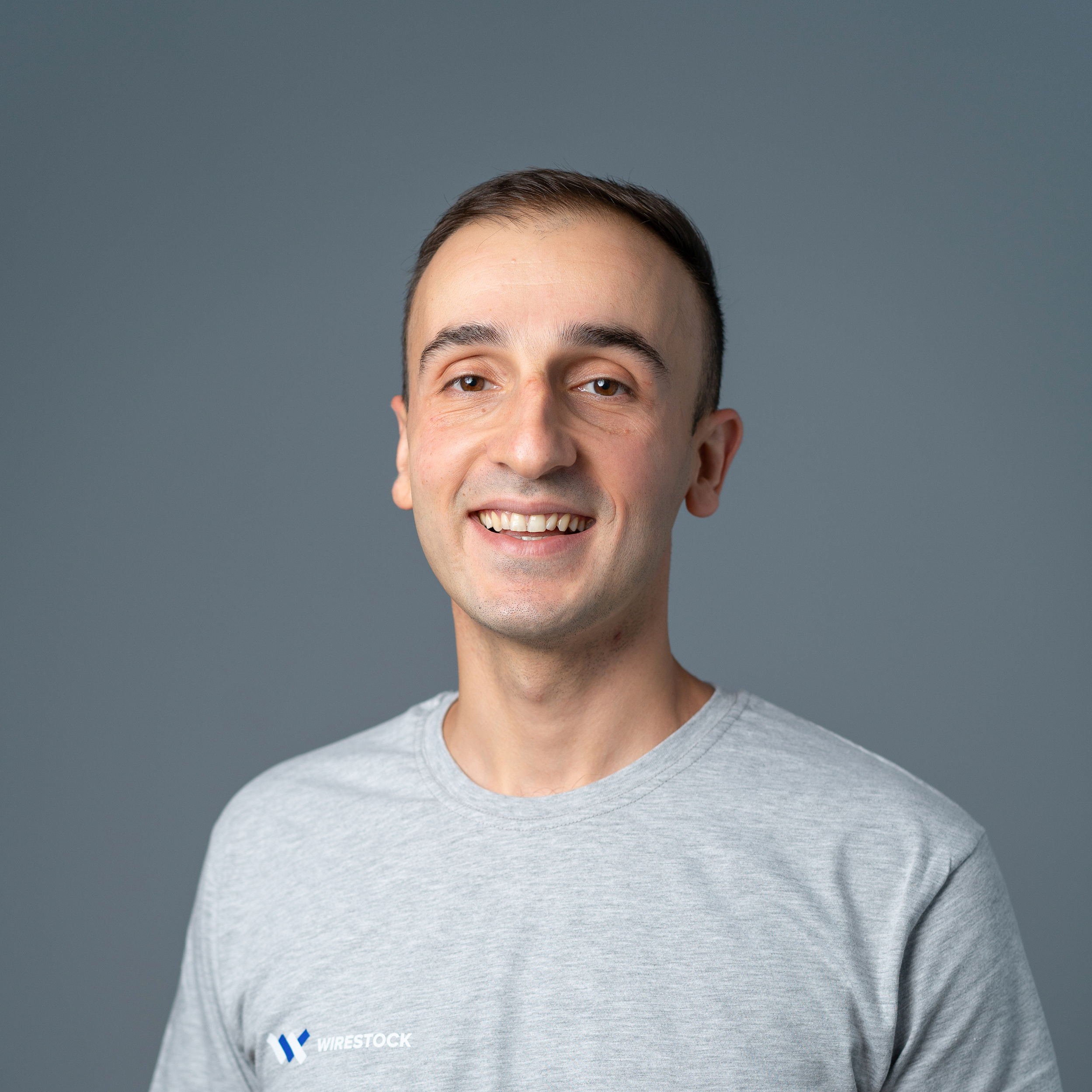
Mikayel Khachatryan Put a Price on Human-Made Data
Wirestock began by removing the paperwork from stock photography. Its CEO is now trying to solve a larger bargain: how creators get paid when their work helps machines learn.

6thSense
6thSense builds wearable tactile sensing rigs that record how human hands actually touch the world - pressure, grip, contact, force, depth, vision and 3D hand pose - out in real homes rather than labs. It packages that multimodal, model-ready data and sells it to teams training the next generation of dexterous robots, positioning itself as a 'nervous system for physical AI.' The company is part of Y Combinator's Summer 2026 batch and is based in San Francisco.

Sureform
Sureform is a San Francisco startup (Y Combinator X25) that collects real-world, multimodal human data to train robots and world models. It equips workers at hotels, warehouses, restaurants, construction sites, and laundromats with head-mounted cameras, stereo depth rigs, and handheld grippers that capture time-synced video, audio, pose, depth, and tactile data while they do their jobs. Each session is delivered to robotics teams as structured, synchronized, training-ready data.

Dandelion Health
Dandelion Health is a New York-based clinical AI and real-world data company that turns de-identified patient records from a network of U.S. hospitals into research-ready datasets and software for drug developers and AI teams. Its multimodal platform combines structured records, clinical notes, medical images, and raw biological signals such as ECG waveforms across roughly 15 million patients, helping pharmaceutical companies design smarter trials, discover biomarkers, generate real-world evidence, and validate healthcare algorithms against diverse populations.
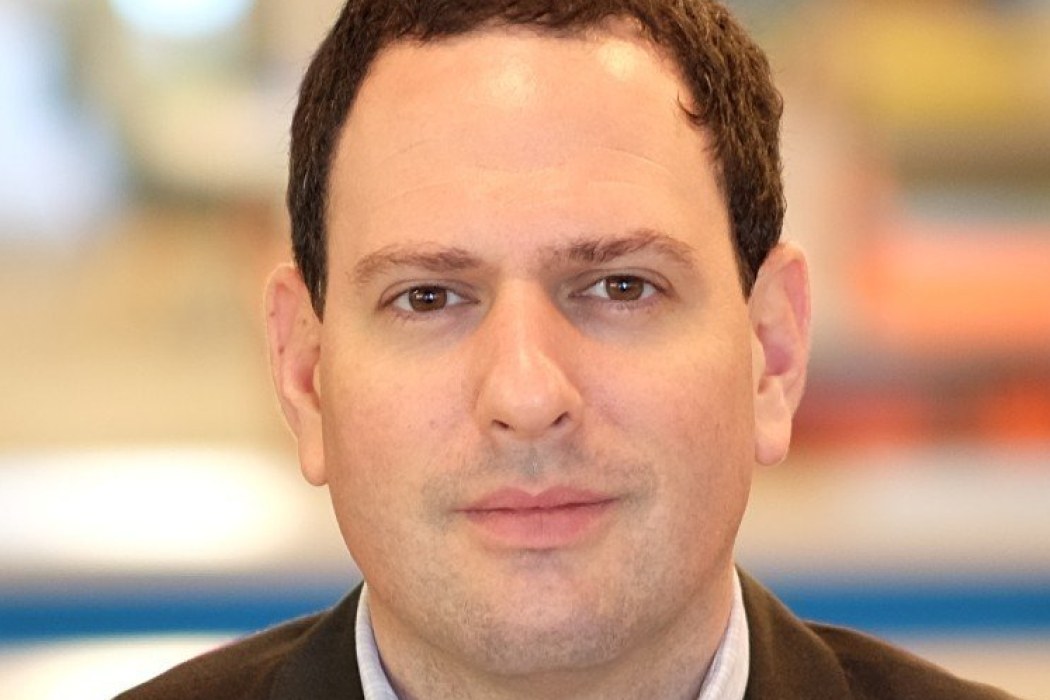
Elliott Green
Elliott Green is the co-founder and CEO of Dandelion Health, a New York-based real-world data and clinical AI platform building multimodal, longitudinal datasets from a consortium of non-academic health systems. A former founding member of Oscar Health with a finance background, Green launched Dandelion in 2020 to give life science companies and AI developers unbiased, clinical-grade data - including the images, waveforms, and notes that make up most of medicine but are rarely used. The company closed a $14M Series A in 2026 and has launched a free AI validation service and a GLP-1 data library aimed at bringing precision medicine to cardiometabolic disease.

Foxglove
Foxglove is a San Francisco company building a data and observability platform for robotics and Physical AI. Its tools let engineers record, sync, search, and visualize the multimodal sensor data their robots produce - 3D point clouds, video, GNSS, and proprioceptive streams - so teams can debug and improve autonomous systems without building expensive in-house infrastructure. Founded in 2021 by two Cruise and Coinbase veterans, Foxglove maintains the open-source MCAP file format (now the default recording format in ROS 2) and counts NVIDIA, Amazon, Anduril, Wayve, and Waabi among its users.

Stardust AI
Stardust AI is a San Francisco-founded, data-centric AI company that helps enterprises turn raw, messy, multimodal data into the high-quality datasets that machine-learning models actually need. Through its Rosetta auto-labeling platform, its MorningStar data engine and its COSMO dataset offerings, Stardust annotates and manages 2D/3D/4D data spanning images, video, point clouds, audio and text - with heavy expertise in autonomous driving and large language models. The company works with names like SAIC Motor, BYD, Geely, Bosch, ZF, Xiaomi and JD.com, and pitches a simple thesis for the AI era: whoever controls the data controls the model.
Richard Meng
Richard Meng is the co-founder and CEO of Roe AI, a Y Combinator-backed (W24) startup building an AI-powered data warehouse that lets data teams query unstructured, multimodal data - documents, images, web pages, video - with plain SQL. A UC Berkeley CS and Statistics double major, he previously led generative AI engineering at Snowflake and worked on the Skills and Knowledge Graph products at LinkedIn before founding Roe AI in 2023 to solve a problem that nagged him for a decade: the 80% of enterprise data that never gets used because it isn't in neat rows and columns.

Sammy Sidhu
Sammy Sidhu is the co-founder and CEO of Eventual, the company behind Daft, an open-source, Python-native data engine built to wrangle messy multimodal data like images, video, audio and LiDAR at petabyte scale. A UC Berkeley EECS grad with a background in high-performance computing and deep learning, he cut his teeth on Wall Street high-frequency trading and then on the perception stacks of self-driving cars at DeepScale (acquired by Tesla), Lyft Level 5 and Woven Planet (Toyota). After repeatedly watching brilliant engineers burn 80% of their time fighting data plumbing instead of building, he and Jay Chia turned that frustration into Eventual. Daft now processes petabytes daily at Amazon, CloudKitchens, Together AI and Essential AI, and the company has raised roughly $30M from investors including CRV, Felicis, Microsoft's M12 and Citi.

Noetik
Noetik is an AI-native biotechnology company building foundation models of human cancer biology to discover precision immunotherapies. It pairs one of the world's largest proprietary spatial-omics datasets - hundreds of millions of spatially resolved tumor and immune cells - with a high-throughput in vivo CRISPR Perturb-Map platform to train multimodal virtual cell models like OCTO-VC. These models simulate gene expression, cell states, and tumor-immune interactions, letting researchers find drug targets and predict patient response computationally. Founded in 2022 by former Recursion leaders Ron Alfa and Jacob Rinaldi, Noetik has raised roughly $62M and licenses its models to pharma, including an anchor partnership with GSK.

Paradigm4
Paradigm4 builds scientific data management and analytics software for the life sciences. Its flagship REVEAL platform and SciDB array database let pharma, biotech, and research institutions integrate and analyze massive multimodal datasets - genomics, multi-omics, imaging, clinical records, wearables, and environmental data - to find biomarkers and validate drug targets. Co-founded in 2010 by entrepreneur Marilyn Matz and Turing Award-winning MIT professor Michael Stonebraker, the company is based in Waltham, Massachusetts.
Manifold
Manifold is a Boston-area applied-AI company building a vertical agent platform for life sciences. Its software helps pharma companies, molecular diagnostics firms, biobanks and academic medical centers turn messy multimodal biomedical data into governed, analysis-ready insight - compressing workflows that used to take months into minutes, while keeping the data governance that regulated research demands. Founded in 2016 and led by CEO Vinay Seth Mohta, the company raised an $18M Series B in December 2025, bringing total funding to roughly $40M.
Wirestock
Wirestock is a two-sided marketplace that connects 700,000+ photographers, videographers, illustrators, and 3D artists with AI labs that need ethically-sourced, high-quality multimodal training data. After pivoting from stock-content distribution in 2023, the company now supplies six of the largest foundation-model makers and is running at a $40M revenue run rate.