The warehouse had seen pallets before. The robot had seen pallets before. Then a customer wrapped one in plastic, and the familiar object became a new problem. Thoro, which makes autonomous mobile robots for industrial spaces, gathered examples from the site, ran them through its data workflow, and updated its model. The episode is almost comically small beside the claims made for artificial intelligence. That is exactly why it matters. A machine's education is tested by the next thing it has never quite seen.
- Encord gives AI teams one place to find, label, review, and test training data.
- Its customers include robotics, healthcare, sports, and generative AI teams.
- The product works best when a team can feed real model failures back into its data pipeline.
Thoro once ran a local, open-source annotation tool. Remote colleagues could not easily use it; progress was hard to inspect; incoming robot data had to be moved by hand. Its new path runs from robot to AWS, into Encord for labeling and review, then through Python training scripts to the next deployment. Thoro says labeling is now at least 50% faster and that a typical model update can run from Monday's collection to Friday's deployment. The plastic-wrapped pallet took longer - about three weeks - but it showed the same principle: a failure can become a training example when the pipeline is ready for it.
The expensive needle
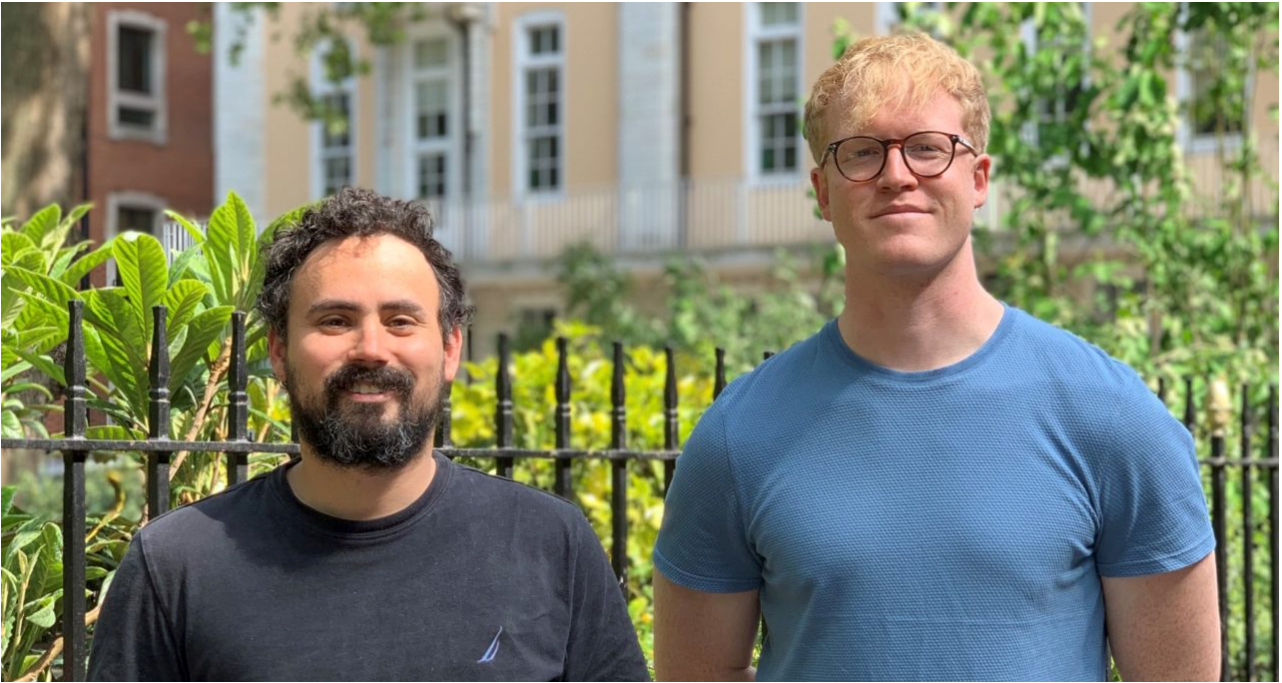
Encord began in 2021 with two founders, Eric Landau and Ulrik Stig Hansen, in Y Combinator's winter batch. Their account of those days includes cold emails by daylight and struggles with model-library dependencies at night. The original product focused on annotation: drawing boxes, tracking objects, and coordinating people who decide what an image or video actually contains. That is necessary work, but it leaves a larger question unanswered. Which of a million possible frames should the team spend its next hour labeling?
The company answered by expanding around the label. Index lets teams inspect, search, and curate data across sources. Annotate routes images, video, audio, documents, medical scans, and sensor data through human and automated labeling workflows. Active compares labels and model predictions, helps surface errors, and points to examples likely to improve the next training run. A team can use natural-language search to find a scene, apply a custom ontology, have a person review an automated label, then see whether the revised model handles that scene better. The three products make a loop rather than a pile of tools.
This is Encord's difference from a narrow labeling shop or an internal script. The company tries to connect selection, annotation, quality control, and evaluation in one system, while data can remain in a customer's own cloud storage. It offers an API and Python SDK for teams that already have a model pipeline. It also sells managed annotation and collection services for teams that need people as well as software. Starter, Team, and Enterprise plans divide the software by scale and features; Encord's public pricing page lists capabilities, not dollar amounts.
The glamorous part has wheels
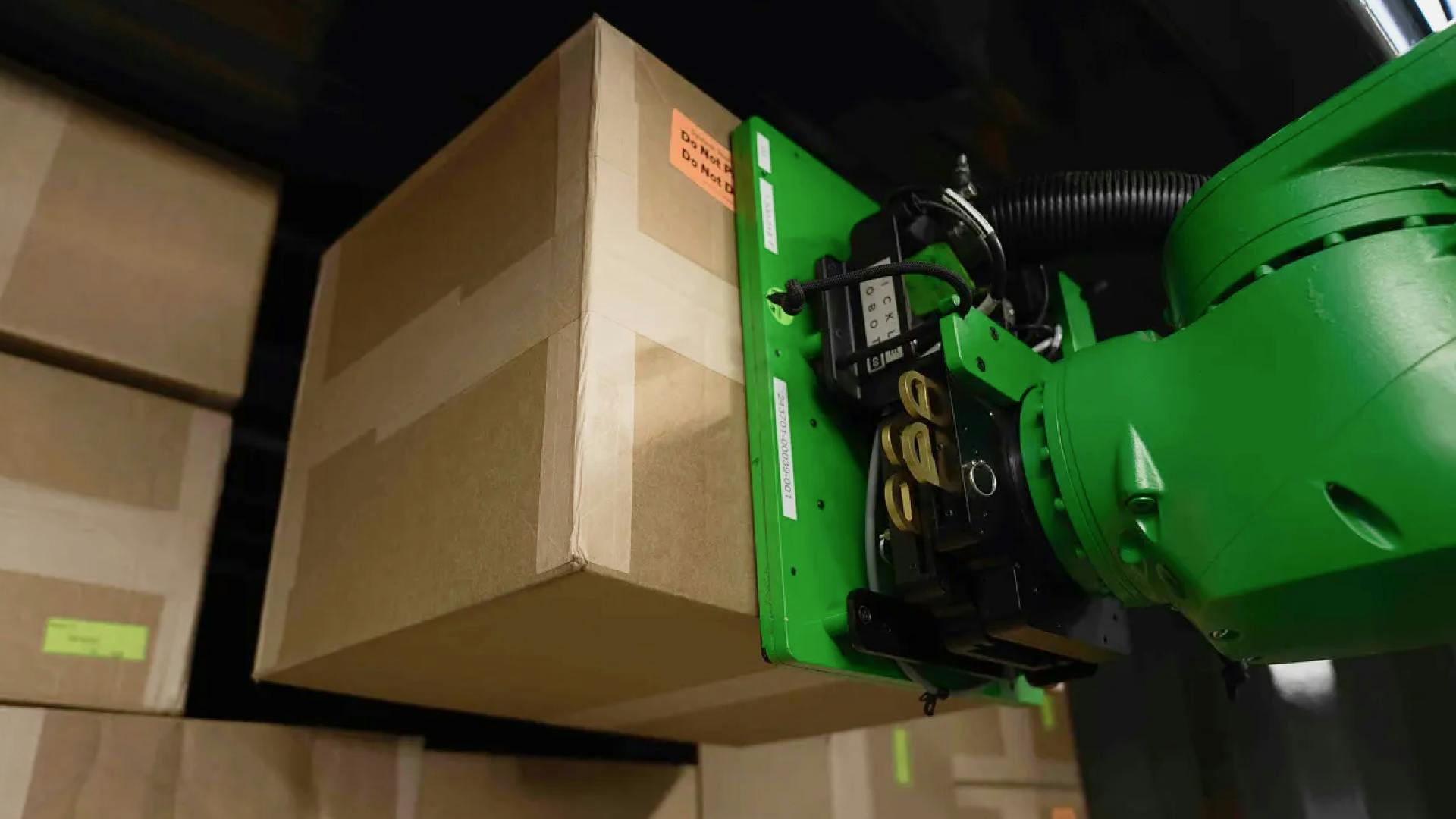
A robot provides the photograph. Data operations provide the plot. Pickle Robot, which builds machines to unload trucks, had found its old labeling setup produced incomplete package labels and costly audit cycles. After moving to Encord, it reported 30% better annotation accuracy, 60% faster model iteration, and 15% better robotic grasping accuracy. Those are customer-reported results, not promises for every warehouse. They reveal what buyers are paying for: less time between discovering a strange package and teaching the machine to handle it.
“We could only see if data was labeled or not labeled.”Chris Dunkers, Thoro, on its earlier workflow
The same logic travels beyond robots. Hudl uses Encord for sports video: its models pre-label player tracking data, people correct it, automated checks inspect it, and reviewers approve the result. Hudl reports a tenfold speed increase for tracking annotations and a 40% reduction in ice-hockey review time. UiPath uses the platform across image and text data for table extraction. A sports frame, a scanned document, and a pallet camera all differ in content; each produces too much raw material for a team to inspect one item at a time.
That breadth is why Encord's 2025 Physical AI suite added 3D, LiDAR, and point-cloud workflows. Cameras alone do not describe the world for an autonomous vehicle, drone, or robot. Sensor streams must be synchronized; annotations must refer to the right object at the right moment; models need to be tested against what actually happened. The company now markets itself as a data layer for physical AI, although its customers also work in healthcare, generative video, enterprise automation, and other fields.
How the bet grew
The founders' first public scale marker was a $15 million Series A in 2021. In August 2024, a $30 million Series B accompanied the public launch of Index, making the company's move beyond annotation explicit. In February 2026, a $60 million Series C led by Wellington Management brought announced funding to $110 million. Encord said its platform had grown from one petabyte to more than five in the preceding year, while revenue from physical-AI customers rose tenfold. These numbers establish momentum; they do not disclose profit or the cost of using the platform.
The market is crowded. Scale AI, Dataloop, V7, internal tooling, and specialist annotators all offer alternative ways to prepare data. Encord's argument is operational: a good data pipeline should help a team label less by selecting better examples, catch weak labels before they poison a training run, and connect a model's failure back to its source material. Its 2024 funding announcement said some customers had reduced dataset size by 35% while improving model performance by more than 20%; the company did not present that as a universal result. The benefit depends on the quality of the existing corpus, the available model feedback, and the team's ability to act on the findings.
There is a practical lesson here for anyone building AI with real-world data. Record the failure first. Preserve the surrounding context. Search for its relatives. Label the hard examples with a review path. Compare the next model on the same case before declaring victory. Encord sells a way to do that at scale. The smaller version is a discipline any serious team can copy.
The wrapped pallet is still the perfect advertisement for this kind of business. It is ordinary enough to make an engineer groan and unusual enough to stop a robot. Physical AI will be judged by many such objects. The winners may be the teams that treat each surprise as a precise question for their data, rather than as a request for another mountain of it.