nanophotonics
(7)
Robert Devlin and the lens that learned to lie flat
A childhood spent building radios led Robert Devlin to a different kind of signal. At Metalenz, he is turning nanoscale patterns into optics that can be made by the million - and asking what phones could see next.
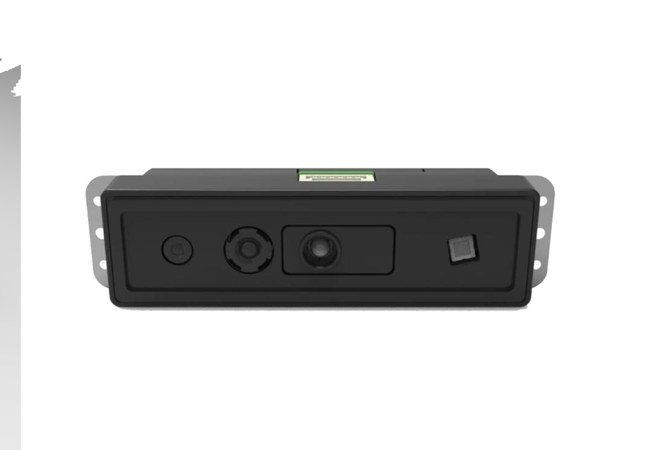
Deptrum
Deptrum (光鉴科技) is a Chinese 3D vision company founded in 2018 by three Silicon Valley scientists, including a former Apple depth-hardware lead. It builds full-stack 3D depth-sensing solutions - nanophotonic chips, structured-light and Time-of-Flight cameras, and AI perception algorithms - that let machines see and measure the physical world. Its hardware powers robots, smart cockpits, palm-payment terminals, smartphones and new-retail systems across finance, automotive and IoT.

Yichen Shen
Yichen Shen is the founder and CEO of Lightelligence, an MIT spinout building computers that run on light instead of electricity. A physicist who earned his PhD at MIT in 2016, Shen co-authored a landmark 2017 Nature Photonics paper showing that deep-learning math could be done with interfering photons, then turned the idea into chips. His company has shipped photonic processors (PACE), the first optical network-on-chip (Hummingbird), and optical interconnects (Photowave), and in 2026 became the first AI photonic-computing company to go public.

Li Zhu
Li Zhu is the founder and CEO of Deptrum (光鉴科技), a 3D vision company building full-stack depth-sensing hardware and software powered by nanophotonics and AI. A Tsinghua undergraduate and UC Berkeley PhD in nano-optoelectronics, he led the depth camera module team behind Apple's iPhone X Face ID before leaving in 2018 to build a structured-light approach that sidesteps Apple's patent monopoly. Deptrum's depth cameras now ship into smartphones, smart cockpits, robots, IoT devices and palm-payment systems, and the company has raised through a Series B.
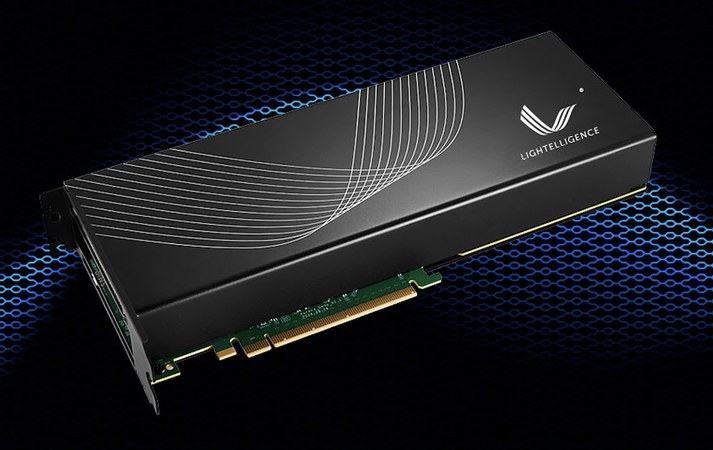
Lightelligence
Lightelligence builds photonic and optoelectronic hybrid computing hardware that moves and processes AI data with light instead of electrons. Spun out of MIT in 2017 on the back of a landmark Nature Photonics paper, the company designs silicon-photonics chips, optical interconnects, and AI accelerators aimed at the bandwidth and energy bottlenecks of modern data centers. In April 2026 it listed in Hong Kong as the world's first AI silicon-photonics chip stock, jumping roughly 400% on debut.

Metalenz
Metalenz is a Boston-based deep-tech company that replaces stacks of curved glass lenses with a single flat, nanostructured semiconductor chip called a metasurface. Spun out of Harvard's Capasso Lab, it is the first company to mass-produce meta-optics, shrinking cameras and sensors for smartphones, biometrics, and 3D sensing. Its flagship Polar ID brings polarization-based, payment-grade face authentication to devices at a fraction of the size and cost of existing systems.

Rob Devlin
Rob Devlin is the co-founder and CEO of Metalenz, the first company to take metasurface optics out of the lab and into mass-market consumer devices. A Harvard-trained applied physicist who studied under Federico Capasso, he turned a Science cover paper into a fabless optical-semiconductor company that prints flat lenses in standard chip foundries. Under his leadership Metalenz shipped the world's first metasurfaces in consumer products with STMicroelectronics in 2022 and launched Polar ID, a polarization-based face authentication system. He keeps the first wafer of 10,000 metasurface lenses on his desk as a reminder of how a single fabrication shot eclipsed an entire PhD's worth of handmade devices.