electrification
(19)
REACH Strategies puts the energy transition in the driver’s seat
The clean energy communications firm turns policy into test drives, community conversations, and practical next steps. Its most revealing product is the encounter between a curious person and an unfamiliar technology.
Romax Technology and the art of catching trouble before it turns
A belt that misbehaved. A tram gearbox with a noise limit. Romax turns the awkward interactions inside rotating machinery into problems engineers can tackle before production.
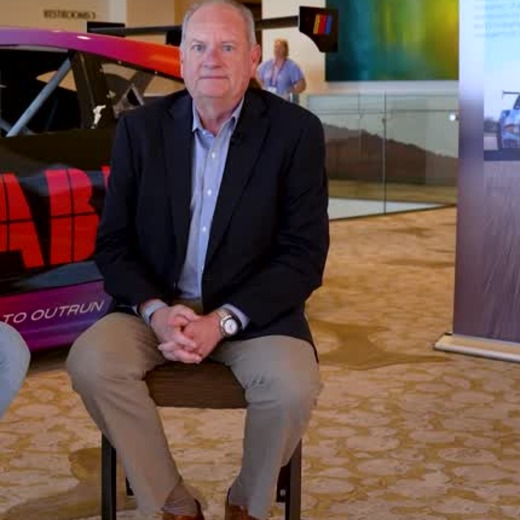
Norm Sowards Has Spent a Career Making Invisible Infrastructure Matter
From circuit breakers and predictive maintenance to NASCAR and the next generation of electricians, the ABB executive's work turns technical systems into stories people can use.

The $100 Box That Turns 400,000 Homes Into a Power Plant
A former commodities trader noticed homeowners were flying blind on their own electricity. So he sold them a $100 box - and started wiring 400,000 basements into a grid-scale power plant.
The AI Boom Has a Plumbing Problem. nVent Wants to Fix It.
Chips get the headlines. nVent makes the boxes, busways, power connections and liquid-cooling systems that help keep those chips - and the electrified world around them - running.
The Company Under the Cloud
AI may live in the cloud, but the cloud lives on switchgear, drives and control systems. ABB is the century-old engineering company turning the digital economy's appetite for power into an industrial growth story.
Siemens
The company Werner von Siemens started with a telegraph in 1847 now wants to be the operating system for the physical world - one factory, train, and power grid at a time.
Schneider Electric
The 190-year-old industrial group has become the control layer for an electric economy - linking breakers, factories, buildings and AI data centers to the software that decides how power should move.

Modo Energy
Modo Energy is a London-based data and analytics platform that helps investors, developers, lenders and traders value and finance battery storage and other electrification assets. It provides regulated benchmarks, transparent revenue forecasts, expert market research and an AI analyst, turning complex power-market data into investment-grade decisions across markets in Great Britain, Europe, the United States and Australia.
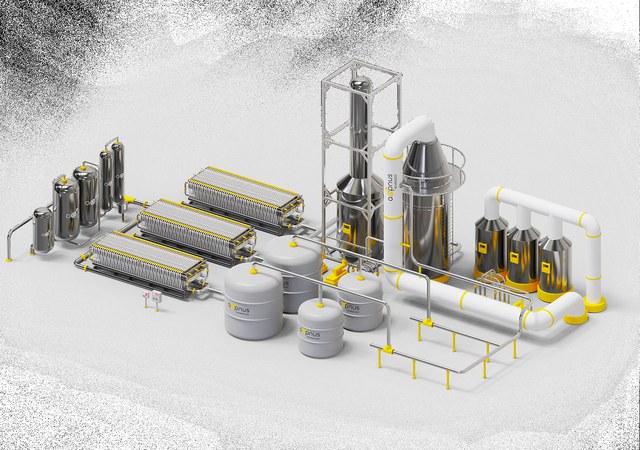
Aepnus Technology
Aepnus Technology is an Emeryville, California cleantech startup that builds ultra-efficient, catalyst-free electrolyzers to turn sodium sulfate - a low-value waste salt produced in enormous volumes by battery-material and critical-mineral plants - back into two industrial staples: caustic soda (sodium hydroxide) and sulfuric acid. By splitting waste salt on-site with renewable electricity, Aepnus lets manufacturers cut disposal costs, reduce emissions, and shorten fragile chemical supply chains, converting a roughly $350-per-tonne waste-handling problem into about $700 of usable reagents per tonne.
Etherdyne Technologies, Inc.
Etherdyne Technologies is a Santa Clara wireless-power company that beams electricity through the air using low-frequency magnetic resonance. Its Ether Power platform creates three-dimensional Power Zones that deliver up to 100 watts to multiple devices at once - no cords, no batteries, no need to line a device up on a pad. Founded in 2016 by two Stanford physics PhDs, the company holds dozens of granted patents, has FCC and CE certifications, and licenses its technology to makers of consumer electronics, retail displays, medical devices and smart infrastructure.

Monterra
Monterra is a San Francisco software startup building design and planning tools for the people who physically install EV chargers. Its platform lets charging contractors design site layouts on satellite imagery, model costs in real time, and auto-generate customer-ready proposals, bills of materials, and electrical schematics - collapsing a process that used to take weeks of engineering and tool-hopping into minutes. Founded in 2022 by David Kim and Kelson Reiss, the company raised a $2.5M pre-seed round led by Base10 Partners in November 2023 to help cut the 'soft costs' that slow down America's charging buildout.
Heron Power
Heron Power is a Scotts Valley, California company building solid-state transformers - power electronics purpose-built for the modern electrical grid. Founded in 2025 by former Tesla powertrain and energy chief Drew Baglino, its flagship Heron Link converts medium-voltage electricity to usable low-voltage power in a modular, software-integrated package, replacing the century-old iron-core transformer. The company targets utility-scale solar, grid-scale batteries, and hyperscale AI data centers, and is building a 40-gigawatt US factory to meet a backlog of orders.
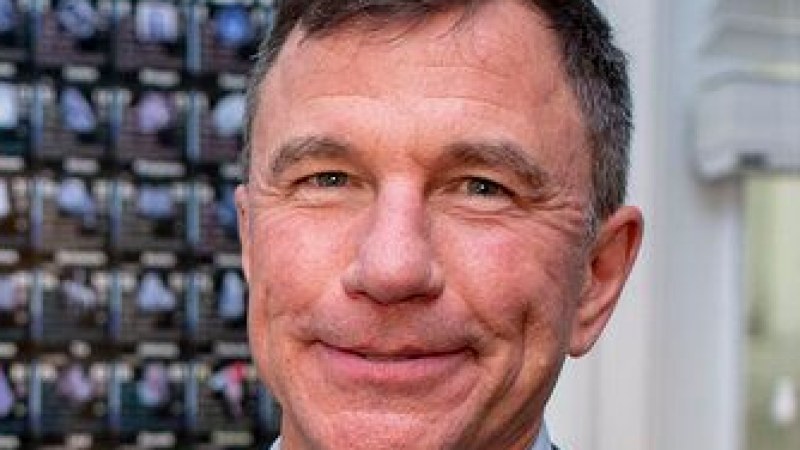
Rick Luebbe
Rick Luebbe is the CEO and co-founder of Group14 Technologies, the Woodinville, Washington company behind SCC55, a silicon-carbon battery material that boosts energy density up to 50% and enables extreme fast charging. A former Army aviation officer who flew scout helicopters in Desert Storm and later commanded an Apache attack company, he traded the cockpit for a Stanford MBA and three startups. After building B2B integrator Hubspan and selling battery-materials pioneer EnerG2 to BASF in 2016, he spun out Group14 in 2015 with co-founder Rick Costantino. The company has raised more than $1 billion, including a $463M Series D, and is building the world's largest factory for advanced silicon battery materials. His mission, stated plainly: electrify everything.
One Mobility Group
One Mobility is the automotive brand of Foxconn Interconnect Technology (FIT), unveiled in September 2025 to unite the acquired German engineering houses Voltaira and Auto-Kabel under one banner. It is a build-to-print development and manufacturing partner for OEMs and Tier 1 suppliers, delivering power distribution systems, high- and low-voltage modules, safety and accessory components, and charging systems for electrified and connected vehicles. The company pairs 90+ years of German automotive engineering heritage with the manufacturing scale of the world's largest electronics maker, operating 40+ certified sites across 17 countries with roughly 11,000 employees.
Bill Lin
Bill Lin is the Deputy CEO and Board Member of One Mobility GmbH, the automotive arm of Foxconn Interconnect Technology (FIT), headquartered in Reutlingen, Germany. With a career spanning supply chain management, management consulting, and EV business leadership at Foxconn, Lin bridges Taiwan's electronics manufacturing powerhouse with Germany's century-old automotive precision engineering heritage. He also serves as Chief Integration Officer at FIT, steering the integration of One Mobility's 11,000-person global workforce across 40+ locations in 17 countries following the 2024 acquisition of Auto-Kabel Group.

Chris Black
Chris Black is the CEO of GridX, Inc., an enterprise energy technology platform serving major US utilities. With nearly 30 years in technology and operations, he has been a central figure in the clean energy software sector - as CTO/COO at Tendril, he orchestrated the acquisitions that formed Uplight (now valued at $1.5B+), then invested via Huck Capital before taking the helm at GridX in April 2022 during its $40M Series C round. Under his leadership, GridX calculates 49 million bills daily, serves 40 million meters under contract, and models 1,000+ tariffs for utilities including PG&E, Southern California Edison, and ComEd.

Frenetic
Frenetic is a Madrid-born deep-tech company building AI-powered software and a manufacturing service for custom magnetic components - the unglamorous transformers and inductors at the heart of every power supply, EV charger, and electrified machine. Their platform compresses what used to take months of trial-and-error into days of simulation, and ships physical samples in roughly a week.
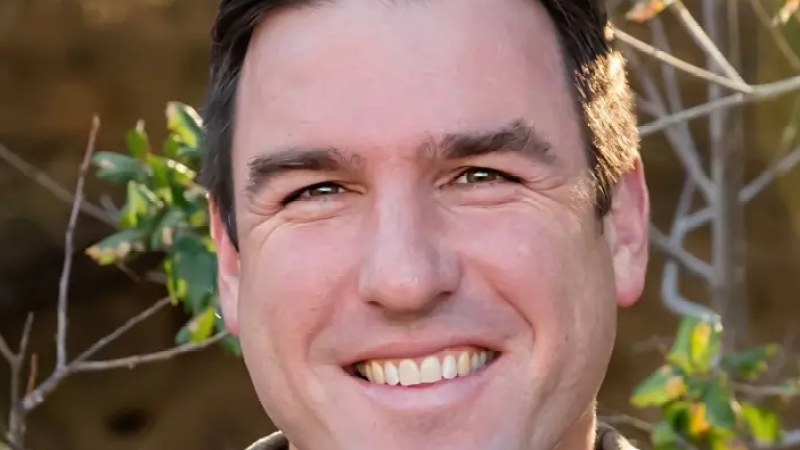
Ryan Buckley
Ryan Buckley is the Co-Founder and CEO of Shovels, a Lafayette, California-based startup that turns fragmented government building permit records into a searchable intelligence layer for the construction and climate tech industries. Armed with degrees from UC Berkeley, MIT Sloan, and Harvard Kennedy School, Buckley spent years building parallel B2B ventures before co-founding Shovels in 2022 with Luka Kacil. The company now processes 180+ million building permits, covers 30 million US addresses, and raised a $5M seed round in June 2025 led by Base10 Partners. A prolific blogger, part-time college professor, and author of 'The Parallel Entrepreneur,' Buckley is building what he calls the 'Pitchbook for the construction industry.'