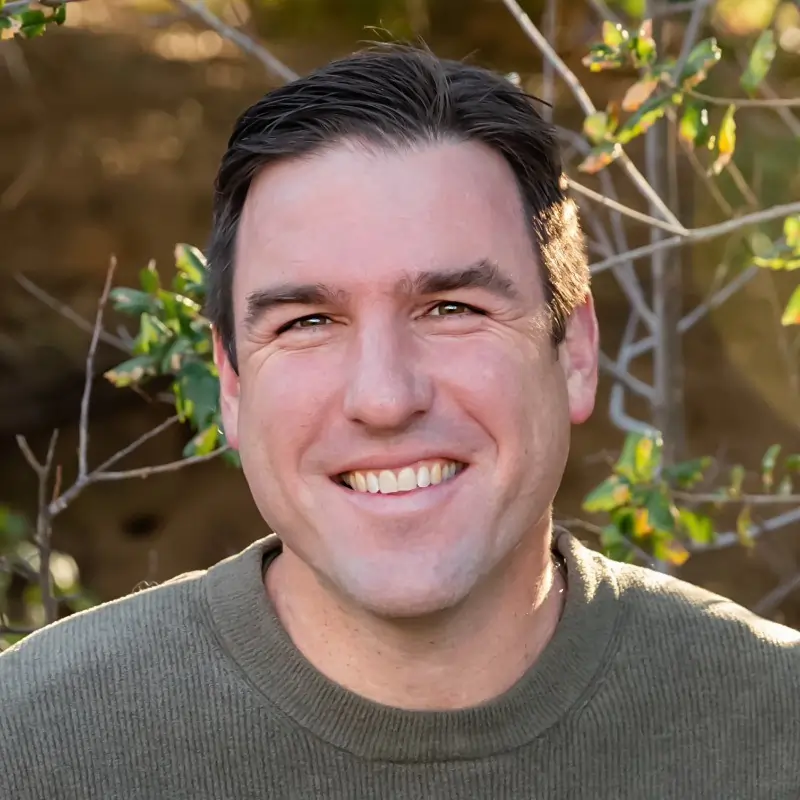
Somewhere in a county records office in Ohio, there is a building permit for a heat pump installation. It lists the contractor's license number, the address, the inspection date, the permit value. Before Shovels existed, that record would have sat in a government database nobody outside the county could access without a phone call or a public records request. Ryan Buckley decided that was absurd.
Buckley co-founded Shovels in 2022 with Luka Kacil, a Slovenian engineer he met through MightySignal after that company was acquired by AppMonsta in 2019. The premise was straightforward: building permits are public records. Every city and county in the US issues them. They are a treasure map of construction activity, contractor quality, property history, and climate tech opportunity - if you can aggregate and clean 180 million of them and make them searchable in real time.
It's hard to identify a good contractor. There is no LinkedIn for contractors.
- Ryan Buckley, CEO of ShovelsThat line - "no LinkedIn for contractors" - is the clearest distillation of what Shovels is actually solving. A homeowner wants to install solar panels. A climate tech company wants to find qualified installers in a specific zip code. A telecom giant needs contractors who have pulled permits for fiber infrastructure. None of them have a reliable way to vet who they're hiring. Buckley is building that infrastructure, one county database at a time.
The Parallel Entrepreneur, Serialized
Buckley didn't arrive at Shovels without a trail. He has three degrees - two bachelor's from UC Berkeley, a Master's in Public Policy from Harvard Kennedy School, and an MBA from MIT Sloan with a focus on entrepreneurship. And then he spent the next decade doing what the degrees theoretically prepared him for: building companies. Sometimes multiple at once.
In 2011, he co-founded Scripted.com with Sunil Rajaraman and raised $700,000 from Crosslink Capital. Along the way he built a string of other B2B ventures - Toofr.com (email finding), Inlistio.com, eNPS.co, Voxloca.com - and formalized that approach in a 2018 book called The Parallel Entrepreneur, which laid out a framework for starting and running multiple businesses simultaneously without burning everything down.
When Buckley told his Shovels team he was going to raise venture capital, they pushed back. Shovels was already on a path to profitability. Why take the money? His response was to document the entire fundraising process in real time, sharing his thinking in Discord like a running journal - every rejection, every conversation, every pivot in strategy. "My process is messy," he wrote on his blog. "I don't mean disorganized; it's organized to the tilt." The team watched the fundraise unfold from the inside.
The $5M seed round from Base10 Partners closed in June 2025 and brought total funding to $6.5M. Rexhi Dollaku, General Partner at Base10, put it plainly: "Shovels has a rare and massive opportunity to become the definitive source of truth for high-value, hard-to-access datasets."
Climate Data at Scale
The construction industry overlaps heavily with the energy transition. Heat pumps need installers. EV chargers need electricians. Solar panels need roofing and electrical permits. The Inflation Reduction Act created billions in incentives and a sudden, desperate need to find qualified contractors in specific geographies. Shovels sits at exactly that intersection.
"Climate tech companies need to know who to target to get their software installed - who has an EV charger and who has a battery," Buckley said in a cleantech podcast. The pitch is precise: if you can pull every heat pump permit filed in the last 18 months and cross-reference it with contractor license data, you have an instant list of qualified contractors and warm homeowner prospects. No cold outreach required.
We want to own that intersection between the Inflation Reduction Act incentives and building contractor databases.
- Ryan BuckleyShovels' customers proved the thesis. Beam, a construction software company, found that integrating Shovels data produced 20-30% higher contractor engagement rates. Fortune 500 companies in telecom, technology, and home building started showing up - inbound - asking for the data Shovels had already built. "All through inbound demand," Buckley noted. The product was already doing the selling.
Running Multiple Worlds at Once
Between running a venture-backed startup, Buckley teaches marketing at Diablo Valley College in Pleasant Hill, California. He sits on the advisory board for the college's Business and Computer Science departments and leads the Diablo Valley Tech Initiative, an economic development organization he founded, as well as Lamorinia Entrepreneurs, a local community group.
He has been writing online since 2008. His personal blog at rbucks.com covers everything from AI integration to parenting to high school reunion planning. The writing has a different texture than most founder blogs - less polished, more honest, more mid-thought. "Being without AI would feel like doing my job with no internet," he wrote in 2025. His team at Shovels uses Claude Code daily.
The company Buckley is building has a clarity to it that most data startups lack. The problem is well-defined: government permit data exists, it is fragmented and inaccessible, and it contains meaningful commercial signal. The solution is engineering-intensive but not conceptually complex: ingest, clean, normalize, surface. The market is genuinely large - construction is a $1.8 trillion US industry - and the data moat compounds with every jurisdiction added.
In January 2026, Shovels acquired ReZone, an AI-powered platform that tracks and analyzes local government meetings - zoning hearings, planning commissions, city council votes. The combination makes strategic sense: if you already know what got built, knowing what's about to get approved for construction is the logical next layer of intelligence.
The Education Under the Startup
Three degrees across three elite institutions sounds like credential stacking. In Buckley's case it reads more like genuine intellectual curiosity - public policy, business, entrepreneurship - that eventually resolved itself into a company that sits at the intersection of civic data, commercial intelligence, and climate infrastructure. The Harvard Kennedy School background is not a detail that comes up in press releases, but it's visible in how Shovels thinks about its role: not just a data vendor, but an entity that can reduce information asymmetry in a sector that has long operated on handshakes and rumors.
Buckley met his co-founder Luka Kacil - who lives in Slovenia - through MightySignal after AppMonsta's 2019 acquisition. They have built and run Shovels as a fully distributed company from the start. In 2025, the team gathered in Nashville for a summit - a rare in-person moment for a company that otherwise spans the Atlantic and multiple US time zones. By then, Shovels had tripled its revenue and doubled its headcount.