mammography
(4)
CareRay Digital Medical Technology Co., Ltd.
CareRay Digital Medical Technology is a Suzhou, China-based developer and manufacturer of digital X-ray flat panel detectors, the light-sensing components that turn radiation into diagnostic images. Founded in 2007, the company built its reputation on direct-deposit cesium iodide (CsI) scintillator technology and, in 2011, released what it describes as China's first commercially available direct-deposit CsI flat panel detector. CareRay supplies fixed, portable and wireless detectors for radiography, mammography, fluoroscopy, dental and industrial non-destructive testing, selling primarily as an OEM component partner to imaging-system builders worldwide, with a satellite operation in California's Silicon Valley.

Clairity, Inc.
Clairity is a Boston-based healthtech company that built Clairity Breast, the first FDA-authorized AI platform that predicts a woman's five-year risk of breast cancer directly from a routine screening mammogram. Founded by Harvard radiologist Dr. Connie Lehman, the company turns images already sitting in the medical record into a forward-looking risk score, aiming to move breast care from late-stage detection toward early, equitable prevention.

DeepLook Medical
DeepLook Medical is a Scottsdale, Arizona medical imaging company whose FDA-cleared software, DL Precise, helps radiologists see and measure suspicious lesions that hide inside dense breast tissue. Using proprietary shape-recognition algorithms that overlay directly on existing imaging systems, the tool delivers single-click segmentation across mammography, ultrasound, CT and MRI. Led by CEO Marissa Fayer, the company is in commercial use at major U.S. health systems and closed a Series A led by Xcellerant Ventures in 2024.
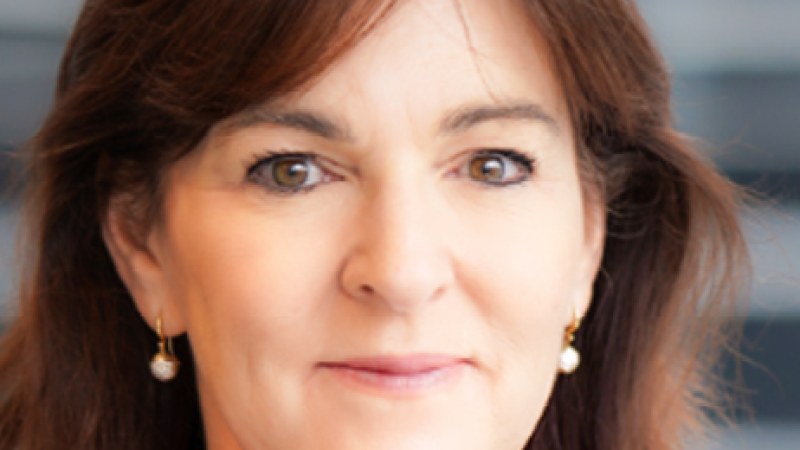
Connie Lehman
Connie Lehman is a radiologist who spent three decades reading mammograms and decided the picture could tell a different story. As founder and CEO of Boston-based Clairity, she built the first FDA-authorized AI platform that reads a routine screening mammogram and estimates a woman's five-year risk of developing breast cancer, spotting tissue patterns invisible to the human eye. A Professor of Radiology at Harvard Medical School with more than 300 peer-reviewed publications, she left a celebrated academic career to commercialize the idea that imaging should predict cancer, not just find it. TIME named her to its 2026 TIME100 Health list and Forbes to its 50 Over 50: Innovation list.