Founder · CEO · Radiologist
Connie
Connie
Lehman.
She read mammograms for thirty years, then taught one to answer a question no radiologist could.
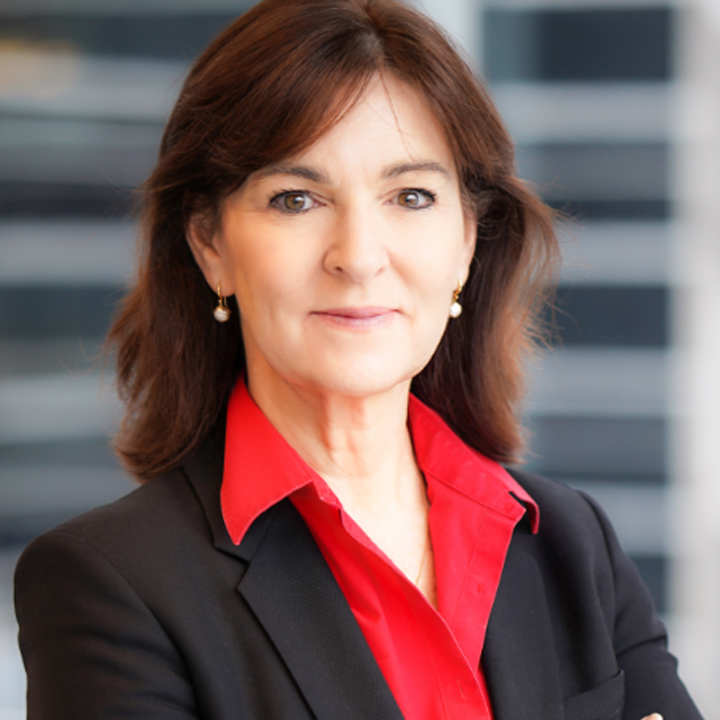
The doctor who decided the picture was hiding a prophecy.
She read mammograms for thirty years, then taught one to answer a question no radiologist could.
A woman walks in for the same screening mammogram she gets every year. The image looks ordinary. A radiologist scans it for the thing that is already there - a mass, a calcification, a shadow with bad intentions. Connie Lehman built a machine that looks at that exact same image and asks something stranger: not what is here now, but who develops cancer in the next five years. That is the whole bet of Clairity, the Boston company she founded in 2020 and now runs as CEO.
Clairity Breast is, by the company's account, the first FDA-authorized AI platform to estimate a woman's five-year breast cancer risk directly from a routine screening mammogram. It hunts for subtle patterns in breast tissue - texture and signal invisible to the human eye - that turn out to be predictive of future disease. No extra scan. No new appointment. The same pixels, a different question.
Lehman did not arrive here as an outsider with a clever model. She arrived as one of the people who spent a career learning exactly why the old question was not enough. Professor of Radiology at Harvard Medical School. Chief of Breast Imaging at Massachusetts General Hospital. More than 300 peer-reviewed papers across computer-aided diagnosis, deep learning, density assessment, and risk-based triage. She helped write the screening guidelines that the American Cancer Society, the American College of Radiology, and the National Comprehensive Cancer Network put their names to. She knew the field's blind spots from the inside.
That sentence is the hinge of her second act. Detection waits for the tumor. Prediction does not. Knowing the shortfalls of traditional screening, Lehman started asking what imaging could do before disease develops rather than after. Her research leaned harder into deep learning, including collaboration between MIT and Mass General on Mirai, a model that read risk from mammograms. The academic version proved the patterns were real. The company version is the attempt to put them in front of clinicians everywhere.
The credential trail is almost absurdly tidy. Phi Beta Kappa at Duke. Both an MD and a PhD at Yale. An honorary medical degree from Harvard. Before Boston she built an internationally recognized breast imaging program at the University of Washington and the Seattle Cancer Care Alliance, where she was director of breast imaging and vice chair of radiology. Then she rebuilt the service at MGH. Each role was the kind of post most people retire from. She used them as a runway.
The recognition has caught up to the work. In 2025 Forbes put her on its 50 Over 50: Innovation list, the roster of women breaking boundaries well past the age at which founders are supposed to appear. In February 2026, TIME named her to its TIME100 Health list of the world's most influential leaders in health. The same year, Clairity closed a $43 million Series B led by ACE Global Equity and Santé Ventures, with the Breast Cancer Research Foundation among the backers - money pointed squarely at a national launch.
There is a quieter detail worth holding onto. Lehman did not pivot away from radiology to chase a trend in AI. She did the opposite: she spent decades getting close enough to the problem that she could see what the tool should be. The mammogram was always carrying more information than the question we asked of it. She just decided to ask the bigger question - and to take the work out of the journal and into the clinic, where a woman might actually hear the answer in time to do something about it.
Equity is stitched into the mission, not bolted on. Clairity's stated aim reaches toward underserved populations and diverse patient validation - the people for whom a risk score arriving five years early is not a convenience but the difference between an option and a diagnosis. The pitch is not faster machines. It is a shift in the verb tense of cancer care, from found to foreseen.
Long before there was a company, there was a clinician who kept noticing what the field could not yet measure. In Seattle, Lehman helped push breast imaging into the community, working in an era when targeted ultrasound and mobile mammography were the practical frontiers of getting screening to women who would not otherwise get it. The throughline was never the gadget. It was access and accuracy - making the right read available to the right woman at the right moment.
She built that conviction into institutions. At the University of Washington and the Seattle Cancer Care Alliance she developed a breast imaging program recognized internationally for patient care, education, and research. At Mass General she rebuilt a division during a stretch of scarce resources, and still grew its clinical and research output. These are not the moves of someone chasing novelty. They are the moves of someone who keeps the same problem in front of her for decades and refuses to look away from it.
Her authority in the field is institutional as well as scholarly. She has served on the National Cancer Institute's Breast Cancer Steering Committee and on the American College of Radiology's committee on breast imaging appropriateness criteria. She co-authored screening recommendations carried by the American Cancer Society, the ACR, and the National Comprehensive Cancer Network. When the guidelines tell a radiologist what to do, some of the language traces back to work she helped shape. That is the unusual leverage she brought to a startup: not a hunch about AI, but a seat at the table where breast screening is defined.
She did not set out to build software. She set out to fix a question she had been answering, every working day, for thirty years. The technology followed the question. The company followed the technology. And a routine mammogram - the most ordinary image in women's health - became the place to look for a warning that arrives while there is still time to act.
What makes the story unusual is the timing. Most founders are warned that the window closes early, that the first company has to come before the gray hair. Lehman ran it backward. She accumulated the expertise first - the doctorates, the publications, the program-building, the guideline work - and only then turned founder, landing on the Forbes 50 Over 50 list precisely because she did the thing the conventional wisdom says is too late to start. The lesson buried in her resume is that some problems are worth thirty years of patience before you are ready to solve them.
If Clairity works at scale, the change will be quiet and enormous at once. A risk score arriving five years before a tumor does not announce itself with drama. It shows up as a screening plan adjusted, a conversation had earlier, a cancer caught small or prevented entirely. The verb changes from treat to anticipate. And it all rides on an image a woman was already going to get - which may be the most elegant part of the whole idea.
A woman gets her standard screening mammogram. No extra imaging, no new visit, no added radiation.
The AI reads pixel-level texture in breast tissue - signals invisible to the human eye but linked to future disease.
It returns a risk estimate, letting clinicians personalize screening and prevention before a tumor ever appears.
The same images can now predict who may be at risk.
Funding figures per public Series B reporting (Nov 2025) and company filings.
Sources: clairity.com · TIME / TIME100 Health 2026 · Forbes 50 Over 50 · Business Wire (Series B, Nov 2025) · The Boston Globe · Mass General · Breast Cancer Research Foundation · AuntMinnie.