Breaking: Voio exits stealth with $8.6M seed Pillar-0 billed as most accurate open AI model for radiology Mirai & Sybil studied at 90+ hospitals in 30 countries Berkeley + UCSF professor turned founder "You can see into the future. You can be proactive." Breaking: Voio exits stealth with $8.6M seed Pillar-0 billed as most accurate open AI model for radiology Mirai & Sybil studied at 90+ hospitals in 30 countries Berkeley + UCSF professor turned founder "You can see into the future. You can be proactive."
Profile / AI & Medicine

Adam
Yala.

He builds machines that read a scan and tell you what's coming - the brain bleed today, the lung cancer in three years. Then he gives the code away.

Berkeley, CA Adam Yala

The teacher who grades the future. Adam Yala kept his Berkeley and UCSF faculty seats and became a startup CEO anyway.

$8.6M
Seed Raised
90+
Hospitals
30
Countries
3
MIT Degrees
The Lede

Right now, he is teaching radiology to look forward.

In November 2025, a company called Voio walked out of stealth with $8.6 million and a claim that tends to invite eye-rolls in the crowded AI radiology field: that its first open model, Pillar-0, was the most accurate one out there. The CEO making the claim was Adam Yala, and he had receipts. Before Voio, his open-source cancer models were already running quietly inside more than 90 hospitals across 30 countries.

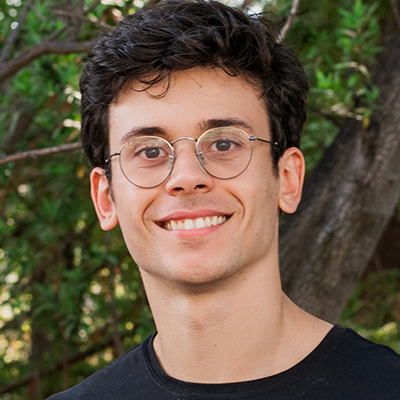
Yala is an assistant professor of Computational Precision Health, Statistics, and EECS - jointly at UC Berkeley and UCSF - and now the co-founder and CEO of Voio. He did not leave the lab to chase the startup. He kept both faculty appointments and added the company on top, building it with Dr. Maggie Chung, a practicing UCSF radiologist, and Trevor Darrell, the professor who founded Berkeley AI Research.

The pitch is precise. Voio is training models that scan the chest, brain, abdomen, and breast, detect hundreds of conditions automatically, and draft the clinical report a radiologist would otherwise type by hand. Pillar-0 reads the image and flags both the emergency in front of you and the risk hiding years ahead. Pillar-1, the next step, widens the aperture and writes the draft. The goal is not a machine that replaces the radiologist. It is a machine that hands the radiologist back their afternoon.

"It should not be that the way we serve you digital ads is more sophisticated and personalized than the way that we serve you cancer screenings."

- Adam Yala

That line is the whole thesis in one sentence. Advertising figured out how to predict and personalize at planetary scale. Medicine, somehow, still screens most people on a one-size-fits-all calendar. Yala's career has been a long argument that the same math that targets a shoe ad should be aimed at something that matters - whether you, specifically, need a scan, and when.

Voio emerged from stealth in November 2025, and the framing was deliberate. Plenty of companies have promised AI that reads scans since the field caught fire in 2016. What Voio offered was not a single-finding alarm but a model meant to read the whole image the way a radiologist does - hundreds of conditions, across body regions, with a draft report attached. Pillar-0 was the proof of concept, trained on UCSF medical imaging and released openly. Pillar-1, the follow-on, is the product: detection across a wider array of images, plus the generated report that turns a flagged scan into something a clinician can sign.

The distinction Yala keeps drawing is between replacing and empowering. The popular AI story says the radiologist is the next job to disappear. His counter is arithmetic: demand for imaging keeps climbing, radiologists are scarce, and the bottleneck is human hours, not human judgment. An AI that drafts the report and surfaces the risk does not remove the radiologist from the loop. It removes the parts of the loop that grind them down.
The Oracles

He names his models after things that see the future.

Mirai is Japanese for "future." Sybil was the ancient prophetess who read what was coming. The naming is not decoration - it is the job description. Each model is built to spot disease before it announces itself.

Breast

Mirai

Built during his MIT PhD. Reads a mammogram and flags who is high-risk for breast cancer years before a radiologist could. Open-source, tested across dozens of hospitals worldwide.

Lung

Sybil

The same idea aimed at the lung. Predicts lung cancer risk from a single CT scan. Open-source, and now part of prospective clinical trials.

Everything

Pillar-0

Voio's debut. Trained on UCSF imaging, it detects current conditions like brain hemorrhage and long-term risks like lung cancer - billed as the most accurate open radiology model.

The Arc

From a best-paper award in language to the inside of a hospital.

It is easy to assume Yala always pointed at medicine. He didn't start there. His first marquee win, in 2016, was a Best Paper Award at EMNLP - a natural language processing conference. The same year brought an NSF Fellowship and an MIT EECS Fellowship. He was a CS person's CS person, the kind who collects three degrees from the same institution because the problems kept getting more interesting.

The turn to cancer

At the MIT Jameel Clinic and CSAIL, the question shifted from how machines read text to how machines read patients. Mirai was the breakthrough. By 2019, his mammography work was ranking among Radiology's most-downloaded and most-discussed papers of the year. The press followed - The New York Times, The Washington Post, the Boston Globe, Wired. In 2022 he was a Falling Walls finalist in Life Science, and his work was tied to an Eppy Award for investigative reporting.

The move west

He brought the work to Berkeley and UCSF, a pairing that puts a computer scientist down the hall from a hospital. That is not a small detail. Yala has said the Computational Precision Health ecosystem is, in his words, the best in the world for this kind of work - close enough to real clinicians that a model can go from a paper to a patient without falling into the gap that swallows most medical AI.

"These tools are advancing the state of the art in oncology. You make a new type of clinical care possible because you can see into the future. You can be proactive."

- Adam Yala

The company

Voio is the translation layer made permanent. A model that lives in a GitHub repo helps researchers. A model that lives in a radiologist's workflow helps patients. The $8.6M seed, from Laude Ventures and The House Fund, exists to close that last distance - to take the accuracy that wins papers and put it where overworked radiologists actually sit. And on the much-debated question of whether AI will make radiologists obsolete, Yala is blunt: "I don't think we're even close to having too many radiologists."

The lab behind the company

The startup is downstream of the academic work, not a departure from it. The Yala lab organizes its research around three themes that read like a roadmap for everything Voio is now trying to ship. The first is modeling full patient records - imaging, pathology, and language together - so a prediction draws on the whole person rather than a single test. The second is deriving better decisions from those predictions: which screening interval, which treatment, with guarantees on decision quality rather than a bare probability. The third is clinical translation, the unglamorous discipline of getting a model past the demo and into care that survives a hospital's reality.

His teaching mirrors the same ambition. At UCSF and Berkeley he runs courses with names like Machine Learning for Personalized Cancer Care and Foundations for Computational Precision Health, plus a doctoral seminar - training the people who will build the next decade of medical AI. It is a tell about how he thinks. The fastest way to scale a method is rarely a single model. It is a generation of researchers who know how to build one that a clinician will actually trust.

What ties the professor and the founder together is a refusal to treat accuracy as the finish line. A model that scores well on a benchmark and never reaches a patient has, in his framing, done nothing. The metric that matters is whether someone got the right scan at the right time - and whether the radiologist reading it had the bandwidth to act. That is the bar Voio is built to clear, and it is the same bar Mirai and Sybil have been quietly clearing in hospitals for years.

The Reach

Open-source, then everywhere.

Hospitals using his models
90+
Countries reached
30
MIT degrees earned
3
Seed funding ($M)
8.6

Figures drawn from Berkeley News, UC Berkeley Research, and Voio's launch coverage. Bars are illustrative, not to a single scale.

In His Words

A founder who roots for the people his AI helps.

We are empowering individual radiologists to have more impact even with overwhelming workloads - and ultimately, to save more patients' lives.

With our models and products, it's going to be genuinely more exciting and empowering to be a radiologist next year than last year.

I don't think we're even close to having too many radiologists.

I think that at CPH we have the best ecosystem in the world to enable this kind of innovation. I'm very grateful to be here.

Fun & Telling

Details that stick.

01

He named his models after seers - Mirai means "future," Sybil was the prophetess. The branding is the spec.

02

Three MIT degrees in computer science: BS, MEng, and PhD, all from the same school.

03

He became a startup CEO without quitting academia - holding faculty seats at both Berkeley and UCSF.

04

His first big award was in natural language processing, years before he was known for medical imaging.

05

Voio's three founders span Berkeley CS, UCSF radiology, and the founder of Berkeley AI Research.

06

His breast-cancer model Mirai has been put to the test at dozens of hospitals across 30 countries.