He used to model what happens inside a reactor. Now he models what happens when a small business asks to be insured.
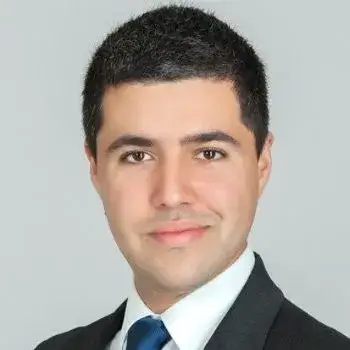
The look of a man who finds underwriting genuinely thrilling - and means it.
Paul Monasterio runs a company most people will never knowingly touch, doing a job most people assume was solved decades ago. Kalepa, the New York startup he co-founded in 2018, builds software that sits beside commercial insurance underwriters - the people who decide whether to cover a restaurant, a trucking fleet, a factory - and tells them, in plain terms, what they are actually looking at.
The flagship product is called Copilot. The name is deliberate. Monasterio is not trying to replace the underwriter; he is trying to hand them the one thing the job has always lacked: a clear, fast, defensible read on a risk before they put their name on it. Submit a business, and within the same day Copilot pulls together what that business does, where its exposures sit, and how it stacks against the carrier's own guidelines.
"There's a wow moment when they can basically see, okay, this is not smoke and mirrors," he says of the first time an underwriter watches it work. That moment is the whole sales pitch. In an industry drowning in AI promises, he keeps pulling the conversation back to earth: "We need to make sure that we tie exactly what we're doing with these models to real deliverables and change decisions."
The market he is chasing is almost comically large. Commercial insurance is roughly a trillion dollars in annual global premium. Kalepa, by his own accounting, currently touches around two billion of it - about 0.2 percent. He says this not as an apology but as a starting line. The stated ambition is to one day route half to two-thirds of that trillion-dollar river through the platform.
What makes the bet interesting is who is making it. Monasterio did not grow up dreaming about loss runs and risk appetites. He arrived here sideways, from a field about as far from insurance paperwork as you can get.
"When insurance works well, it is an engine of innovation. If people don't feel comfortable taking risk because they don't know who's going to take care of them when things go sideways, they just don't." - Paul Monasterio
He was born in Venezuela around 1985 and came to the United States for college. His family still lives there. He landed at UC Berkeley and walked out with a B.A. and B.S. in Mathematics and Nuclear Engineering, then went to MIT for a Ph.D. in Nuclear Science and Engineering. For a while he was, quite literally, a nuclear physicist, doing time at Lawrence Livermore and other research institutions.
Then he made a turn that physicists rarely make and analytics firms rarely encourage: he left the lab. He joined Applied Predictive Technologies, a company built on a single elegant idea - run controlled experiments on business decisions the way scientists run them on physical systems. It suited him. He is the kind of person who says, without irony, that he is "naturally drawn towards" tangled data problems.
At APT he didn't sit still. He co-founded the firm's Japan office in 2013, opened Sydney in 2014, pushed operations into Australia and New Zealand, and built out a global Technology and Services practice. In 2015 Mastercard bought APT for $600 million, and Monasterio stayed on, leading a global technology practice that used data to drive decisions at enormous scale. A stint at Facebook, working on the strategy and measurement side of its advertising business, rounded out the resume.
Somewhere in that APT stretch, advising many of the world's largest insurance carriers, he saw the problem that would become Kalepa. Underwriting, the engine room of the whole industry, was still being run on instinct, spreadsheets, and slow, partial information. To a man who had spent his life predicting rare, high-consequence events, it looked less like a chore and more like the most interesting unsolved data problem in the room.
Co-founds Applied Predictive Technologies' Japan office.
Opens APT's Australia office; expands across Australia and New Zealand.
Mastercard acquires APT. Monasterio stays on to lead its global technology practice.
Co-founds the company in New York with Daniel Hillman to fix commercial underwriting.
Raises $14M led by Inspired Capital; launches the MGA Kalepa Insurance Services.
Kalepa touches about $2B of the roughly $1T global commercial insurance market. Monasterio calls that 0.2% a starting line, not a ceiling.
"As a Founder, I cannot emphasize that point enough." The ups and downs are too steep for one person. He found Daniel Hillman - a former IDF intelligence lead and UPenn engineer - and never looked back.
The first companies you sell to shape the product as much as the first people you hire. Choose them for the foundation they build, not the logo.
Tie every model to a real deliverable that changes a real decision. If an underwriter can't see the value the same day, the AI is just theater.
"There's a wow moment when they can basically see, okay, this is not smoke and mirrors."
On selling AI to skeptics"We need to make sure that we tie exactly what we're doing with these models to real deliverables and change decisions."
On AI discipline"Founding a company has a lot of ups and downs and the solo journey will be tough."
Advice to foundersJared Diamond's "Guns, Germs, and Steel" and Knut Hamsun's "Growth of the Soil" - a 1917 Norwegian novel about a man clearing land with his hands. Patient systems and stubborn perseverance. It tracks.
Haim Saban, who built Power Rangers by creatively reusing Japanese footage, and Sara Blakely of Spanx. He prizes resourcefulness and "indefatigable will" over pedigree.
Nuclear physics and insurance underwriting are secretly the same job: predicting rare, high-consequence events and pricing the uncertainty around them.
Daniel Hillman, Kalepa's other half, was an intelligence lead in the Israel Defense Forces before becoming a systems-science engineer. An unusual pairing for an insurance company.
Ask Monasterio why any of this matters and he will not start with software. He will start with the idea that insurance, done right, is what lets people take chances at all. "When insurance works well, it is an engine of innovation," he says. People build, hire, and risk capital because someone has promised to catch them if it goes wrong. When that promise gets slow or unreliable, the building stops.
Kalepa's internal phrase for its goal is to help underwriters "bind with confidence" - to say yes, fast, to the right risks, and walk away from the wrong ones without agonizing. The market is hardening and large language models keep getting better, and he has said the company recently doubled its customer count in six months. The crawl-before-you-walk approach with smaller carriers is starting to look like a sprint.
He is unusually candid that the journey is hard, that solo founders should reconsider, that AI is mostly theater until it changes a decision. It is the temperament of someone who spent years in laboratories where the universe does not grade on a curve. The trillion-dollar pie is still mostly untouched. He seems entirely content to keep clearing the soil.