Breaking
Founded Suzhou, 2007 - CareRay Digital Medical Technology 2011: China's first commercial direct-deposit CsI flat panel detector Detectors for radiography, mammography, fluoroscopy, dental & industrial NDT A dozen-plus technology patents OEM partner to imaging-system builders worldwide Founded Suzhou, 2007 - CareRay Digital Medical Technology 2011: China's first commercial direct-deposit CsI flat panel detector Detectors for radiography, mammography, fluoroscopy, dental & industrial NDT A dozen-plus technology patents OEM partner to imaging-system builders worldwide
Company Dossier // Medical Imaging Hardware

CareRay Digital Medical

The company that builds the flat panel detector - the part of the X-ray machine you'll never see, and always depend on.

Est. 2007 Suzhou, China Flat Panel Detectors OEM ~63 people
CareRay digital radiography flat panel detector product line

Above: the working end of a diagnosis. CareRay's radiography detectors sit inside the machines patients stand in front of - unbranded, unglamorous, indispensable.

2007
Founded
2011
First CsI Detector
12+
Patents
5
Imaging Domains
The Profile

The most important part of the machine is the one nobody photographs

Every diagnostic X-ray you've ever had ended at a flat panel detector - the flat, sealed slab that catches the radiation after it passes through you and turns it into a number, then a picture. CareRay makes that slab. It does not, for the most part, make the machine around it.

There is a version of the medical-imaging business that gets the billboards: the big scanner, the branded console, the hospital procurement contract. CareRay Digital Medical Technology is not in that version. Founded in Suzhou in 2007 by Liu Jianqiang, it occupies the layer underneath - the detector, the sensor, the component that other companies buy and integrate and then put their own name on. If you have ever stood in front of a chest X-ray unit, there is a decent chance a detector like CareRay's did the actual work, and you never knew the name.

This is, if you squint, a very deliberate business model. The finished-machine market is crowded, capital-intensive and brutal on margins. The component market is quieter, more technical, and rewards the thing CareRay has spent since 2007 accumulating: depth. The company's whole pitch, in its own words, is "partnering with forward-thinking developers to build the next generation of diagnostic imaging systems." Translation: you build the machine, we'll build the part of it that decides how good the image is. That is not a modest offer. In digital radiography, the detector is roughly the whole ballgame.

The technical claim CareRay leans on is direct-deposit cesium iodide - CsI - scintillator technology. The physics, compressed: X-rays hit a scintillator, which glows; a sensor reads the glow; software turns it into an image. How you build that scintillator determines how much radiation you need (dose) and how sharp the result is (resolution). Those two usually fight each other. In 2011 CareRay released what it describes as China's first commercially available direct-deposit CsI flat panel detector - a milestone that mattered less as a nationalist headline than as proof it could manufacture the hard version of the thing at commercial scale.

"An ethical commitment to developing exemplary products that deliver highest quality performance."

- CareRay, on what its founders were after

What's genuinely interesting about CareRay is the shape of the company relative to its ambition. This is a firm of roughly 63 people that raised a Series A back in 2014 and, as far as the public record shows, has been content to stay a focused detector specialist rather than balloon into a full-systems conglomerate. In a market where the temptation is always to move up the stack and sell the whole box, CareRay mostly kept selling the one part it understands best. That is a strategy that looks like patience and reads, over fifteen-plus years, like discipline.

The product line is a study in taking one competency and fanning it out. Radiography detectors come fixed, portable, tethered and wireless, in sizes up to 17-by-17 inches. There's a 10-by-12 mammography detector, released around 2020, tuned for the fine resolution breast imaging demands. There's the CareView 1800RF, a 17-by-17 dynamic panel for fluoroscopy - the real-time, moving-image kind of X-ray. There are dental detectors. There are industrial non-destructive-testing panels for inspecting welds and castings rather than lungs. Same core physics, many form factors, one company.

Geography is part of the story too, and it's a familiar cross-border hardware shape: the manufacturing and R&D depth sits in Suzhou, while the outward-facing office - the front door for partners and design collaboration - sits in Santa Clara, in the middle of Silicon Valley. It's the standard playbook for a Chinese hardware maker that sells to the world: build where you can build well, sell where your customers are.
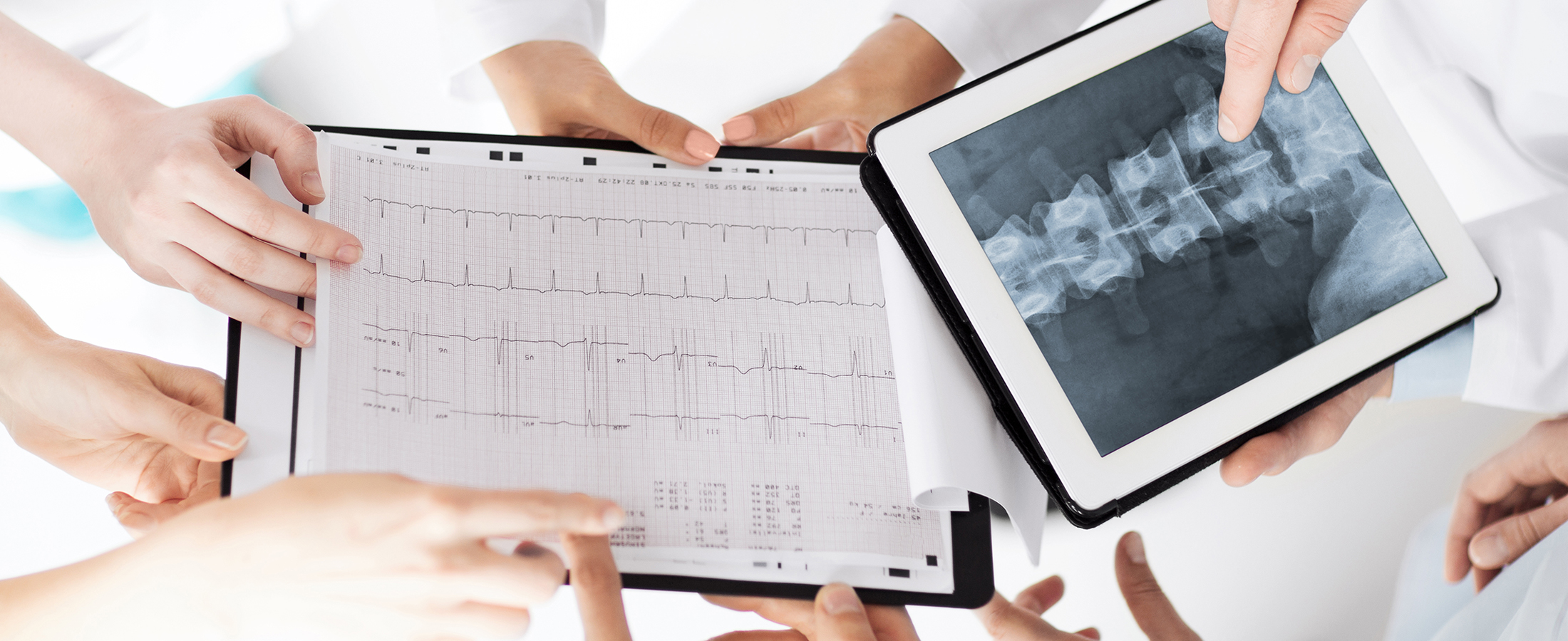
The Catalog

What CareRay actually builds

One physics problem - detect X-rays cleanly at low dose - solved in five different rooms of the hospital and one on the factory floor.

since 2011
Radiography

DR Flat Panel Detectors

Fixed, portable, tethered and wireless CsI detectors up to 17x17 inches - the workhorses of general diagnostic X-ray.

2020
Mammography

10x12 Mammo Detector

Fine-resolution panel built for the low-dose, high-detail demands of breast imaging.

2021
Fluoroscopy

CareView 1800RF

A 17x17 dynamic multi-frame detector for real-time fluoroscopy and radiography/fluoroscopy systems.

Dental

Dental Detectors

Compact panels for intraoral and dental radiography, where size and durability rule.

Industrial

NDT Detectors

Non-destructive-testing panels that inspect materials and parts instead of patients.

Software + Retrofit

PLDR & Upgrades

AI-assisted low-dose imaging plus retrofit and dynamic-DR upgrade solutions for OEM partners.

"Partnering with forward-thinking developers to build the next generation of diagnostic imaging systems."
Under the Hood

The physics and the business model

The technology

CareRay's edge is a small family of proprietary detector techniques aimed at the same target: lower dose, sharper image, faster calibration.

  • Direct-deposit CsI scintillators
  • F2AED - full-field automatic exposure detection
  • 1-Shot Calibration - rapid on-site setup
  • DAEC - digital automatic exposure control
  • DR.IC - digital radiography intelligent controller
  • PLDR - AI-assisted precision low-dose imaging

The business model

CareRay sells components, not consumer brands. It designs and manufactures detectors and subsystems, then hands them to the companies that assemble - and badge - the finished machines.

  • OEM supply to imaging-system builders
  • Retrofit and system-upgrade solutions
  • Medical, veterinary, dental and industrial customers
  • Suzhou R&D and manufacturing; Santa Clara front office
  • India presence via Careray Digital Medical India
The Record

Fifteen-plus years, one component

2007

Founded in Suzhou

Liu Jianqiang establishes CareRay to develop digital X-ray flat panel detectors.

2011

China's first direct-deposit CsI detector

The country's first commercially available direct-deposit cesium iodide flat panel detector ships.

2014

Series A

CareRay raises a Series A round to scale the detector business.

2020

Mammography detector

A 10x12 flat panel detector for breast imaging joins the line.

2021

CareView 1800RF

A 17x17 dynamic detector for real-time fluoroscopy is released.

2022

Fifteen-year milestone

An updated company timeline marks 15 years since founding.

Details That Amuse

Four things worth knowing

The part CareRay makes is the one patients never see and rarely name - yet it does the actual imaging.
The same cesium-iodide core serves medical, veterinary, dental, security and industrial X-ray.
A China-founded manufacturer whose outward-facing office sits in Santa Clara, in Silicon Valley.
It has won A' Design and iF Design recognition - awards for a component most treat as purely functional.
Questions

The obvious questions, answered

What does CareRay make?

Digital X-ray flat panel detectors - the components that convert X-ray radiation into digital images - for radiography, mammography, fluoroscopy, dental and industrial applications.

When and where was CareRay founded?

CareRay was founded in 2007 and is headquartered in Suzhou, Jiangsu Province, China, with a satellite office in Santa Clara, California.

What is CareRay best known for?

Releasing China's first commercially available direct-deposit cesium iodide (CsI) flat panel detector in 2011, and for its low-dose, high-resolution detector technology.

Does CareRay sell directly to hospitals?

Primarily no - CareRay operates mainly as an OEM component supplier, selling detectors and subsystems to the manufacturers who build and brand complete imaging systems.

How large is CareRay?

It is a specialist firm of roughly 63 employees that raised a Series A round in 2014 and serves international markets.

Go Deeper

Links & further reading