waste-management
(21)
Recycleye’s £40 treadmill became a business that picks through your rubbish
A camera, an eBay treadmill and some borrowed garage space started Recycleye. Its robots and optical sorters now tackle recycling’s awkward arithmetic: recovering materials has to pay.
REEN UK wants your bin crew to make fewer stops
Derby reported 53% fewer visits to trial street bins after adding fill-level sensors. REEN’s bigger proposition is to turn the humble rubbish bin into a better instruction for the people collecting it.
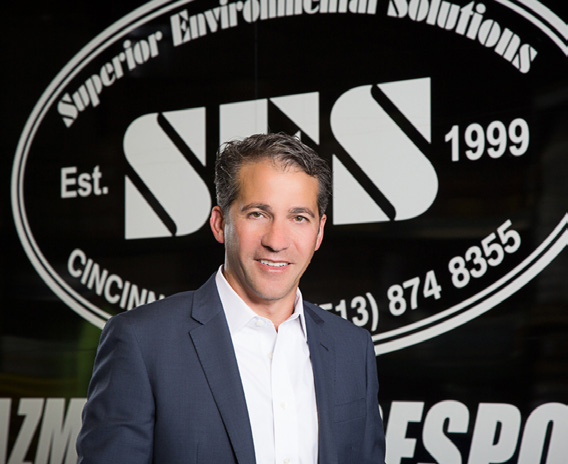
Dean Wallace Built a Company for the Work Nobody Notices Until It Stops
He spent more than two decades scaling the unglamorous, essential work behind factories, utilities and waste systems - then made succession part of the operating plan.

Durham Region Runs the Business Nobody Can Opt Out Of - Here’s the Playbook for Making 780,000 Customers Feel Local
Durham’s real product is coordination: one regional layer for pipes, buses, health, housing and emergencies across eight very different municipalities. Its useful lesson for operators is simple - scale the hard infrastructure, then make the front door feel local.

The Internet Put a Price Tag on a Dumpster. Then Dumpsters.com Built the Logistics Layer.
A blue steel box is the visible product. The harder business is coordinating local haulers, landfill rules, jobsite schedules and customer expectations across the country - one delivery window at a time.
The 5 Million-Stop Machine Turning Trash Into Infrastructure
Republic Services makes roughly 5 million pickups a day. Behind each stop is a carefully linked business of routes, landfills, laboratories, recycling plants and energy projects - an unglamorous network becoming a platform for circular materials.
Overdrive IOT Pte Ltd
Overdrive IOT is a Singapore-headquartered industrial IoT company that connects and monitors physical assets - vehicles, equipment, facilities and people - in real time on a single cloud platform. Founded in 2015 by Aston Chia and Zen Chin, it uses a mix of sensors, connectivity technologies and mesh networking to automate data sensing, then turns that data into tracking, alerting and command-centre visualisation for clients across aviation, logistics, construction and public services in Asia. Customers include Changi Airport, Sentosa, NTU, FedEx and Singapore's Ministry of Manpower. The company raised a US$2.9M Series A from Tin Men Capital.
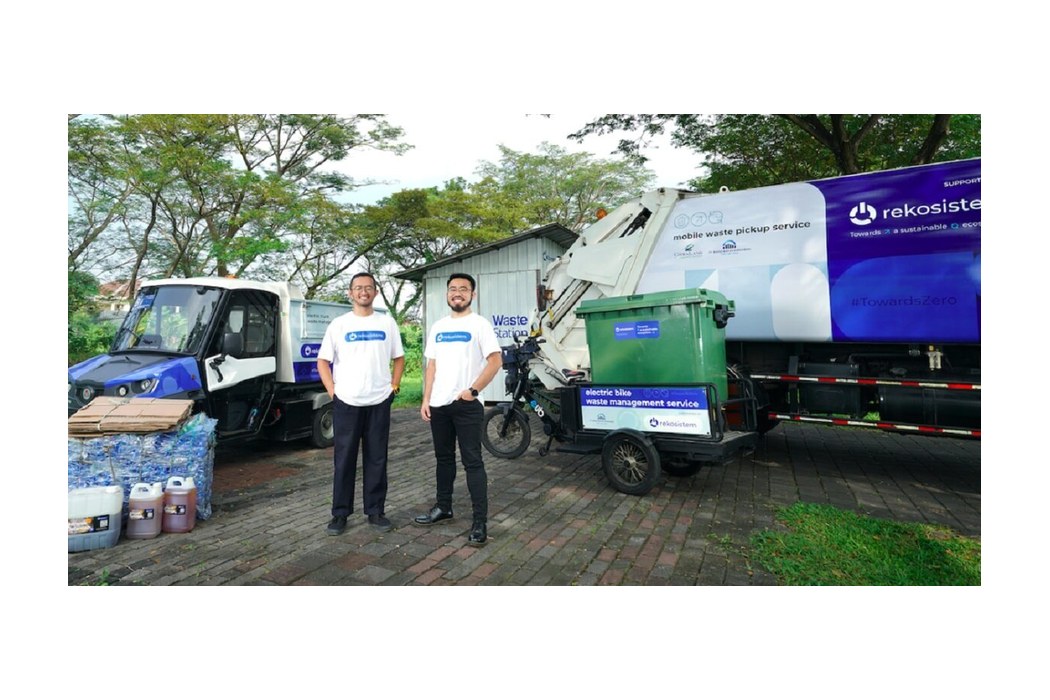
Rekosistem
Rekosistem is a Jakarta-based clean- and climate-tech company that manages Indonesia's fragmented waste supply chain end to end. Through a network of Reko Waste Stations, app-based pickup services, and material recovery hubs, it collects, sorts, and channels waste from households and businesses back into the circular economy. Founded in 2021 by Ernest Layman and Joshua Valentino, the company serves 90,000+ households and 200+ enterprise clients, processes roughly 4,500 tonnes of waste per month, and raised a US$7M Series A in 2025 led by Saratoga Investama Sedaya and K3 Ventures.
Divert, Inc.
Divert, Inc. is a Concord, Massachusetts impact technology company on a mission to prevent food from being wasted. Founded in 2007, it pairs data-driven prevention software with reverse logistics and a network of anaerobic digestion facilities that turn unsold and non-donatable food into renewable natural gas and soil amendment. Divert serves more than 7,800 retail and industrial customer locations - including Kroger, Albertsons, Target, CVS and Ahold Delhaize - and reached a valuation of over $1 billion following a 2026 Series C led by Mitsubishi Corporation.

Downstream
Downstream is a Dallas-based online marketplace that lets construction contractors rent equipment, book waste hauling, and order jobsite services - dumpsters, porta potties, scissor lifts, forklifts, fencing, mobile offices - from a nationwide network of vetted suppliers. The platform delivers real-time pricing, multiple competing quotes per job, consolidated billing, Net 30 payment terms, and AI agents that read a contractor's rollout sheets or invoices to procure automatically. Founded in 2022 (originally as Trash Gurus), the company raised an $8M Series A in November 2025 co-led by Brick & Mortar Ventures and Moneta Ventures.

Michael Marmo
Michael Marmo is the founder and CEO of CurbWaste, a New York-based software platform for waste haulers. A fourth-generation waste industry professional, Marmo started as a scale operator at a family transfer station, built a NYC hauling company called Curbside, then sold it in 2021 to focus on the software he had built to run it. CurbWaste now serves ~150 haulers across roughly 40 states and has raised about $50M in total funding, including a $28M Series B in October 2025 led by Socium Ventures.

Zachary Irwin
Zachary Irwin is the co-founder and CEO of Downstream, a Dallas-based marketplace that lets contractors book equipment rentals, dumpsters, portable toilets, and site services with a few taps - the way you might order a pizza. Started in 2022 as 'Trash Gurus' and rebuilt into an AI-driven procurement platform with 100,000+ listings, Downstream raised an $8M Series A in November 2025 co-led by Brick & Mortar Ventures and Moneta Ventures. Irwin came to construction's least glamorous corner from an unlikely place: years as a healthcare-software (Epic) consultant building oncology and pharmacy systems across 22 states.

Mapistry
Mapistry is a Berkeley-founded B2B software company that helps industrial facilities manage environmental compliance for air, stormwater, wastewater, SPCC, and waste requirements. Its platform replaces spreadsheets and paper binders with automated data collection, mobile inspections, a compliance calendar, site-map building, and real-time analytics - plus an AI feature, Maple, that takes routine data entry off environmental managers' plates. Started by Allie and Ryan Janoch, the company pairs its software with hands-on environmental expertise and serves 2,000+ facilities across dozens of manufacturers.
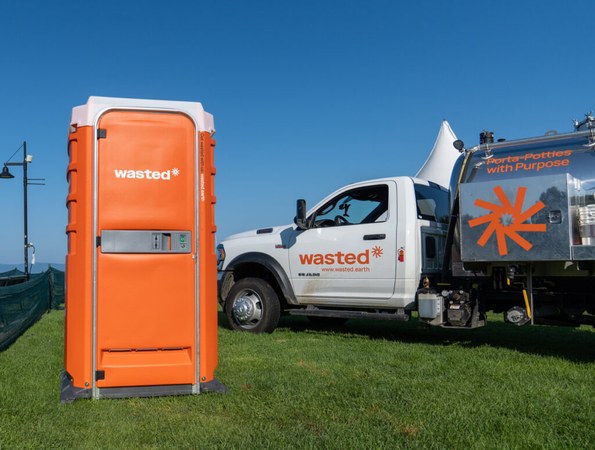
Wasted* PBC
Wasted* PBC is a Vermont public benefit corporation reinventing the humble porta-potty. Its waterless, chemical-free, solar-ventilated toilets separate and collect human waste on-site, then a Vermont R&D team recovers the nutrients and turns them into WeeBloom, a commercially registered struvite fertilizer sold to farms and gardeners. Grown out of the nonprofit Do Good Sh*t, Wasted* is building a circular economy for something everyone would rather not think about - closing the loop from toilet to topsoil.
RoadRunner
RoadRunner (RoadRunner Modern Waste + Recycling) is a Pittsburgh-based, technology-driven waste and recycling company that helps commercial and enterprise businesses cut costs, divert more material from landfills and report on their environmental impact. Founded in 2014 by Graham Rihn, it pairs a managed-services model with proprietary software and AI-powered smart cameras (via its 2022 acquisition of Compology) to meter, monitor and optimize waste streams. The company serves 14,000+ customers across all 50 states and has raised roughly $150M in venture funding.

Graham Rihn
Graham Rihn is the founder and CEO of RoadRunner, a Pittsburgh-based company that uses data and AI to modernize commercial waste and recycling. A Cornell economics grad and former college linebacker who grew up in Allison Park, Pennsylvania, Rihn started RoadRunner in New York City in 2014 after watching garbage pile up on Manhattan streets and asking why an $85 billion industry had skipped the technology revolution. He moved the company to his hometown of Pittsburgh in 2017 and grew it from roughly 30 people in three cities to more than 500 employees serving over 12,000 customers nationwide, raising more than $150 million along the way, including a $70 million Series D led by General Atlantic.

Vaulted Deep
Vaulted Deep is a Houston-based climate tech company that turns sludgy organic waste - biosolids, manure, food and agricultural waste, paper sludge - into permanent carbon removal by injecting it thousands of feet underground using patented slurry sequestration technology. Spun out of injection-well specialist Advantek in 2023, the company offers durable, low-cost, gigaton-scalable carbon dioxide removal while diverting hard-to-handle waste from landfills, oceans and fields. Its credits have been bought by Microsoft, Frontier Climate and others, and it won $8M in the Musk-backed XPRIZE Carbon Removal competition.

Glacier
Glacier builds AI-powered robots that sort recyclables inside Material Recovery Facilities (MRFs). Their compact, conveyor-mounted robots use computer vision trained on billions of recycling images to identify and pick more than 70 material categories, while also generating real-time data on what flows through the waste stream - data that brands and recyclers use to prove and improve circularity.

Rebecca Hu-Thrams
Rebecca Hu-Thrams is the co-founder and CEO of Glacier, a San Francisco-based company building AI-powered robotic arms that sort recyclables in material recovery facilities. Raised by Chinese immigrant parents who instilled a 'reduce, reuse, recycle' ethos, she channeled her Bain consulting background and Thumbtack operating experience into tackling what she calls 'the most demented form of manufacturing on the planet.' Glacier's robots, trained on 3.8 billion images of waste, sort 70+ material categories at 60 picks per minute - preventing roughly 10 million items per robot from reaching landfill annually. Named Fast Company's #1 Most Innovative Company in Robotics & Engineering for 2026, Glacier has raised $33.2 million including a $16M Series A extension in April 2025 backed by Amazon's Climate Pledge Fund and New Enterprise Associates.

Dimension
Dimension is a San Francisco-based B2B waste management platform (formerly Trash Warrior) that uses software and an AI price quoter, Mirror Mirror, to coordinate hauling, recycling, and hazardous waste removal for enterprise customers like Amazon, Instacart, Home Depot, and the DEA - with the long-term aim of pulling the U.S. recycling rate from 35% to 75%.

Lily Shen
Lily Shen is the Founder and CEO of Dimension, a San Francisco-based technology platform transforming waste management with data-driven, full-service solutions. A Princeton and Harvard Kennedy School graduate, she previously held roles at Niantic (Pokemon Go), Opendoor, Deloitte, and the Federal Reserve. Dimension, formerly Trash Warrior, has raised $19.5M in funding and operates in ~300 US cities with a mission to raise the national recycling rate from 35% to 75%.