gnss
(12)
Steve Zeets Measures the Ground From the Sky
A rodman learned to fly, an FAA webpage blinked, and an Iowa surveyor built a career around one stubborn question: can drone data be trusted on the ground?

Advanced Navigation
Advanced Navigation is a Sydney-based deep-technology company building navigation and autonomy systems that let robots, ships, aircraft, submarines and spacecraft know where they are when GPS is jammed, denied or simply unavailable. Founded in 2012 by Xavier Orr and Chris Shaw to commercialise AI-based inertial navigation research, it now designs and manufactures fibre optic gyroscopes, MEMS inertial sensors, underwater acoustic positioning and a miniature autonomous underwater vehicle across defense, space, marine, mining and commercial markets. In March 2026 it raised US$110M in Series C funding to accelerate its expansion into photonics, AI and quantum sensing.

ANELLO Photonics
ANELLO Photonics is a Santa Clara, California semiconductor and navigation company that builds SiPhOG, described as the world's smallest high-precision silicon photonic optical gyroscope. By shrinking fiber-optic-class gyroscope performance onto a chip, ANELLO delivers inertial measurement units (IMUs) and full inertial navigation systems (INS) that keep vehicles, drones, ships and robots positioned accurately when GPS/GNSS signals are jammed, spoofed or simply unavailable - across land, air and sea. Founded in 2018 by silicon-photonics pioneer Dr. Mario Paniccia and MEMS/inertial-sensor veteran Mike Horton, the company serves defense, maritime, aerospace, agriculture, construction, mining and autonomous-vehicle markets.

HYFIX
HYFIX (HYFIX Spatial Intelligence) is a Santa Clara semiconductor startup building an American-made autonomous systems chip that fuses high-precision GNSS positioning, inertial sensing, flight control, encrypted communications and onboard AI into a single system-on-chip. Emerging from the GEODNET decentralized positioning network, HYFIX aims to give U.S. drone and robotics makers a domestic alternative to Chinese-dominated supply chains, with centimeter-accurate location that resists jamming and spoofing.
oneNav, Inc.
oneNav is a Silicon Valley semiconductor startup building the world's first L5-direct GNSS receiver - a chip architecture that skips the aging GPS L1 band entirely and uses the modern L5 satellite signal to deliver positioning that is more accurate, lower-power, and far harder to jam or spoof. Founded in 2019 by Steve Poizner and Dr. Paul McBurney, the company sells IP cores and ASICs to smartphone, wearable, IoT and defense customers.
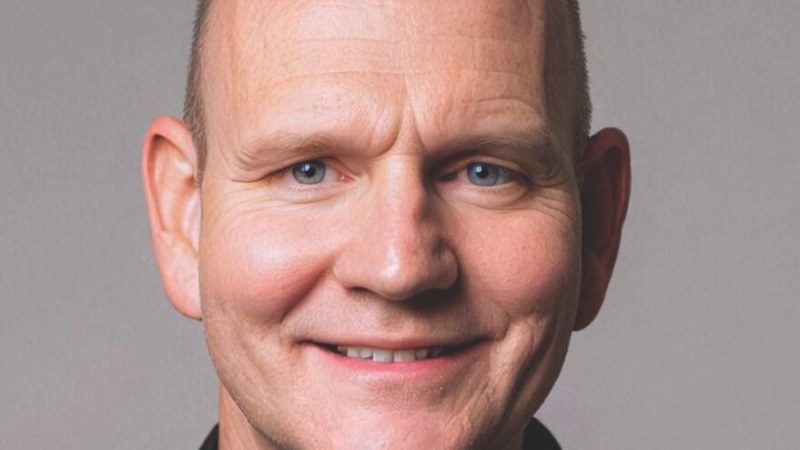
Mike Horton
Mike Horton is an American engineer and serial deep-tech founder who turns physics into products. He co-founded Crossbow Technology in 1995 out of UC Berkeley, commercialized MEMS motion sensors, and sold the company for about $50 million. He later built GEODNET, a blockchain-incentivized network of roughly 21,000 ground stations that has become the world's largest decentralized GNSS reference network, and now leads HYFIX Spatial Intelligence, a Santa Clara startup that raised a $15M seed led by Craft Ventures to build American-made positioning-and-autonomy chips for drones and robots.

ACEINNA
ACEINNA is a Massachusetts-based MEMS sensor company building high-performance, low-cost inertial measurement units (IMUs), GNSS/RTK precision-navigation systems, current sensors, and flow sensors. Spun out of MEMSIC in 2017 with a roughly $50M investment, ACEINNA is best known for its open-source OpenIMU platform and for shipping centimeter-accurate positioning solutions for autonomous vehicles and ADAS at a fraction of the price of legacy systems.

Brian Manning
Brian Manning is the co-founder and CEO of Xona Space Systems, a Burlingame, California startup building Pulsar, a commercial alternative to GPS broadcast from a planned 258-satellite constellation in low-Earth orbit. A former SpaceX engineer who worked on the Falcon 9 thrust structure, Manning reunited eight Stanford aerospace graduates over pizza and beer in 2019 to chase a question nobody had answered: why has no one built a private, encrypted, centimeter-accurate navigation network? In 2022 Xona launched Huginn, the first commercial satellite navigation mission in orbit, and in March 2026 closed an oversubscribed $170 million Series C to scale manufacturing and begin deploying production satellites.

Xona Space Systems
Xona Space Systems is a Burlingame, California company building Pulsar, a commercial low-Earth-orbit constellation that delivers positioning, navigation, and timing (PNT) with centimeter-level accuracy, signals far stronger than legacy GPS, and built-in authentication to resist jamming and spoofing. Founded in 2019 by Stanford and SpaceX alumni, Xona aims to deploy roughly 258 satellites that work with existing devices through software updates, offering a resilient alternative and augmentation to government-run satellite navigation systems.

Point One Navigation
Point One Navigation builds the precision-location stack behind autonomous vehicles, drones, robots and survey-grade tools. Its Polaris RTK network, Atlas inertial sensors and FusionEngine software fuse GNSS, inertial data and computer vision to deliver centimeter-level positioning across the US, Europe, UK, Australia, New Zealand and South Korea.

Steve Poizner
Steve Poizner is a serial Silicon Valley entrepreneur who sold GPS-in-cell-phones pioneer SnapTrack to Qualcomm for $1 billion, served as California Insurance Commissioner, ran for governor, taught high school for a year, wrote a New York Times bestseller, and is now back in the lab as Co-Founder and CEO of oneNav - building the world's first L5-direct GNSS receiver ASIC to make GPS jamming-proof for drones, autonomous vehicles, and defense applications.

Aaron Nathan
Aaron Nathan is the CEO and co-founder of Point One Navigation, a San Francisco-based precision location company building the infrastructure layer for Physical AI. A Cornell-trained engineer who helped lead the university's DARPA Urban Challenge team, he went on to serve as Chief Architect at Coherent Navigation (acquired by Apple) before co-founding adeptCloud (acquired by Hightail). At Point One, he is turning centimeter-level GPS accuracy from a specialist tool into a universal platform — raising a $35M oversubscribed Series C from Khosla Ventures in 2025 to accelerate a mission: making precise location as ubiquitous as GPS itself.